The Legacy of Stefan Bellof: A Racing Prodigy Remembered
Stefan Bellof’s name is synonymous with audacious talent and thrilling speed in the world of motorsport. His legacy, particularly marked by his unforgettable performance at the Nurburgring during the 1983 1000Km race, continues to resonate with racing enthusiasts and professionals alike. Despite his tragically short career, Bellof’s skill and charisma left an indelible mark on the sport, establishing him as one of the most gifted drivers of his time.
The 1983 Nurburgring 1000Km: A Defining Moment
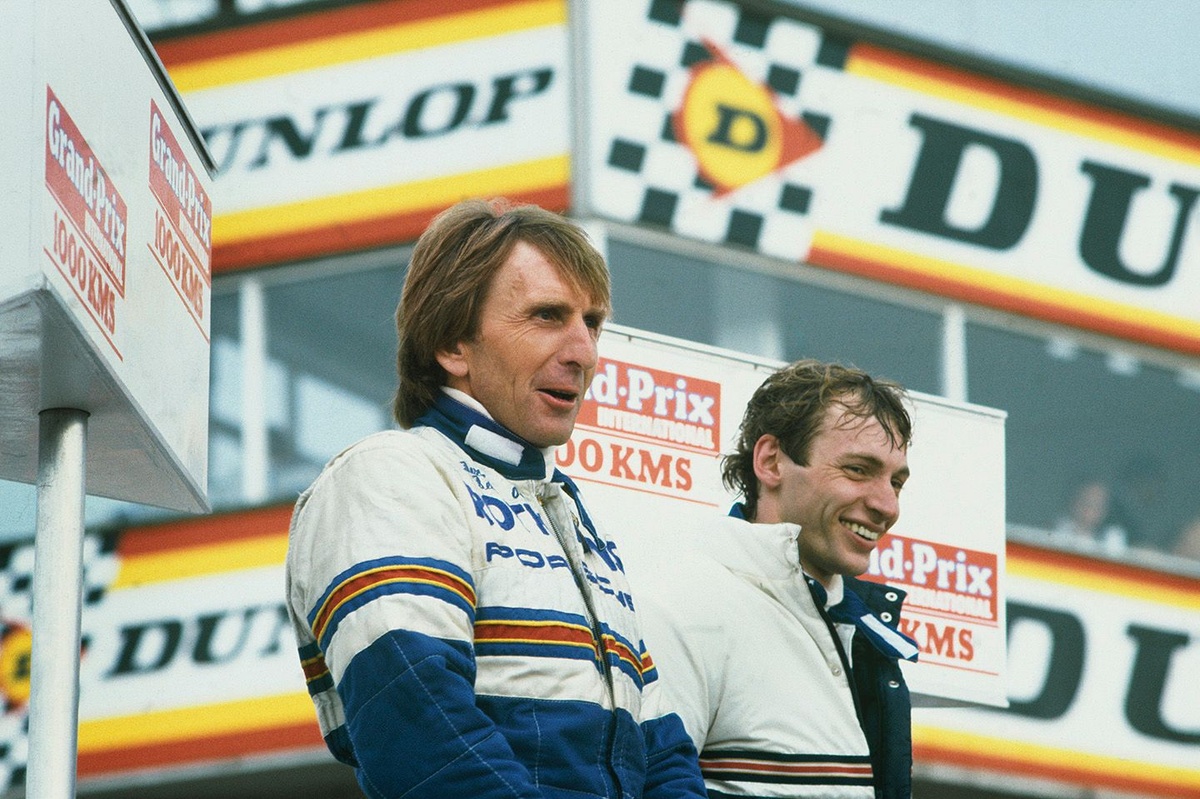
The 1983 Nurburgring 1000Km race is a pivotal chapter in the story of Stefan Bellof. On a day when the air was thick with anticipation, Bellof, driving a Porsche 956, showcased his extraordinary abilities. He secured pole position with a staggering five-second lead over his competitors. As his teammate, Derek Bell, observed the unfolding drama from the pit wall, he sensed that Bellof’s relentless pursuit of speed needed a moment of restraint. However, the management at Porsche remained unconvinced, choosing to let the young talent continue.
Bellof’s performance was nothing short of remarkable, as he consistently clocked lap times that defied comprehension. He recorded a qualifying lap of 6 minutes and 11.13 seconds and a race lap of 6 minutes and 25.91 seconds, both on the challenging 12.94-mile Nordschleife. This achievement is even more impressive considering that it remains a track where everyday drivers can still test their skills today.
Yet, the race took a dramatic turn when Bellof, in a moment of exuberance, lost control of his car at Pflanzgarten, leading to a spectacular crash. This incident not only altered the course of the race but also became a defining moment in the narrative of his life—a cautionary tale of youthful exuberance and the perils of pushing limits.
The Mythos of Stefan Bellof
Despite the dramatic crash, Bellof is often remembered as a daring and flamboyant driver. His reputation for pushing the envelope—whether in practice or during races—has led some to label him as reckless. However, those who knew him best, including his contemporaries and team members, argue that this perception is unjust.
Bellof was not merely a driver who took unnecessary risks; he was a racer who thrived on the adrenaline rush of speed. His confidence and skill allowed him to navigate the complexities of racing with finesse. Bell, who witnessed Bellof’s prowess firsthand, felt that the young driver was capable of winning at Nurburgring without taking such extreme measures. He believed that a simple command to ease off would have sufficed to secure victory. Instead, the drama of the crash overshadowed the brilliance of Bellof’s earlier performance.
Insights from the Pit Wall
Derek Bell’s suggestion to the Porsche management to display a ‘HOLD’ board, urging Bellof to slow down, was met with unexpected enthusiasm from Professor Helmuth Bott, Porsche’s head of research and development. Instead of acting on Bell’s advice, the decision was made to let Bellof continue racing. The result was a crash that not only ended the race for Bellof but also left a lasting impact on his legacy.
Porsche’s engineering legend, Norbert Singer, later reflected that Bellof’s crash was not a result of recklessness but rather a combination of his natural talent and a desire to push the boundaries of what was possible. Bellof was known to challenge the status quo, often attempting to take risky sections of the track flat out, an approach that ultimately led to his misfortune at Pflanzgarten.
The Early Years: From Karting to Formula Racing
Stefan Bellof’s journey to race car stardom began in karting, where his extraordinary talent quickly became evident. Throughout his career, he demonstrated a unique ability to adapt to different racing disciplines, showcasing his versatility as a driver. By the time he transitioned to Formula 3 in 1981, he had already garnered attention for his exceptional skills behind the wheel.
Bertram Schafer, a long-time Formula 3 team owner, played a crucial role in Bellof’s rise. Recognizing Bellof’s potential, Schafer provided him with a seat in the latter half of the 1981 German Formula 3 series. Bellof not only impressed with his speed but also displayed a natural affinity for racing that set him apart from his competitors.
Following his successful stint in Formula 3, Bellof quickly moved up the ranks to Formula 2 in 1982, where he continued to shine. His performance in the series was marked by stunning victories at prestigious circuits like Silverstone and Hockenheim, further solidifying his reputation as a rising star.
The Transition to Formula 1
Bellof’s entry into Formula 1 came in 1984 when he joined the Tyrrell team. This marked a significant step in his career, as he was now competing at the highest level of motorsport. The 1984 Monaco Grand Prix is often cited as one of his most remarkable performances. Despite racing a normally aspirated car, Bellof managed to lap faster than both Alain Prost and Ayrton Senna, two of the biggest names in the sport at the time.
Unfortunately, Bellof’s moment of brilliance was overshadowed when the Tyrrell team faced disqualification from the championship due to a technical infringement. This setback was a bitter pill to swallow for Bellof, who had proven himself capable of competing with the best.
The Tragic End and What Could Have Been
The untimely death of Stefan Bellof in 1985 during the Spa 1000Km race marked a tragic end to a promising career. His fatal crash while attempting to overtake Jacky Ickx at Eau Rouge left fans and fellow drivers in shock. Many believed that Bellof had the potential to become a world champion, and his passing left a void in the motorsport community.
Reflecting on Bellof’s potential, many believe that had he lived, he could have been Germany’s first Formula 1 champion, paving the way for future stars like Michael Schumacher. Manfred Jantke, who managed Bellof during his time with Porsche, expressed that the motorsport world had lost a talent that could have changed the landscape of racing.
The Legacy Lives On
Stefan Bellof’s legacy continues to inspire new generations of drivers and racing enthusiasts. His fearless approach to racing and undeniable talent have become part of the folklore of motorsport. The stories of his incredible performances, particularly at the Nurburgring, are recounted with admiration by those who appreciate the art of racing.
In recent years, there has been a resurgence of interest in Bellof’s life and career, as documentaries and articles highlight his achievements and contributions to the sport. The Nurburgring remains a symbol of his prowess, with many fans paying homage to the driver who once dominated its challenging curves.
Bellof’s story serves as a reminder of the fine line between brilliance and tragedy in the world of racing. His talent was undeniable, and while his life was tragically cut short, his impact on the sport endures.
Conclusion
Stefan Bellof remains a significant figure in the history of motorsport. His unique combination of talent, charisma, and determination set him apart from his peers. As fans and fellow racers continue to celebrate his achievements, Bellof’s spirit lives on in the hearts of those who cherish the thrill of racing. His legacy is one of both triumph and caution, reminding us of the exhilarating yet perilous nature of the sport he loved.
