Insights on the Bristol Night Race and Tire Management Challenges
During a recent segment on SiriusXM NASCAR Radio’s ‘The Morning Drive’, Rudy Fugle, the crew chief for the No. 24 Hendrick Motorsports Chevrolet, shared his insights regarding the much-debated return of the ‘chaos tire’ at Bristol Motor Speedway. This past weekend’s Bristol Night Race showcased a staggering 36 lead changes, a stark contrast to the mere four observed during the spring event. However, these lead changes were accompanied by a notable 14 caution flags, raising questions among NASCAR enthusiasts and professionals alike.
Mixed Reactions from the NASCAR Community
Chad Knaus, the vice president of competition for Hendrick Motorsports, expressed his dissatisfaction with the race’s outcome, stating, “this isn’t the way I like racing.” His comments reflect a broader sentiment within the NASCAR community about the nature of racing at Bristol. Many are left wondering if the current racing format aligns with the expectations and desires of both fans and drivers.
Fugle provided further context, emphasizing that the race’s behavior was more indicative of tire shredding rather than true tire degradation. He argued that the cooler temperatures played a more significant role than the newly introduced right-side tire, suggesting that the older tire might have performed similarly under the same conditions.
"Whoever made that decision, I’m not part of those discussions, but we were informed that was the plan," Fugle noted. He questioned the overarching goal for Bristol races, expressing uncertainty about what NASCAR aims to achieve. “If we don’t know what that goal is, then we are unclear about our direction,” he added.
The Quest for Authentic Bristol Racing
Fugle’s comments highlighted a crucial point: the need for clarity in the objectives of the Bristol race. He asked if fans truly desired a return to the racing style of 1995 or if they were content with the more modern approach. He recalled his own experiences as a child watching Bristol races, noting that the current format does not encapsulate the intensity and excitement of those earlier years.
"If fans are longing for that 1995 experience, it’s not going to come from a Goodyear tire," Fugle asserted. "It requires a fundamental change to the track itself, possibly even resetting the concrete to reflect the conditions of the past." This perspective raises important questions about how much the sport is willing to evolve while still paying homage to its roots.
Evolution of Bristol Motor Speedway
Since 2007, Bristol has undergone various modifications, such as the introduction of progressive banking, which initially favored the top lane. In an attempt to revive the spirit of the track, officials have made changes like grinding down the top lane and even covering the surface with dirt at one point. These alterations have significantly shifted the nature of racing at this iconic venue, leading to a less favorable experience for some long-time fans.
Fugle emphasized the importance of having a well-defined vision for the future of racing at Bristol. “If we want to replicate the 1995 Bristol, we need to set that as our goal,” he stated. He expressed a desire for transparency regarding the objectives of the race format, noting that any type of race presents its own challenges for teams and drivers.
“Understanding what to expect is crucial,” Fugle explained. “Once we determine what we want to make fans happy, we can strategize accordingly, but right now, it feels like we are navigating in the dark.”
Tire Management and Strategy Challenges
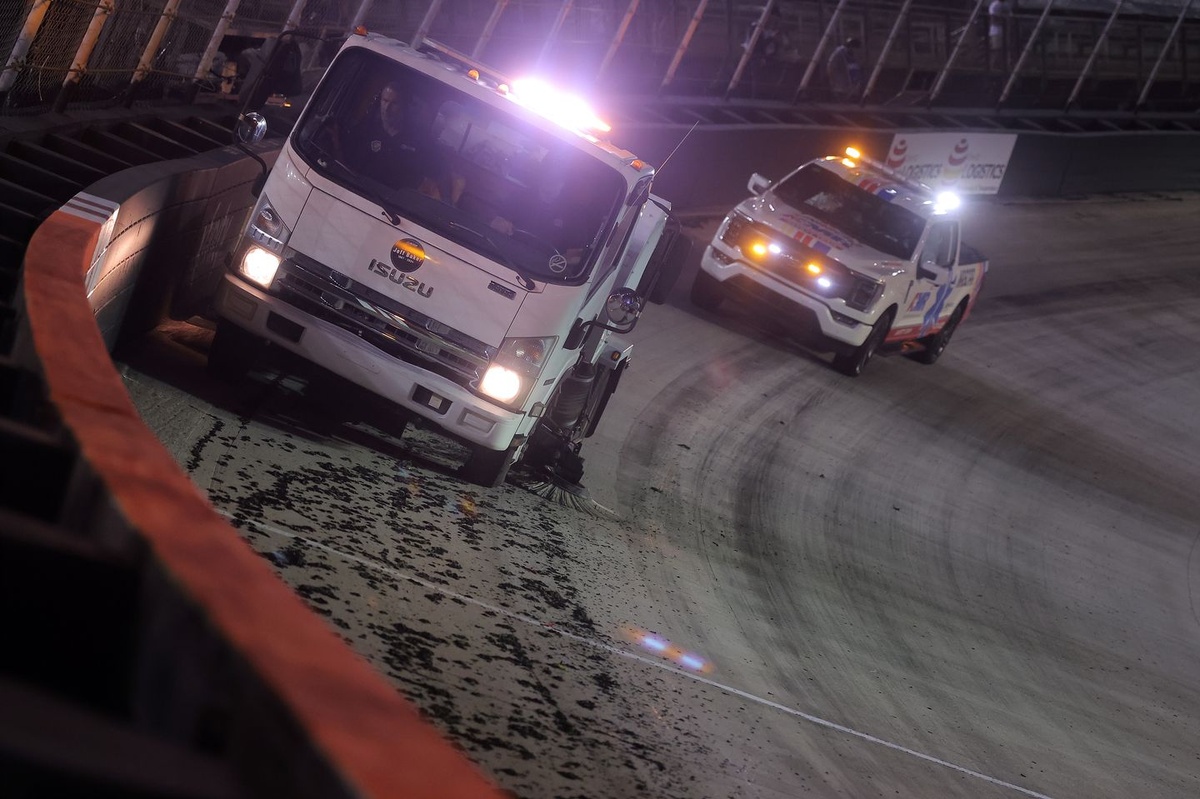
Reflecting on the race, Fugle identified a critical moment around Lap 25 when he noticed the buildup of marbles on the outer groove. This observation prompted a shift in strategy, leading him to advise driver William Byron to slow down and focus on running the bottom line. Despite the need for tire conservation throughout the race, Fugle admitted that the drivers had limited control over their tire performance.
"There wasn’t much you could do from behind the wheel," he lamented. "That was one of my disappointments. While the unpredictability made it compelling, it leaned more towards tire shredding rather than true tire degradation. Ideally, we want to empower drivers to manage their tires effectively, but that wasn’t the case."
The challenge of planning a race strategy was compounded by the uncertainty surrounding tire availability. While Goodyear eventually provided an additional set of tires, Fugle indicated that there was a significant period—about 100 to 150 laps—when they were unsure if they would receive that extra set.
“It was tough to strategize effectively, given the uncertainty,” Fugle said. “We had to approach the race in ‘safe mode’ initially, only to adapt our strategy once we learned more about the tire situation for Stage 3.”
The Impact of Unpredictability on Race Outcomes
The unpredictable nature of the night race proved to be a significant factor affecting the performance of the No. 24 team. Byron suffered nose damage during the race and was subsequently pushed into the wall during the final restart, resulting in a disappointing 12th-place finish.
“It felt like punches were coming from all directions,” Fugle remarked. “The chaos made it difficult to maintain a consistent strategy. Every driver faced challenges that were beyond their control, and that unpredictability ultimately shaped the outcome of the race.”
The Bristol Night Race serves as a reminder of the complex dynamics at play in NASCAR, especially concerning tire management and race strategy. The balance between maintaining the excitement of racing while ensuring a level of control for drivers is a delicate one, and the recent event has sparked important discussions about the future of racing at Bristol and beyond.
Future Directions for Bristol Motor Speedway
As the NASCAR community reflects on the Bristol Night Race, it’s clear that conversations around tire management and race strategy will continue to evolve. The feedback from crew chiefs like Rudy Fugle and drivers offers valuable insights into what fans and teams desire from the racing experience.
Going forward, it will be essential for NASCAR to establish clear objectives for the Bristol races, ensuring that the excitement of competitive racing is balanced with the integrity of the sport. The ongoing dialogue between drivers, teams, and officials will play a crucial role in shaping the future of racing at this iconic track.
In a sport defined by its rich history and passionate fan base, the challenge will be to honor the traditions of the past while adapting to the needs of today’s racing landscape. The lessons learned from the Bristol Night Race could pave the way for a more cohesive vision that satisfies both fans and participants alike.
As NASCAR continues to navigate these challenges, the hope is that the heart of racing—thrilling competition, strategic mastery, and driver skill—remains at the forefront of the experience. The journey ahead will require collaboration, innovation, and a commitment to preserving the excitement that makes NASCAR a beloved sport for millions.
