The Intricacies of Grid Positioning in Formula 1: A Closer Look at Recent Events
The world of Formula 1 is filled with nuances and strategies that go beyond the mere mechanics of speed. One of the more intriguing aspects of the sport is the way teams and drivers position themselves on the starting grid, a process that involves careful calculation and sometimes, a bit of gamesmanship. A recent incident at the United States Grand Prix in Austin highlighted these complexities and raised questions about the lengths teams will go to secure an advantage.
The Incident at the United States Grand Prix
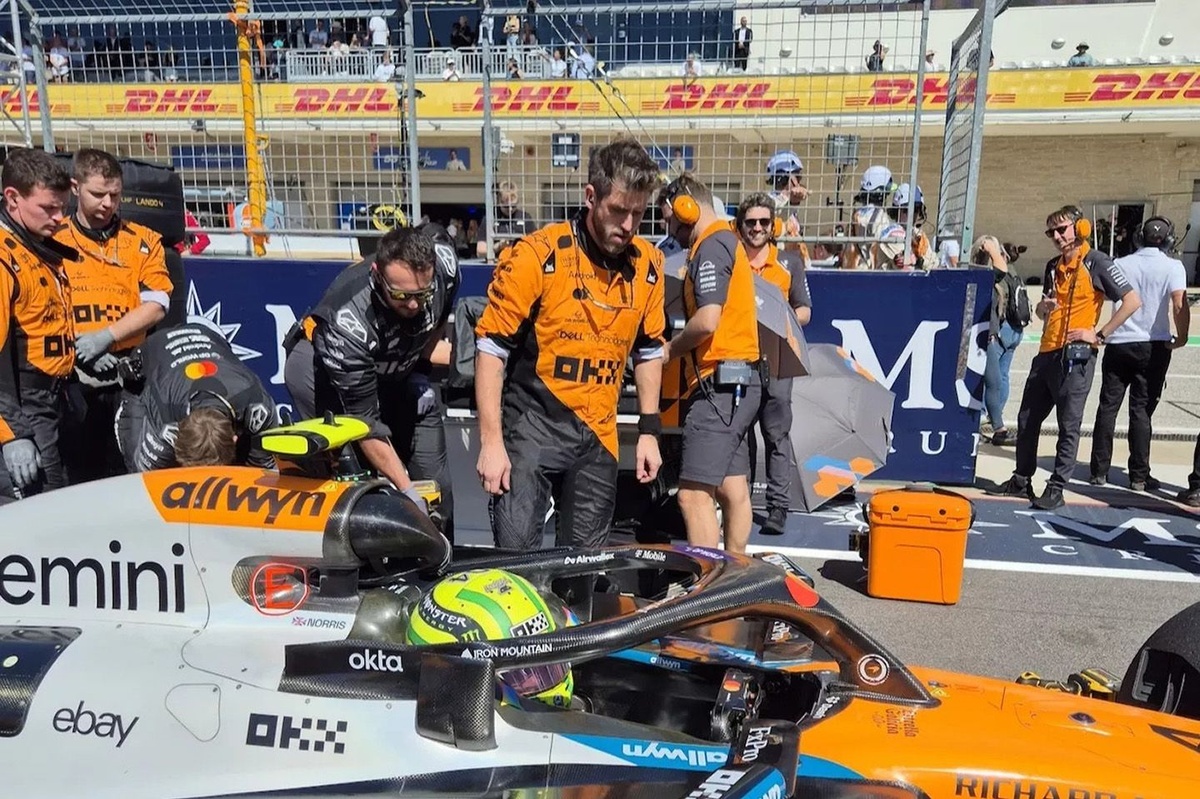
Following the United States Grand Prix, Red Bull Racing found itself in hot water, having been fined €50,000, with €25,000 of that amount suspended, due to a crew member attempting to access the grid during the formation lap. The intention behind this breach was to remove a piece of tape that McLaren had placed on the grid to assist driver Lando Norris in accurately positioning his car at the front of his designated grid slot.
This incident was not an isolated occurrence. It was widely recognized that there had been a tactical back-and-forth between Red Bull and McLaren, with both teams engaging in subtle maneuvers to outsmart one another. Reports indicate that this wasn’t the first instance where Red Bull attempted to disrupt Norris’s markers, prompting McLaren to implement countermeasures.
In a clever twist, McLaren utilized tape that was designed to leave a mark on the track even after it was removed. This tactic had proven effective in previous races, including a notable instance in Singapore, where the tape left behind the phrase "better luck next time." The rules governing Formula 1 do not prohibit teams from adding markers to trackside furniture, nor do they prevent other teams from removing them. However, Red Bull’s fine stemmed from their crew member disregarding the marshals’ instructions, who were trying to close the pitwall gate.
The incident sparked considerable discussion among fans and experts alike. Many questioned why a driver with championship aspirations would need assistance in positioning their car correctly. This brings to light the complexities that modern drivers face when it comes to grid placement.
The Challenge of Modern F1 Car Design
Modern Formula 1 cars are engineered for optimal performance, which often comes at the cost of driver visibility. Aerodynamics dictate that drivers sit in a reclined position, with their feet elevated to near eye level. Adrian Newey, a prominent figure in F1 engineering, compared this unique seating arrangement to lying in a bathtub with one’s feet resting on the taps. While this design enhances performance, it also restricts the driver’s field of vision, making it challenging to accurately gauge their position on the grid.
Norris’s need for additional reference points to ensure precise alignment is not unique to him. Following a minor miscalculation during the Bahrain Grand Prix, where he overshot his grid box, Norris became more vigilant about his positioning. Other drivers, like Carlos Sainz, have expressed similar sentiments. Sainz noted that he relies on specific reference points within his car, such as the mirror mounting fixtures, to aid in his alignment. However, he acknowledged that not all cars provide such aids, leaving drivers to depend on the grid markings.
Nico Hulkenberg also weighed in on the matter, explaining that the visibility of the grid box varies from car to car, depending on the design of the side impact structures. He mentioned that with the current generation of cars, it can be particularly challenging for drivers to see their grid boxes clearly. While he personally doesn’t use tape for alignment, he recognizes the difficulties that come with the intricate designs of modern F1 vehicles.
The Importance of Grid Positioning
Grid positioning is a crucial aspect of racing strategy, especially when the stakes are high, such as in a championship battle. The McLaren team’s approach involves rolling their car as close as possible to the maximum allowed point within the yellow lines before marking their spot. Other drivers have shared that they often scout the grid for reference points during their start simulations in practice sessions, aiming to make a definitive decision about their positioning before the race begins.
When a world championship is on the line, even the slightest misalignment can have significant consequences. This is where the advantage of being positioned as far forward in the box as possible comes into play. As Oliver Bearman, a rising star in the sport, pointed out, the presence of numerous aerodynamic devices on modern cars can obscure a driver’s view of the yellow line that indicates their grid position.
Bearman highlighted that the upgrades made to his Haas car altered its geometry, making it even more difficult to see the yellow line. This raises an interesting point about how advancements in car performance can inadvertently hinder a driver’s ability to position themselves accurately on the grid. The trade-off between speed and visibility becomes a key consideration for teams and drivers alike.
The Role of Strategy and Tactics
The interplay between teams like McLaren and Red Bull illustrates the extent of strategic thinking involved in Formula 1. Each team is constantly seeking ways to gain an edge, whether through innovative car designs, tactical maneuvers, or psychological games. The recent incident at the United States Grand Prix serves as a reminder of how competitive the sport is and how every detail can impact the outcome of a race.
Teams are not only focused on their own performance; they also closely monitor their competitors. The tactics employed during the grid positioning process are just one example of how teams attempt to outmaneuver each other. The competitive spirit of Formula 1 fuels a relentless pursuit of excellence, with teams continuously refining their strategies to achieve the best possible results.
The incident also sheds light on the broader context of racing regulations and enforcement. While teams are allowed certain freedoms, there are clear boundaries set by the governing body of the sport. The fine imposed on Red Bull serves as a reminder that adherence to rules is paramount, even in the heat of competition.
Conclusion
In summary, the world of Formula 1 is characterized by a complex interplay of technology, strategy, and human skill. The recent incident involving Red Bull and McLaren at the United States Grand Prix highlights the lengths teams will go to secure an advantage on the grid. As drivers navigate the challenges posed by modern car design, the importance of precise positioning becomes increasingly clear.
The intricate dynamics of grid placement, coupled with the tactical maneuvers employed by teams, showcase the intense competition that defines Formula 1. As the sport continues to evolve, one can only imagine the innovative strategies that teams will develop to gain the upper hand in the quest for victory.
