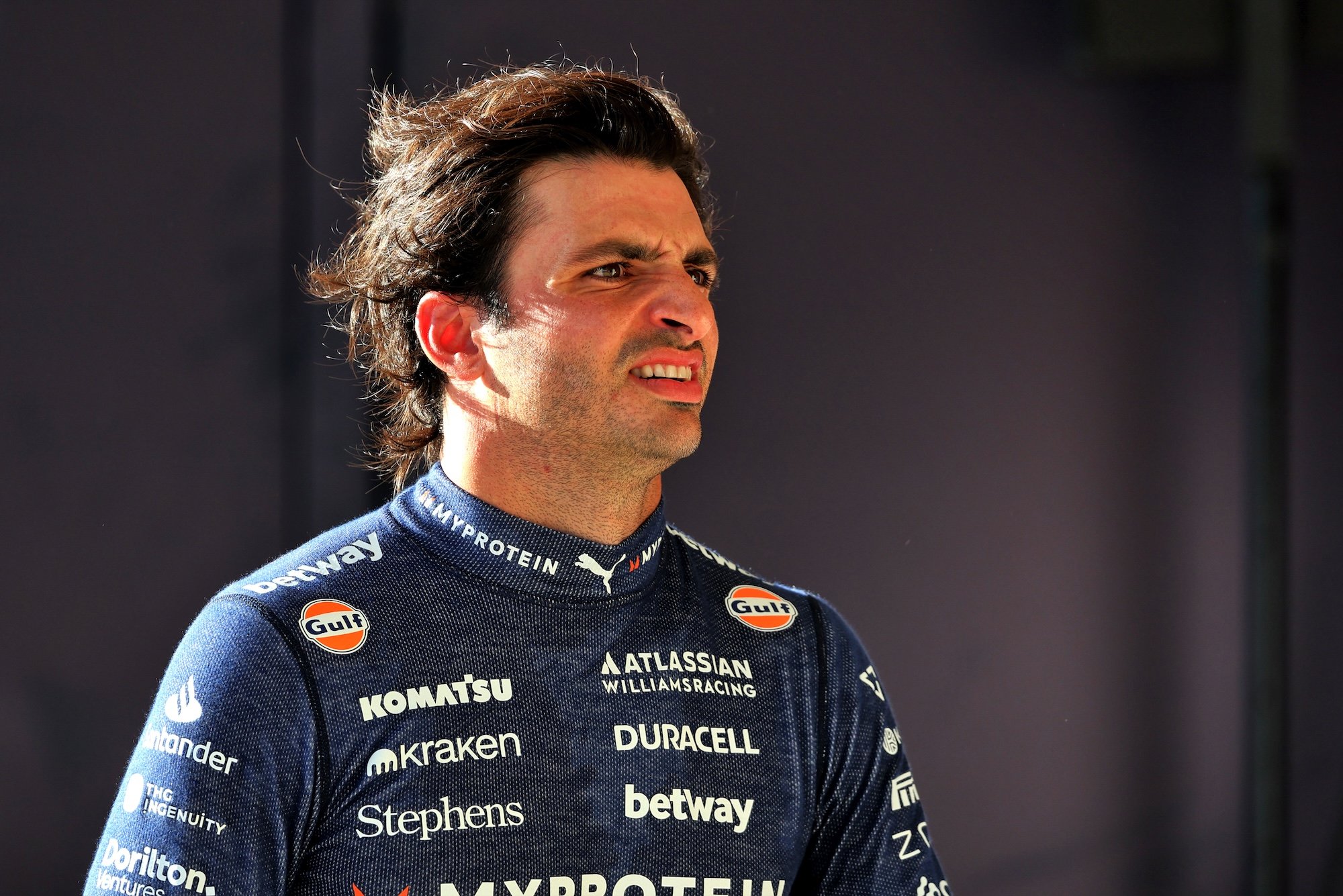
Carlos Sainz Voices Discontent Over Grid Penalty Ahead of Mexican GP
Carlos Sainz, the Spanish driver representing Williams in Formula 1, is expressing his dissatisfaction regarding a five-position grid penalty he received for the upcoming Mexican Grand Prix. This penalty stems from a collision with Kimi Antonelli during the United States Grand Prix. Sainz described the sanction as “completely disproportionate” during a press conference held at the Autódromo Hermanos Rodríguez on Thursday, the 23rd.
Collision Incident at the Circuit of the Americas
The incident occurred when Sainz and Antonelli were battling for the seventh position at the Circuit of the Americas. The collision not only resulted in Sainz being deemed at fault but also led to his premature exit from the race. As a consequence, he will serve the penalty during the next race in Mexico, where he previously celebrated victory while driving for Ferrari last season. Additionally, Sainz has been handed two penalty points on his superlicense, raising concerns about the stringent application of FIA (Fédération Internationale de l’Automobile) regulations.
Sainz’s Reaction to the Penalty
During the press conference, which was attended by Antonelli as well, Sainz emphasized his belief that what happens on the track should remain on the track. He articulated his concerns about the fairness of the penalty, stating, “I found it completely disproportionate to what the incident was. It exposes some weaknesses in the regulations we have. I have to accept it, but it’s hard to understand.”
This isn’t the first time Sainz has found himself frustrated with penalties. He previously expressed his irritation over a punishment he received at the Dutch Grand Prix. As a prominent member of the Grand Prix Drivers’ Association (GPDA), he is an influential figure among drivers but indicated that he would not raise the issue in the drivers’ briefing. “It’s not something to discuss in the briefing, as it won’t change anything,” he remarked.
Discussion on FIA Guidelines
Despite his reluctance to bring this specific issue to the drivers’ briefing, Sainz advocates for a broader discussion about the FIA’s guidelines. He believes that while a guideline can assist in evaluating an incident, it should not be mistaken for a hard-and-fast rule. Sainz pointed out that the current application of these guidelines can sometimes lead to inconsistent judgments regarding incidents on the track. “Sometimes they are being applied in any situation, and that’s not the best way to judge an incident,” he added.
Contextualizing the Penalty
To better understand the implications of Sainz’s penalty, it’s important to consider the context within the realm of Formula 1. The sport has strict regulations that govern driver conduct, and penalties are often imposed to maintain fairness and safety on the track. However, the interpretation of these rules can vary significantly, leading to debates among drivers, teams, and officials about their application.
In this instance, Sainz feels that the severity of the penalty does not accurately reflect the nature of the incident. The FIA’s decision-making process is designed to uphold the integrity of the sport, but it can also lead to controversies that spark discussions about the fairness of the penalties imposed.
The Role of the FIA in F1
The FIA plays a crucial role in overseeing Formula 1, ensuring that rules are adhered to and that the sport remains competitive and safe. However, this oversight can sometimes lead to tensions between drivers and officials, especially when penalties are perceived as excessively harsh or unfair.
As drivers navigate the complexities of racing, they must also contend with the regulatory framework that governs their actions. This dual responsibility can create a challenging environment, particularly when incidents like the one involving Sainz and Antonelli occur.
Sainz’s Career and Influence
Carlos Sainz has established himself as a prominent figure in Formula 1. His career has been marked by notable performances and a growing reputation as a skilled driver. His role within the GPDA allows him to voice concerns shared by many drivers, reflecting a collective desire for clarity and fairness in the application of racing regulations.
As discussions about penalties and regulations continue, Sainz’s position as a leading driver enables him to influence the conversation. His experiences on the track, particularly in relation to penalties, provide valuable insights that can contribute to ongoing dialogues about the future of regulations in Formula 1.
The Upcoming Mexican Grand Prix
Looking ahead to the Mexican Grand Prix, Sainz will be keen to make the most of the opportunity despite the setback of the grid penalty. Having previously won in Mexico, he is familiar with the challenges and intricacies of the Autódromo Hermanos Rodríguez. The atmosphere in Mexico is electric, and the support from fans can significantly impact a driver’s performance.
Sainz’s determination to succeed, even in the face of adversity, underscores his competitive spirit. As he prepares for the race, he will undoubtedly be focused on delivering a strong performance, aiming to turn the situation into a positive outcome.
Fan Reactions and Media Coverage
The reactions from fans and the media regarding Sainz’s penalty have been varied. Some supporters sympathize with his viewpoint, agreeing that the penalty seems overly harsh given the circumstances of the incident. Others, however, believe that any form of collision warrants a penalty to maintain the sport’s integrity.
Media coverage has highlighted the tensions surrounding penalties in Formula 1, with journalists exploring the broader implications of Sainz’s situation. This incident serves as a reminder of the ongoing debates regarding fairness and consistency in the application of racing regulations.
Conclusion
As Carlos Sainz gears up for the Mexican Grand Prix, he finds himself navigating the complexities of racing regulations alongside the pressures of competition. His outspoken nature regarding the penalty reflects the sentiments of many drivers who seek a balanced approach to race incidents. The upcoming race will not only be a test of his driving skills but also an opportunity to demonstrate resilience in the face of challenges.
While penalties are a necessary part of maintaining order and fairness in Formula 1, the discussions surrounding their application continue to evolve. As drivers like Sainz advocate for clarity and fairness, the hope is that the sport can find a way to achieve both competitive integrity and a fair racing environment.
