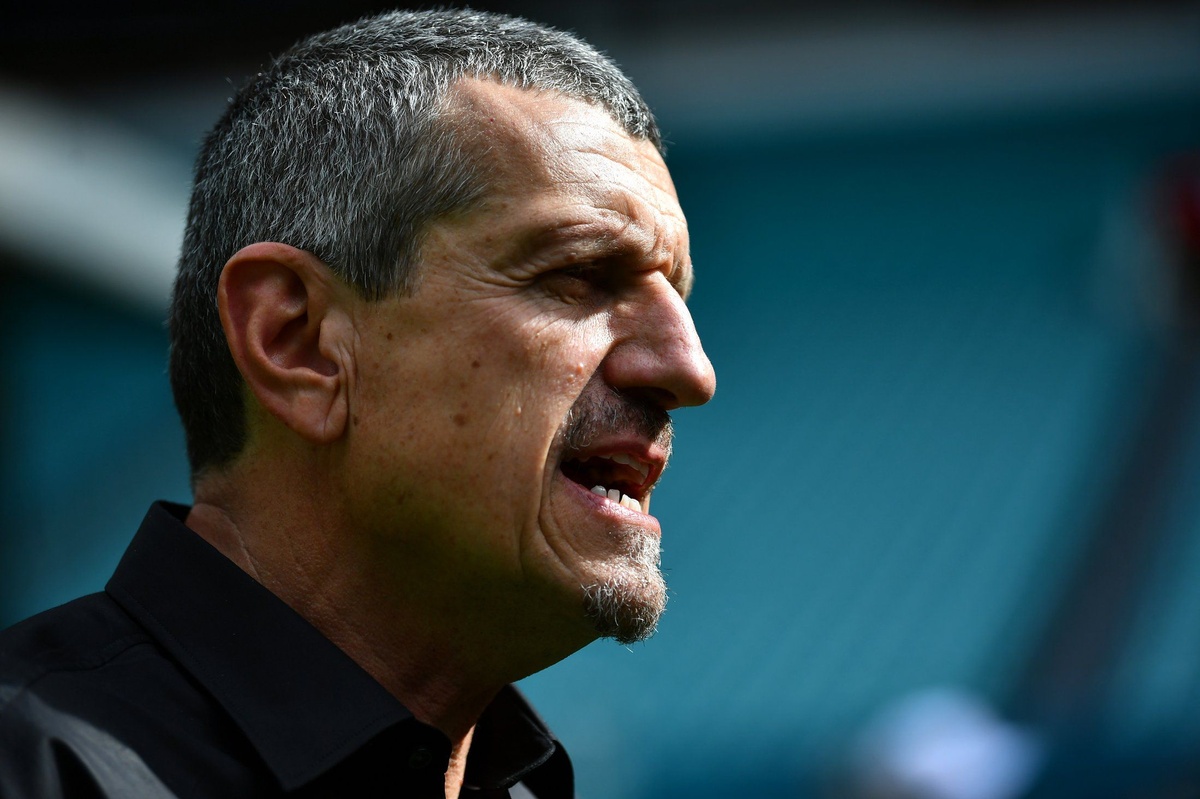
Guenther Steiner Criticizes McLaren for Not Challenging Piastri’s Penalty
Former Haas F1 Team principal Guenther Steiner has recently expressed his disappointment with McLaren’s decision not to contest the 10-second penalty handed to Oscar Piastri during the Brazilian Grand Prix. This incident has sparked considerable discussion among fans and analysts alike, as it centers around the complex dynamics of racing regulations and the responsibilities of the teams involved.
The Incident That Sparked Controversy
During the Brazilian Grand Prix, Oscar Piastri found himself in the midst of a contentious situation. The Australian driver received a 10-second penalty along with two penalty points on his racing license after a collision with Andrea Kimi Antonelli of Mercedes. This collision subsequently involved Charles Leclerc from Ferrari, resulting in Leclerc’s retirement from the race.
The stewards provided a detailed explanation of the incident, indicating that at the restart of the safety car on lap six, Piastri attempted to overtake Antonelli on the inside of Turn 1. However, the stewards concluded that Piastri had not established the necessary overlap before reaching the apex of the corner. They noted that his front axle was not in line with Antonelli’s mirror, which is a critical factor in determining the legality of an overtaking maneuver according to the Driving Standard Guidelines.
The stewards further explained that Piastri locked his brakes while trying to avoid contact but ultimately collided with Antonelli. This contact led to Antonelli hitting Leclerc, who was positioned on the outside, forcing him to retire from the race. As a result, the stewards deemed Piastri entirely responsible for the incident, leading to the imposed penalty.
Reactions from the Paddock
The penalty quickly became a hot topic among drivers and fans after the race. Many considered the stewards’ decision to be overly harsh. Leclerc himself voiced his opinion, suggesting that the blame should be shared between Piastri and Antonelli. He described the incident as a "50/50" situation, where both drivers played a role in the collision. Leclerc pointed out that while Piastri’s move was ambitious, Antonelli was also at fault for not recognizing Piastri’s presence in the corner.
“I think actually Kimi was as much to blame as Oscar,” Leclerc remarked in post-race interviews. “For me, it was a bit of a 50/50 incident, Oscar being a bit optimistic and Kimi doing the corner like Oscar was never there, so that means they collided and then touched me. For me, the blame is not all on Oscar. Yes, it was optimistic, but this could have been avoided and I’m frustrated."
Steiner’s Call for Action
In a subsequent discussion on The Red Flags Podcast, Steiner emphasized that McLaren should have taken action to challenge the penalty. He argued that it was essential for teams to actively engage with the stewards regarding decisions that could significantly impact the outcome of a race. Steiner pointed to Leclerc’s comments as evidence that even the affected driver did not view Piastri as the sole culprit in the incident.
"Why you don’t go there and at least say something to the stewards?" Steiner questioned. "Even Charles Leclerc said, ‘I mean, it wasn’t Oscar’s fault.’ If the other driver, who was taken out, says, ‘Hey, nothing to do with him. Maybe I was a little bit too optimistic.’ He didn’t say that because he wouldn’t admit to that one. But you know, three wide."
Steiner’s remarks highlight a significant aspect of motorsport—a delicate balance between adhering to rules and allowing for the inherent unpredictability of racing. He raised concerns over how the interpretation of rules can sometimes stifle the competitive spirit of racing, suggesting that the sport may risk becoming overly rigid if teams refrain from challenging penalties.
The Psychological Impact of Contesting Penalties
Steiner also touched on the psychological ramifications of contesting decisions made by race stewards. He argued that even if a team’s appeal is unsuccessful, the act of standing up for their driver can foster a sense of unity and determination within the team. This is particularly important in a high-pressure environment like Formula 1, where team morale can have a tangible impact on performance.
"It’s psychological as well," Steiner noted. "Obviously, I overdid it sometimes, which doesn’t help. But then stating the facts, it shows that you know what you’re doing. You show this and this is wrong. You give your point of view. Will you win it? You don’t know. But you always have to try. That’s my opinion."
He further emphasized that the effort to contest a penalty reflects a commitment to the team’s values. It demonstrates to the drivers and the entire team that they are willing to fight for their interests, which can be motivating for everyone involved.
The Broader Implications for Team Dynamics
The incident and Steiner’s comments raise broader questions about team dynamics and how decisions made at the top can influence the overall performance of a racing team. In the high-stakes world of Formula 1, every decision—whether about strategy, driver management, or contesting penalties—can significantly affect the team’s trajectory.
A team that actively engages in discussions with race stewards is one that instills confidence in its drivers. When drivers know their team is willing to back them up and advocate for them, it can lead to improved performance on the track. Conversely, a lack of action in the face of controversial penalties may lead to feelings of helplessness among drivers, potentially impacting their competitive edge.
The Importance of Advocacy in Racing
Steiner’s arguments underscore the importance of advocacy within motorsport. Racing teams are not only responsible for preparing their cars and executing strategies during races; they also play a crucial role in navigating the complex regulatory landscape of the sport. By actively participating in discussions with stewards and challenging decisions when necessary, teams can help shape the racing environment and ensure a fair competition.
This advocacy extends beyond individual incidents. It contributes to a broader dialogue about the rules and regulations that govern the sport. As teams engage with the stewards, they can provide valuable feedback on how rules are interpreted and enforced, potentially leading to changes that benefit the entire racing community.
Conclusion
Guenther Steiner’s critique of McLaren’s decision not to contest Oscar Piastri’s penalty during the Brazilian Grand Prix highlights a significant aspect of competitive racing: the need for teams to advocate for their drivers and challenge decisions that may not reflect the complexities of racing incidents. The interplay between rules, driver behavior, and team dynamics is intricate, and it is crucial for teams to engage actively in discussions about penalties and regulations.
As the Formula 1 season progresses, it will be interesting to see how teams respond to incidents like this one and whether they choose to take a more proactive stance in challenging decisions made by the stewards. The outcome of such challenges can have far-reaching implications for both team morale and the overall competitive landscape of the sport.
