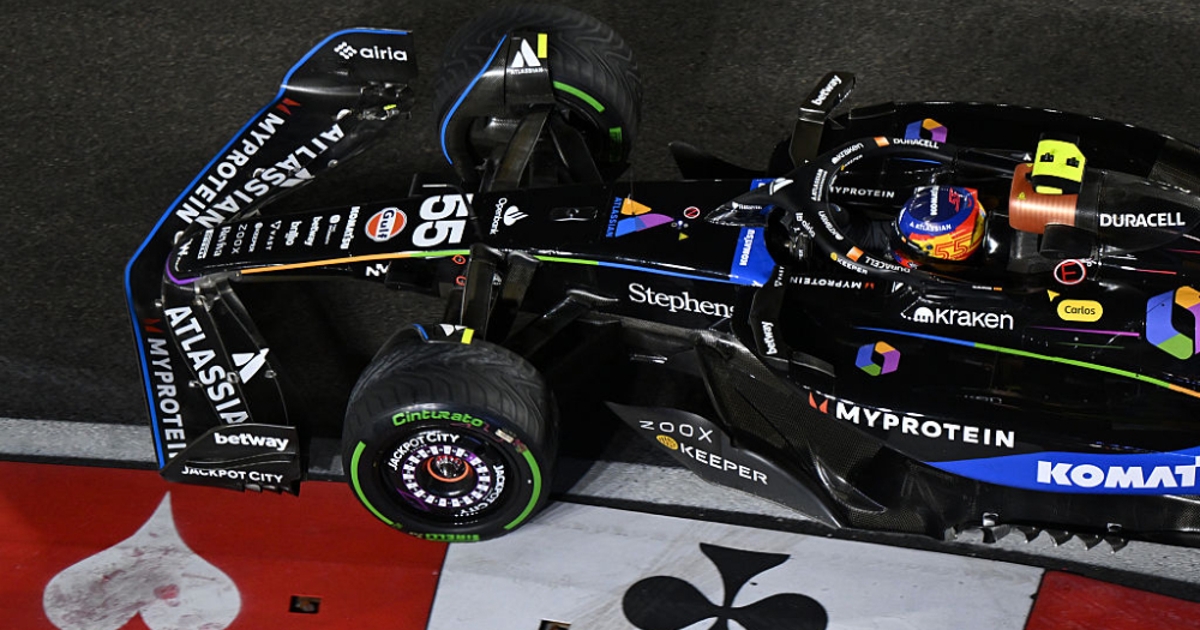
Carlos Sainz’s Performance at the Las Vegas Grand Prix: A Closer Look
Carlos Sainz, the talented driver for Williams, felt optimistic about his performance at the Las Vegas Grand Prix, believing he had achieved a lap time that might secure him pole position. However, he acknowledged that the competition would be fierce as he aimed for a top finish during the race on Saturday night. His final attempt at the end of Q3 had initially placed him in a provisional pole position, but he was ultimately outpaced by Max Verstappen. Lando Norris then came in with an impressive lap, finishing 0.3 seconds ahead of both drivers, even amidst the challenging wet conditions.
The Thrill of Qualifying
Reflecting on his qualifying session, Sainz expressed a mix of excitement and realism. He admitted that while he had dared to dream about clinching pole position, the presence of other cars finishing their laps made him cautious. Nevertheless, throughout the qualifying rounds, he maintained confidence in securing a favorable grid position. "It was a very good lap," Sainz remarked. "I thought it was worthy of pole position. When I crossed the finish line, I found myself in P1, but realizing I was the first to complete my lap made me ponder its longevity, especially with the two formidable drivers trailing behind."
Despite the extreme conditions, Sainz credited his performance on the extreme wet tires used during Q1 and Q2, noting that he felt particularly competitive. He expressed a wish that the weather had remained wet, as it seemed to enhance his driving experience and confidence. "Every time we hit the track, we were P1," he noted. This confidence, however, was tempered during Q3 when he switched to intermediate tires. Given the less-than-stellar performance in FP3, he anticipated a slower lap time, yet was pleasantly surprised with his final outcome.
Navigating the Challenges of Qualifying
Sainz’s weekend had been marked by disruptions, making it difficult for him to showcase his true pace consistently at the top of the time sheets. He recognized that in dry conditions, his performance might not have been as strong, likely landing him somewhere between P5 and P8. The wet weather, however, provided him with an opportunity to shine, allowing him to lead during parts of Q1, Q2, and Q3. He expressed skepticism about his ability to maintain a P3 position if the race were to take place in dry conditions, while acknowledging that he had demonstrated solid speed in the wet.
With both Norris and Verstappen occupying the front row, Sainz anticipated that the race would be highly competitive. "I don’t expect either of the top contenders to be overly cautious," he stated. Instead, he believed that the outcome would hinge on the pace of the drivers rather than the risks they were willing to take. Sainz noted that starting from the front row is a significant advantage, and he aimed to capitalize on this opportunity.
Preparing for the Race Ahead
As Sainz prepared for the race, his focus shifted to maintaining his position. He was well aware that several fast cars, including those from Mercedes and the other McLaren team, were poised to challenge him. "I’m going to give it my best shot to hold on to that P3," he asserted, recognizing the strength of the competition. Sainz drew on his previous experiences in Baku and Austin, where he had fought hard for podium finishes. His strategy was clear: minimize mistakes and make himself as challenging to overtake as possible.
The Las Vegas Grand Prix presented a unique set of challenges, and Sainz was determined to navigate them effectively. With the added pressure of the top drivers around him, he aimed to leverage every ounce of skill and strategy to secure a result that exceeded expectations. "I’ll be pushing to make it happen," he concluded, embodying the relentless determination that has characterized his racing career.
Analyzing the Competitive Landscape
The Las Vegas Grand Prix is not just another race on the calendar; it represents a critical juncture in the championship battle. For drivers like Sainz, every position gained can have significant implications for both the race and the overall standings in the championship. As he prepared to face off against formidable competitors like Verstappen and Norris, Sainz remained acutely aware of the dynamics at play.
The importance of qualifying cannot be overstated, particularly in a sport where every fraction of a second counts. The ability to secure a strong grid position can often dictate the outcome of the race, especially in a competitive field. Sainz’s performance in qualifying demonstrated his potential, but the true test would come during the race itself.
The Road Ahead: Race Strategy and Execution
As race day approached, Sainz’s team worked diligently to refine their strategy. Understanding the tire choices, weather conditions, and potential for incidents on track was paramount. The Las Vegas circuit, known for its high-speed sections and intricate corners, would require precision and skill. Sainz’s experience would play a crucial role as he navigated the challenges ahead.
The strategy would also involve managing tire degradation and fuel consumption, particularly if the race unfolded under varying weather conditions. Sainz’s familiarity with the track and his ability to adapt to changing circumstances would be vital assets as he aimed to maintain his position and fend off challenges from behind.
The Impact of Team Dynamics
In motorsport, teamwork is critical. Sainz recognized the importance of synergy between him and his engineering team. Continuous communication and feedback were essential for fine-tuning the car’s performance and ensuring that it was optimized for the unique demands of the Las Vegas circuit. The collaboration between driver and engineer can often be the difference between a solid performance and a podium finish.
Sainz’s relationship with his team was built on trust and mutual understanding. His feedback from the car would inform necessary adjustments, whether it be in terms of aerodynamics, suspension settings, or tire management strategies. This partnership would be put to the test as the race unfolded.
Looking Ahead: The Championship Picture
As the season progressed, the implications of each race became more pronounced. Sainz was aware that his performance at the Las Vegas Grand Prix could have ramifications for the overall championship standings. Each point earned could be crucial, and maintaining strong finishes would be vital for his team’s aspirations in the Constructors’ Championship.
The competitive nature of Formula 1 means that positions are fiercely contested, and every driver is acutely aware of the stakes involved. Sainz’s ability to remain focused and resilient in the face of pressure would be key as he sought to solidify his position in both the race and the championship.
Conclusion
Carlos Sainz’s experience at the Las Vegas Grand Prix encapsulated the essence of Formula 1 racing: the thrill of competition, the intricacies of strategy, and the relentless pursuit of excellence. As he prepared for the race, he embodied the spirit of a driver determined to make his mark on the track. With the stakes high and a formidable field ahead, Sainz was ready to take on the challenge, aiming for a result that would not only reflect his talent but also contribute to his team’s success in the championship.
