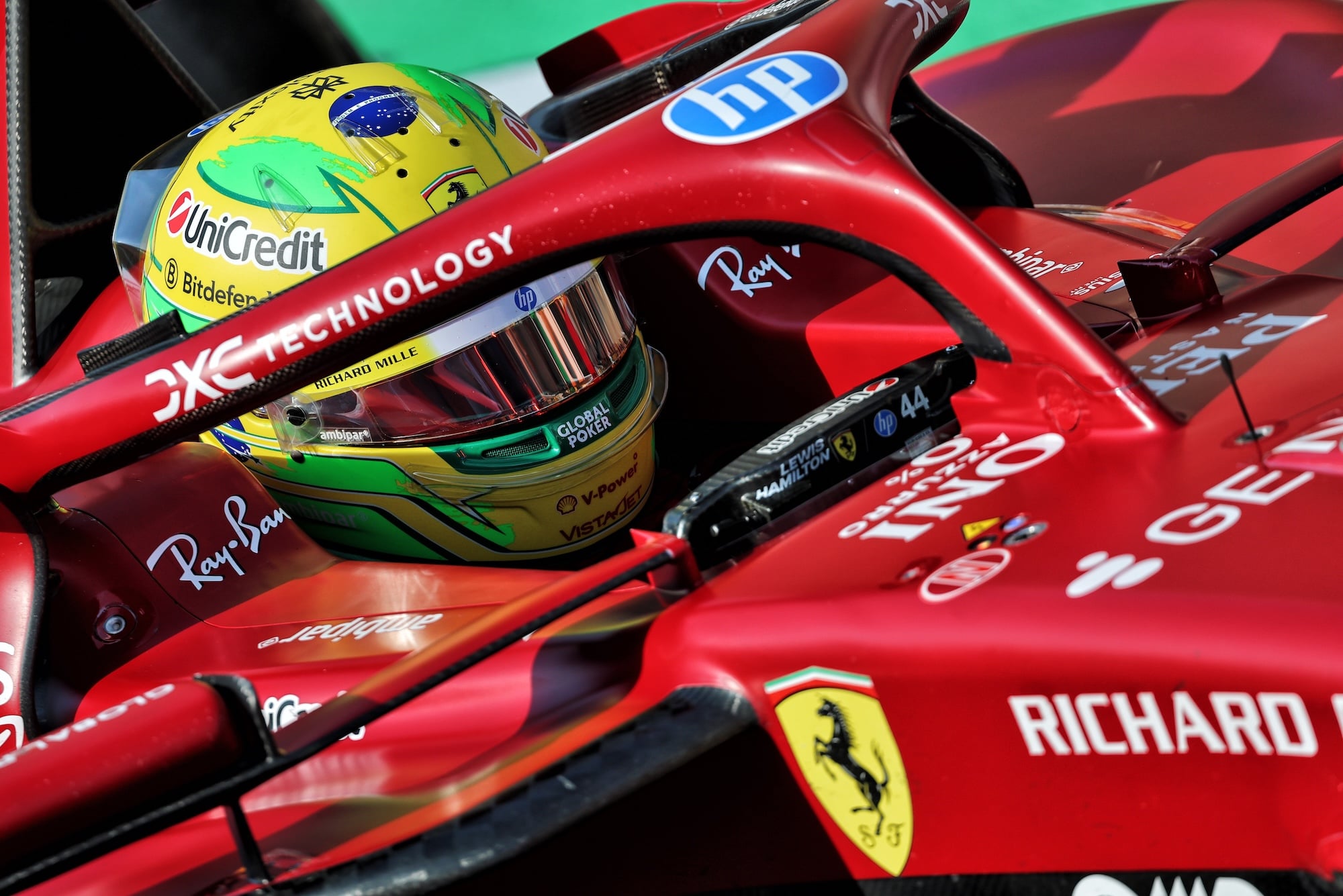
Hamilton Expresses Frustration After Qatar Grand Prix
In the aftermath of the Qatar Grand Prix in Formula 1, Lewis Hamilton voiced his disappointment regarding the stark performance gap between Ferrari and other teams, particularly Williams. The seven-time F1 champion pointed out that the stagnation in development of the SF-25, the model Ferrari has been utilizing throughout the 2025 season, became glaringly apparent in light of Williams’ podium finish, where Carlos Sainz secured a commendable third place.
Hamilton, who is in his debut season with Scuderia Ferrari, lamented the fact that the team has yet to secure a race victory this year. With only the Abu Dhabi Grand Prix remaining to wrap up the season, the pressure is mounting. The Italian team made a strategic decision to halt development on the current car early in the season to redirect their efforts toward the 2026 model, which will be the first to compete under the new technical regulations set by Formula 1. While this choice may be beneficial for the future, it has undeniably compromised the team’s immediate performance.
Hamilton’s Perspective on Ferrari’s Challenges
Hamilton didn’t hold back when discussing the inherent limitations of the SF-25, asserting that despite Ferrari’s efforts to fine-tune the car and tap into its potential, the fundamental issues could not be overcome through modifications alone. He expressed how arduous it has been to maintain pace with rival teams. Particularly noteworthy was Hamilton’s astonishment at how Williams managed to achieve such a significant result, nearly being overtaken by their car during the race. His surprise underscored the competitive nature of the sport and the unexpected turns it can take.
The British driver also took the opportunity to commend the progress made by Williams and Sauber throughout the season. He emphasized that, in contrast to Ferrari, both teams exhibited consistent development and were able to achieve improved results. Hamilton remarked, "They have done a fantastic job," acknowledging the strides made by his competitors.
The Road Ahead: Lessons for Ferrari
As the 2025 season draws to a close with Ferrari still without a victory, Hamilton and the Scuderia are urged to concentrate on the lessons learned this year to pave the way for improvements next season. The driver, who supports shifting focus to the 2026 model, is optimistic that the future could bring new challenges and better outcomes for the team.
With the 2026 regulations on the horizon, Ferrari’s strategy to pause development of the SF-25 might be a gamble that pays off in the long run, but for now, the team must grapple with the reality of their current situation. The competitive landscape of Formula 1 is ever-changing, and the ability to adapt is crucial for success.
Insights from the Qatar Grand Prix
The Qatar Grand Prix served as a stark reminder of the evolving dynamics within the sport. The performance of various teams is influenced by a range of factors, from engineering innovations to driver skill. Hamilton’s reflections post-race highlight the importance of continuous improvement and the relentless pursuit of excellence that defines Formula 1.
Hamilton’s acknowledgment of the challenges faced by Ferrari resonates with the broader narrative of the sport, where teams must navigate the complexities of car development, regulatory changes, and competition from rival teams. In a sport where milliseconds can define a race, the ability to innovate and adapt quickly is paramount.
The Competitive Landscape of Formula 1
This season has showcased a dynamic competitive landscape, with teams like Williams and Sauber making significant strides. Their ability to develop and optimize their vehicles has allowed them to capitalize on opportunities, leading to impressive finishes in races. Hamilton’s comments underscore the notion that success in Formula 1 is not solely determined by historical performance or the prestige of a team but rather by the continuous effort to evolve and improve.
As the season concludes, the focus will undoubtedly shift toward the upcoming challenges, including how teams will respond to the new regulations in 2026. The anticipation surrounding these changes adds an extra layer of excitement to the sport, as teams strive to find the perfect balance between innovation and performance.
Embracing Change: Ferrari’s Vision for the Future
Ferrari’s decision to redirect its focus toward the 2026 model reflects a long-term vision aimed at sustaining competitiveness in an ever-evolving sport. While the immediate results may not be favorable, the strategic pivot could position the team to better contend with rivals in the upcoming seasons. Hamilton’s support for this shift indicates a shared understanding within the team that long-term success requires bold decisions and a willingness to embrace change.
One of the critical aspects of this transition will be how effectively Ferrari can leverage the lessons learned from the SF-25. Analyzing performance data, identifying areas for improvement, and fostering innovation will be essential to ensure that the new model can compete at the highest levels.
The Role of Driver Feedback in Development
Driver feedback is an invaluable asset in the development of a Formula 1 car. Hamilton’s insights regarding the SF-25 provide critical data for engineers and designers as they work on the upcoming model. Understanding the limitations and strengths of the current vehicle allows the team to prioritize specific areas in the design and engineering process for the 2026 car.
Moreover, Hamilton’s perspective as a seasoned driver can guide the team in making informed decisions about aerodynamics, handling, and overall performance. Collaborating closely with drivers ensures that the final product aligns with their needs and preferences, ultimately enhancing the car’s competitiveness on the track.
Looking Forward: Excitement for the Future
The upcoming Abu Dhabi Grand Prix will mark the conclusion of the 2025 season, but the excitement surrounding Formula 1 is far from waning. As teams prepare for the new regulations and the challenges that lie ahead, fans and participants alike are eager to see how the landscape will shift.
Hamilton’s reflections on the season serve as a reminder of the commitment and dedication required to excel in Formula 1. The sport is constantly evolving, and the pursuit of excellence is a never-ending journey. The anticipation of the new season brings with it hopes for improved performance, exciting races, and a renewed competitive spirit.
Conclusion
In the world of Formula 1, where every detail counts, the narratives of drivers and teams intertwine to create a compelling story of ambition, struggle, and triumph. Lewis Hamilton’s candid remarks following the Qatar Grand Prix encapsulate the essence of this dynamic sport, emphasizing the importance of growth, adaptation, and the relentless pursuit of success.
As the racing community looks forward to the future, the lessons learned from the 2025 season will undoubtedly shape the strategies and aspirations of teams, including Ferrari. The journey continues, and the thrill of the chase remains at the heart of what makes Formula 1 a captivating spectacle for fans around the globe.
