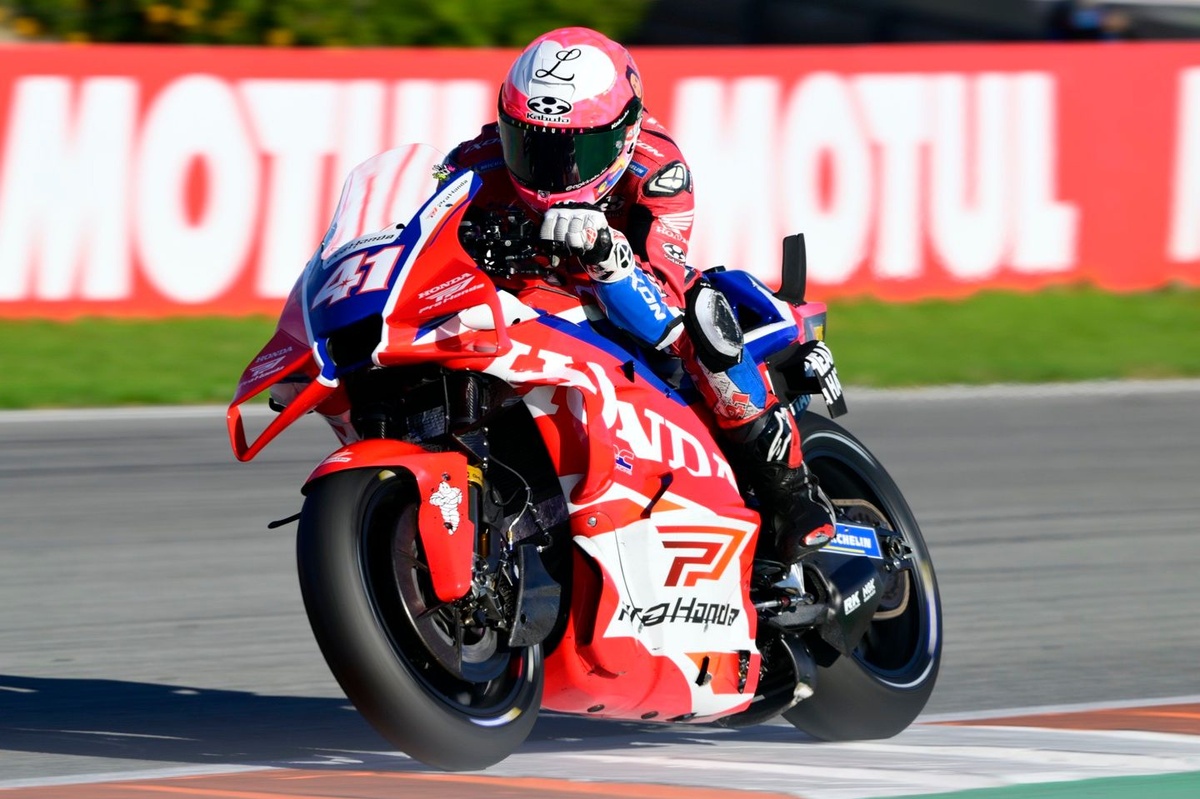
Aleix Espargaro Highlights Honda’s 2025 MotoGP Engine Improvements
In the competitive realm of MotoGP, Aleix Espargaro has emphasized the significance of Honda’s engine advancements for the 2025 season, stating that these updates played a crucial role in maintaining Honda’s position within the sport. According to Espargaro, without these enhancements, the manufacturer would struggle to secure a spot in the top ten.
Honda, one of only two brands benefiting from extensive allowances under MotoGP’s concession regulations, made it possible to integrate a variety of new components into the RC213V throughout the racing season. This flexibility allowed Honda to enhance its previously underperforming engine while competitors like Ducati, Aprilia, and KTM were constrained by the engine freeze, which limited their capacity to make modifications.
A Strong Foundation and Notable Achievements
Starting the season with a strong base motorcycle, Honda experienced one of its most successful seasons in recent years. Among its accomplishments was a victory at the rain-soaked French Grand Prix, along with several podium finishes in dry conditions at Silverstone, Motegi, and Sepang. By the conclusion of the season, Honda had outperformed its traditional rival Yamaha in the manufacturer standings, wrapping up the year in fourth place with 285 points, a significant increase from the merely 75 points accumulated in the previous year.
Espargaro, who transitioned to a test rider role with Honda after concluding his racing career in MotoGP, praised the extensive development efforts undertaken by the manufacturer in 2025. He remarked, “The vast amount of material that we incorporated, the countless laps I completed testing various components, and how much we transformed the bike over these past six months has been remarkable.”
The Importance of Testing and Development
Reflecting on the test team’s contributions, Espargaro shared his belief that the situation would be dramatically different without their input. He clarified that while he played a role, the real credit goes to the testing opportunities that allowed for thorough evaluations of numerous components. He highlighted the support provided to fellow riders Joan Mir and Luca Marini, saying, “For instance, we had three engine updates during the season, and the engine we have now is incredibly fast. Ducati, on the other hand, does not have the option to make engine changes.”
Espargaro pointed out that if Mir and Marini had been racing with the original engine from the beginning of the season, they likely would not have been able to contend for top ten finishes.
Standout Performances and Transformative Updates
The initial half of the season featured several standout performances for Honda, most notably highlighted by LCR rider Johann Zarco’s memorable victory in France. However, it was after the summer break that the factory team began to achieve consistent top-tier results. A substantial mid-season update significantly altered the trajectories of Mir and Marini, turning them into regular top-five contenders beginning with the Austrian Grand Prix.
Mir excelled, securing a commendable third-place finish on Honda’s home ground in Japan, followed by another third-place finish in Malaysia just weeks later. This marked a pivotal moment for Mir, as it was the first time since joining Honda in 2023 that he felt genuinely comfortable with the bike.
Analyzing Improvements Across the Board
When asked about the key factors contributing to his improved performance, Mir attributed much of his success to the updated engine. However, he also acknowledged that Honda had made substantial progress in various other areas. “For me, it is not just one thing. Considering our previous position, it was never about a single factor. It involved enhancing aerodynamics, engine performance, grip, electronics, and gaining a better understanding of our challenges.”
Mir further elaborated on the engine’s delivery and character, stating that it significantly impacted his experience compared to other Honda riders. He noted, “I’m more sensitive to throttle control, while the other riders might cope better with less connection, which poses more of a challenge for me. Additionally, the feeling of braking stability at the front has improved, even though it’s not yet perfect; I’m at a much better level now.”
Honda’s Competitive Edge
The competitive landscape of MotoGP has always been fiercely contested, and Honda’s ability to adapt and innovate is essential for maintaining relevance in this high-stakes environment. The updates introduced in 2025 have not only revitalized Honda’s performance but have also underscored the importance of continuous development in the sport. Espargaro’s insights into the extensive testing and upgrades reflect a broader commitment to excellence that could set a precedent for future seasons.
As the season progressed, Honda’s strategic decisions regarding engine updates and modifications showcased the brand’s determination to reclaim its former glory. The collaboration between riders, engineers, and test teams has proven invaluable in achieving these goals, allowing Honda to navigate the challenges posed by other leading manufacturers.
The Road Ahead for Honda in MotoGP
Looking forward, the path for Honda in MotoGP appears promising, particularly with the momentum gained from the 2025 season. The successful integration of engine updates and the collaborative efforts of the team are expected to lay a solid foundation for future races. With the insights gained from this season, Honda aims to build on its achievements and continue pushing the boundaries of performance.
As the MotoGP landscape evolves, Honda’s commitment to innovation and adaptation will play a pivotal role in shaping its future endeavors. The brand’s ability to respond to challenges and leverage opportunities will be crucial as it strives to enhance its competitive edge in the years to come.
In summary, the 2025 MotoGP season has been a transformative year for Honda, characterized by significant advancements in engine performance and overall bike development. Aleix Espargaro’s experiences as a test rider have underscored the importance of continuous improvement and collaboration within the team. As Honda looks ahead to future seasons, the lessons learned and successes achieved in 2025 will undoubtedly influence its strategies and aspirations in the ever-competitive world of MotoGP racing.
