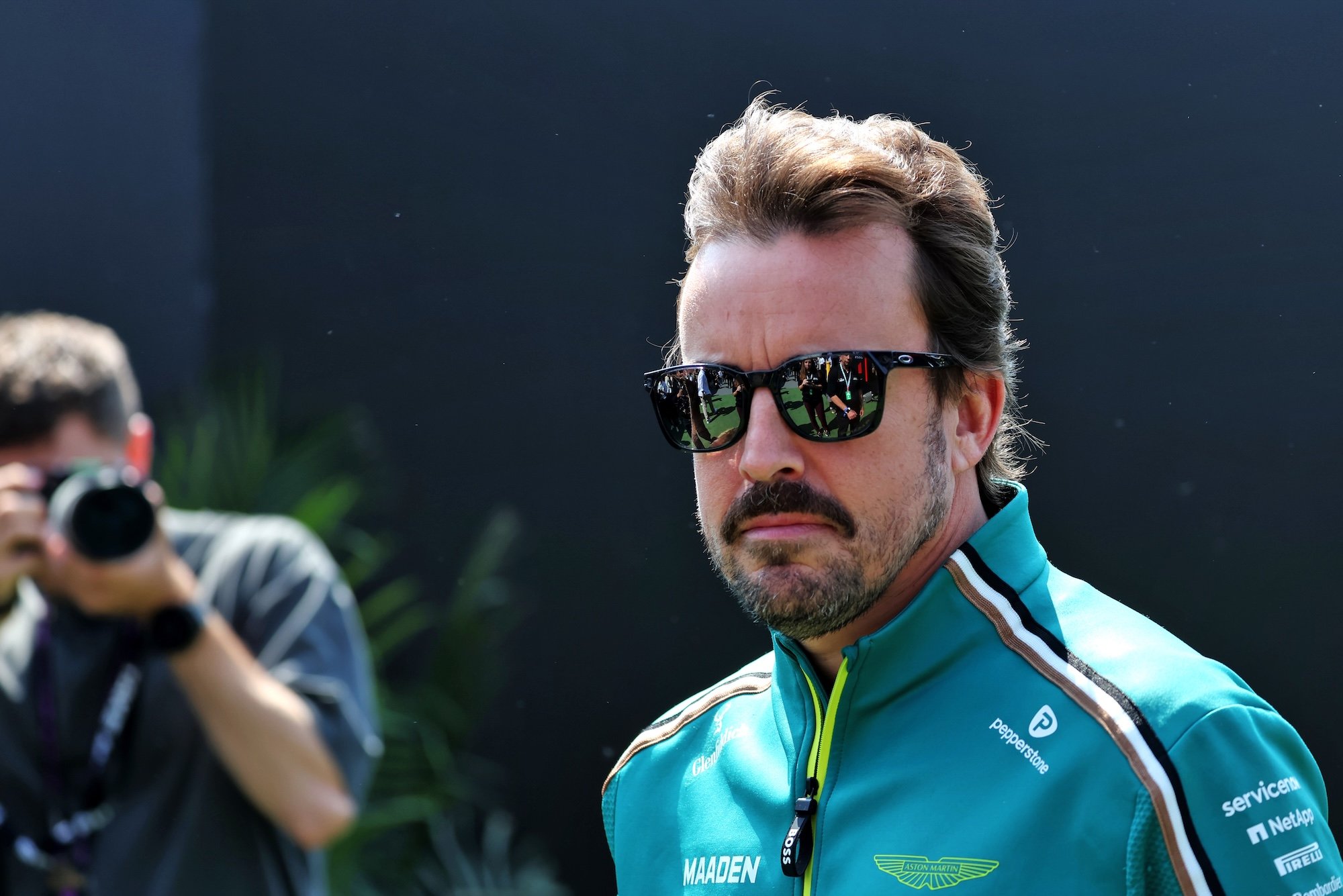
The Enduring Rivalry: Fernando Alonso and Lewis Hamilton in Formula 1
The intense rivalry between Fernando Alonso and Lewis Hamilton that emerged during the 2007 Formula 1 season remains a hot topic of discussion nearly two decades later. Recently, Jacques Villeneuve, the 1997 world champion, weighed in on this historical rivalry by defending the Spanish driver. Villeneuve placed significant blame on Ron Dennis, the then-team principal of McLaren, for disrupting the internal balance of the team that season.
A Look Back at the 2007 Season
In a recent episode of the Red Flags Podcast, Villeneuve revisited the behind-the-scenes dynamics of a season that was anything but ordinary. Alonso, who had just arrived at McLaren as a two-time world champion, faced a competitive environment that was far from what he anticipated. Villeneuve argued that Dennis effectively placed all of McLaren’s support behind the rookie Hamilton, which fundamentally undermined Alonso’s standing within the team right from the start.
“It’s essential to remember that McLaren signed Alonso as a two-time world champion. He wasn’t just a driver; he was a significant asset for sponsors and the team as a whole. But then Ron Dennis announced Hamilton and essentially communicated, ‘Okay, Hamilton is our champion; we are not on your side, Fernando.’ That just doesn’t make sense,” Villeneuve criticized.
The Pressure Cooker of McLaren
Villeneuve emphasized that the leadership’s approach at McLaren left Alonso with little choice but to fight back. "When a team principal destabilizes a team in such a way, you have to stand your ground," he explained. "Alonso was not in a fair situation at that time, and he had to wage his own battle within the team. This ultimately led to the team’s downfall."
The 2007 season is often remembered as one of the most dramatic in Formula 1 history. With Hamilton, a rookie at the time, and Alonso, a seasoned champion, both driving for McLaren, they inadvertently began to siphon points from each other. This internal conflict allowed Kimi Raikkonen, driving for Ferrari, to clinch the championship by a mere point, marking one of the most thrilling turnarounds in the sport’s history.
The Aftermath of the Rivalry
The consequences of this rivalry were profound. Not only did McLaren lose the championship, but the relationship with Alonso deteriorated significantly. After just one season, Alonso departed McLaren and returned to Renault in 2008, ushering in a tumultuous period in his career while reinforcing the notion that the events of 2007 were pivotal for his trajectory.
Villeneuve, who had raced alongside Alonso at Renault in 2004, noted that the circumstances faced by the Spaniard at McLaren were particularly unjust given his wealth of experience and accomplishments. According to Villeneuve, the internal pressure created within McLaren severely hampered Alonso’s ability to showcase his full potential.
Hamilton’s Rise Amidst the Turmoil
On the other hand, Hamilton emerged from this challenging situation with remarkable success, finishing as the runner-up in his debut season and showcasing the talent that would eventually elevate him to a seven-time world champion. Nevertheless, Villeneuve argues that the narrative suggesting Hamilton "overcame" Alonso that year doesn’t capture the entire picture.
“It’s not just about comparing points or positions. One must consider what transpired within the team. Fernando wasn’t afforded the same treatment, and that altered everything,” Villeneuve concluded.
Team Dynamics and Their Importance
The events of the 2007 season serve as a poignant reminder of how critical team management can be, not just for on-track results but also for maintaining healthy relationships between elite drivers. Villeneuve believes that Ron Dennis’s missteps in 2007 highlight a vital lesson: internal balance is essential for high-caliber talents to truly shine.
In the world of Formula 1, where every fraction of a second counts, the psychological and emotional dynamics between drivers can be just as crucial as their technical skills. As teams strive for excellence, understanding the interpersonal relationships that fuel performance becomes increasingly important.
The Legacy of the 2007 Season
The legacy of the 2007 rivalry between Alonso and Hamilton continues to resonate within the Formula 1 community. It stands as a case study on the impact of team dynamics and management strategies. The season was not only a battle of skill and speed but also a clash of personalities, expectations, and the inherent pressures of competing at the highest level.
For fans and analysts alike, the rivalry encapsulates the drama, tension, and unpredictability that make Formula 1 so captivating. The story of Alonso and Hamilton is a testament to the complexities of human relationships in a competitive environment, illustrating that success in motorsport is often about more than just raw talent.
Conclusion
As the saga of Alonso and Hamilton continues to unfold, it serves as a reminder of the intricate layers that exist within the world of Formula 1. The lessons learned from the 2007 season remain relevant today, as teams and drivers navigate the ever-evolving landscape of the sport. The rivalry not only shaped the careers of two of the sport’s greatest drivers but also left an indelible mark on the history of Formula 1, ensuring that the debates surrounding it will persist for years to come.
In the end, the story of Alonso and Hamilton is not just about racing; it’s about the human spirit, competition, and the relentless pursuit of excellence.
