Behind the Scenes of the Singapore Grand Prix: The Essential Role of Marshals
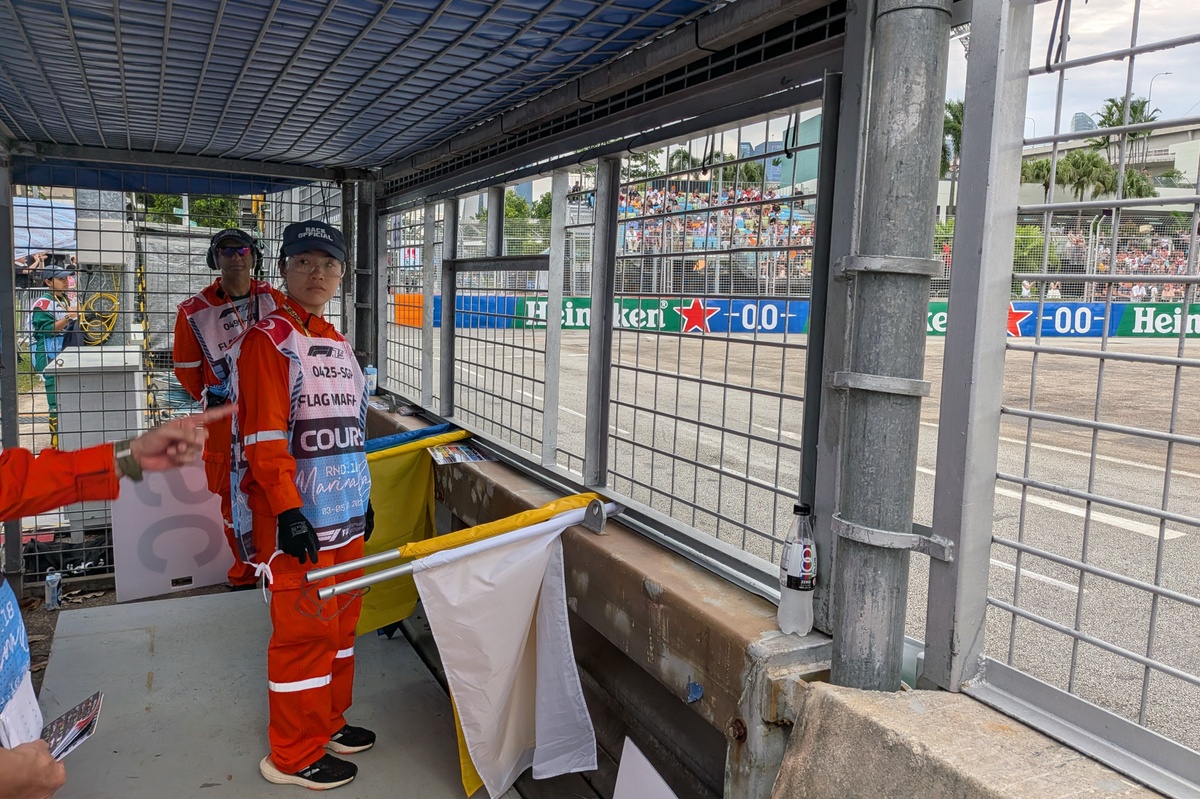
As the clock winds down to the beginning of the practice session at the Formula 1 Singapore Grand Prix, the atmosphere is charged with anticipation. The radio crackles to life, signaling the start of one of the most thrilling weekends in motorsport. “30 seconds,” a voice announces, and soon after, we hear the familiar phrase: “Cars on track.” Standing at Turn 5, a group of dedicated officials clad in bright orange overalls prepares for an exciting yet demanding day of work.
The Backbone of Formula 1: Who Are the Marshals?
In the world of Formula 1, marshals play a crucial role in ensuring the safety and smooth operation of races. The Singapore Grand Prix boasts around 1,100 marshals, a number that surpasses that of many other races. These volunteers come from diverse backgrounds and wear different colored tabards to denote their specific responsibilities. Track marshals are tasked with clearing debris, recovery marshals deal with stranded vehicles, and flag marshals manage the various flags and light signals that communicate crucial information to drivers.
Safety is of utmost importance, which is why fire marshals are trained to handle any fire hazards that might arise, while observers watch for potential dangers. Each sector of the track is overseen by a sector chief, ensuring that every detail is monitored closely.
Experience in Action: The Leadership of Sector Chief Ganesh
At Sector 5, we meet Ganesh, an experienced sector chief who has been part of this dynamic environment for 16 years. Originally from Chennai, India, and now residing in Singapore, Ganesh is accompanied by two trainee sector chiefs, affectionately called "tangos," who are learning the intricacies of race operations. As we prepare for the practice session, Ganesh emphasizes the importance of communication: "We are the eyes and ears of the Clerk of the Course. While race control has their cameras, they depend on us to report what happens on the track. If a car hits the wall but can continue, we need to assess if there’s any damage that could affect the session."
The Unique Challenges of Street Racing
The weather in Singapore can be unpredictable, often characterized by dark, ominous skies. However, on this Friday afternoon, the rain is light, allowing for a relatively calm practice session as drivers test the limits of their machines on the tight street circuit. One of the observers reports a plastic bottle near the racing line, but after quick deliberation, it is decided that it does not pose a significant risk. Meanwhile, the smoking brakes of Alex Albon’s Williams do not go unnoticed, prompting fire marshals to be ready for action should the need arise.
Turn 5 is known for being a crucial braking zone, which is why it is staffed with an unusually high number of marshals—18 in total—who range from very experienced to newcomers. This blend of expertise ensures that the station is prepared for any situation.
Staying Alert: The Reality of Marshal Duties
Contrary to what some might believe, a smooth practice session doesn’t mean that marshals are simply waiting for action. Staying alert and trained is essential, as Ganesh reminds us, “A street circuit is unique because anything can happen. If you prepare for 100 scenarios, it’s the 101st that will actually occur.” He shares a memory of a crash involving Lance Stroll during qualifying in 2023, which caught everyone off guard. “You have to be ready for anything,” he says.
Reflecting on the weekend’s events, Ganesh acknowledges that while they celebrate the successes, they also learn from any mistakes. The diversity among the marshals is a testament to the global appeal of motorsport. In a place like Singapore, which has limited motorsport activities, marshals receive extensive training and safety briefings before the event, relying on experienced individuals from around the world to fill various roles.
The Journey of a Marshal: From Grassroots to Grand Prix
Many marshals begin their journey at local levels, working their way up through various motorsport events. Sophia, a 30-year-old marshal from the UK, shares her experience of starting at Silverstone and progressing through events like Formula E and F1. "I fell in love with marshalling right away,” she explains. “There’s a real sense of family within the community. You work together for several days at the same post, getting to know each other and forming lasting friendships."
While becoming a marshal is open to almost anyone, it is not a path for everyone. The voluntary nature of the role means that traveling to international events comes with personal costs. In Singapore, for example, marshals report for duty as early as 10:45 AM and remain on their feet until the action concludes around 11 PM. The job does carry risks, as demonstrated by the close call involving Liam Lawson at the recent Mexico Grand Prix.
The Appeal of Community and Camaraderie
The community aspect is a significant draw for many marshals. Sophia notes, "It’s not just about being close to the action; it’s also the friendships you build along the way." The influx of interest in motorsport, especially after the success of shows like Netflix’s “Drive to Survive,” has made the marshalling community more diverse. Sophia recalls her feelings of isolation as one of the few female marshals of South Asian descent in the UK. However, she has seen change, thanks to initiatives by Motorsport UK and the FIA, including programs designed to increase representation.
The Changing Face of Motorsport
Dom, a 71-year-old marshal from Melbourne, also shares his experiences, noting that the interest in marshalling surged after the popularity of “Drive to Survive.” Many younger individuals are now joining the ranks, bringing fresh energy and enthusiasm to the community. “We were short on volunteers before the pandemic,” Dom recounts. “Now, we have hundreds of new applications, especially from young people eager to get involved.”
The camaraderie among marshals transcends age and background. Whether they are working at a local club event or the prestigious Formula 1 races, marshals form a traveling family, united by their love for motorsport and commitment to safety.
A Career Path in Motorsport
Rui Marques, the F1 race director, exemplifies how marshalling can lead to broader career opportunities within the motorsport industry. Starting as a marshal at the Estoril circuit in Portugal, he has since held various positions, including scrutineer and steward, eventually becoming the race director for F1. “I found a family wherever I went in the motorsport world,” he shares. Marques emphasizes the importance of training and preparation for marshals, stating, “A good marshal is someone who is ready for action. They might only need to intervene a couple of times during a weekend, but they must be prepared.”
Marques also acknowledges the trend of younger individuals joining the marshalling community, which is a positive development. The FIA has recognized the need for enhanced training and has established a new Officials Department to further support marshals, stewards, and race directors.
The Reality of Race Day: Quick Reactions and Teamwork
As the second practice session begins, the routine is familiar: race control checks in, and the session gets underway. However, this time, the action quickly escalates when George Russell hits the wall, prompting Dom to wave the red flag. Recovery vehicles are dispatched to repair the damage, and once the track is safe, the marshals are ready to resume their duties.
The camaraderie is palpable as marshals share moments of laughter and support amid the high-pressure environment. Pei, a female marshal from Malaysia, expresses her love for F1 and the teamwork required during events. "It’s a demanding job, but we work together to ensure everything runs smoothly," she explains.
Beyond Formula 1: The Value of Local Events
While Formula 1 may be the pinnacle of motorsport, it’s essential to recognize that grassroots racing plays a vital role in the motorsport ecosystem. Local events provide invaluable training experiences, and many skilled marshals prefer to work in these settings, where they can be more hands-on. Marques points out, "If you start with F1, you can become detached from the realities of other racing categories. Club racing has its own set of challenges that can teach valuable lessons."
Conclusion
The world of motorsport is much more than just the races; it’s about the people who work tirelessly behind the scenes to ensure everything runs smoothly. The marshals, with their dedication and passion, are the unsung heroes of the sport. They come together from diverse backgrounds, united by a common goal of safety and teamwork. Whether at a grand prix or a local track, their commitment to the sport is what keeps the wheels of motorsport turning.
If you’re inspired by the stories of these dedicated individuals and wish to join their ranks, reach out to your local motorsport association to begin your journey into the thrilling world of marshalling.
