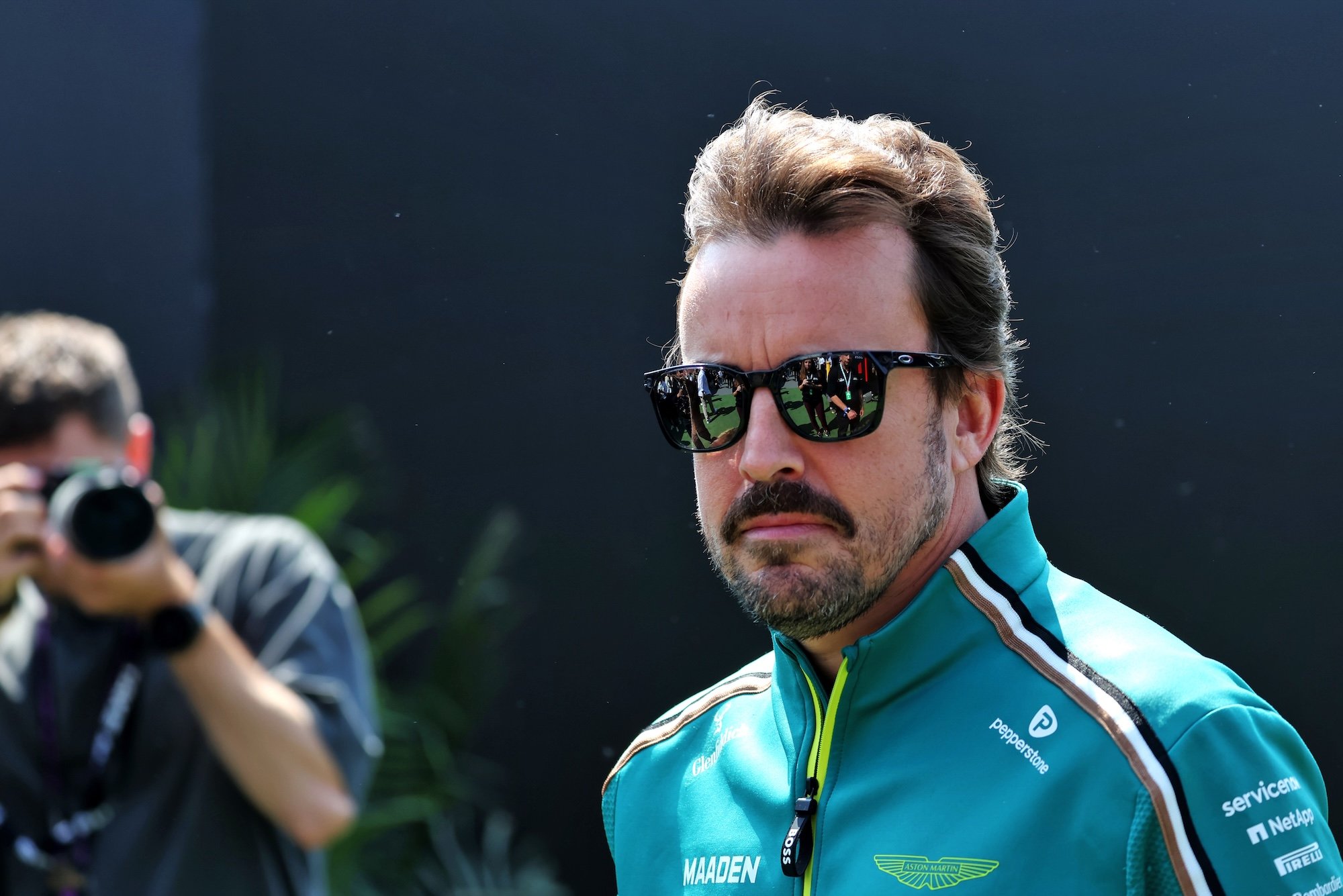
Fernando Alonso’s Performance at the Singapore Grand Prix: An In-Depth Analysis
The Singapore Grand Prix has always stood out as a challenging event in the Formula 1 calendar, and this year was no exception. Fernando Alonso, driving for the Aston Martin team, showcased impressive skill and adaptability during the practice sessions leading up to the race. His performance has drawn attention not only for his speed but also for the unique adjustments he has made to his driving style and car setup, particularly regarding his steering ratio.
Alonso’s Practice Session Highlights
In the initial free practice session, Alonso topped the time sheets, signaling his intent and readiness for the weekend ahead. By the conclusion of the second practice session, he secured a commendable fourth place, demonstrating consistency and competitiveness with his AMR25. His performance has been particularly noteworthy, especially given the demanding nature of the Singapore circuit, which is known for its tight corners and challenging layout.
Alonso’s ability to navigate this intricate track with confidence is a testament to his experience and skill as a veteran driver. Throughout the summer, he had shown promising pace on circuits that require high aerodynamic efficiency, and this proficiency has translated well to the unique challenges posed by Singapore.
Steering Ratio Adjustments
One of the most significant aspects of Alonso’s setup this weekend has been his decision to employ a wider steering angle in his Aston Martin. This adjustment has not gone unnoticed, with former F1 champion Jenson Button commenting on the impact this setup has on Alonso’s driving. According to Button, Alonso seems to be utilizing a different steering ratio that allows for a greater steering angle than what is typically seen.
This wider steering angle can be particularly advantageous on a circuit like Singapore, where precision and control are paramount. Button explained that Alonso appears to have a steering box with a different ratio, enabling him to make more pronounced steering adjustments without drastically altering the car’s balance. This is crucial in a place where small movements can lead to significant changes in handling.
The Mechanics of Steering Ratio
To understand the implications of Alonso’s steering adjustments, it’s essential to delve into the mechanics of steering ratios. A higher steering ratio means that the driver must turn the steering wheel further to achieve the desired angle of turn on the tires. This setup can reduce the physical strain on the driver, as it allows for smoother, less taxing steering movements.
However, there is a caveat: while a higher ratio may make it easier to turn the wheel, it requires more extensive and precise movements to achieve the same result. In Alonso’s case, this means he often finds himself crossing his arms during turns, a maneuver that could potentially complicate his ability to maintain the ideal steering angle.
Button raised concerns regarding the possibility of Alonso becoming "tangled up" in his steering movements, which might hinder his performance. Nevertheless, Alonso’s extensive experience in the sport suggests that he is well-equipped to manage these challenges effectively.
Physical Demands of the Singapore Grand Prix
The Singapore Grand Prix is notorious for its physical demands on drivers, primarily due to its street circuit layout and the extreme heat and humidity typical of the region. The combination of these factors makes for a grueling race that tests both physical endurance and mental fortitude.
Alonso, now at 44 years old, has had to adapt his driving style to accommodate these conditions. The adjustments he has made to his steering system likely play a crucial role in helping him conserve energy throughout the race. By employing a higher steering ratio, he is potentially reducing the physical toll on his body, allowing him to maintain focus and performance over the demanding race distance.
Furthermore, the street circuit is characterized by its lack of overtaking opportunities, meaning that drivers must be exceptionally precise in their movements. Any small error can lead to significant consequences, making Alonso’s careful calibration of his steering even more critical.
Alonso’s Experience and Adaptability
Alonso’s success at the Singapore Grand Prix can also be attributed to his vast experience. Having competed in Formula 1 for over two decades, he has encountered a multitude of racing conditions and challenges. This wealth of experience enables him to make informed decisions about his car’s setup and driving style, allowing him to adapt quickly to the ever-changing dynamics of a race weekend.
His choice to implement a wider steering angle demonstrates not only his willingness to innovate but also his understanding of the nuances of car handling on a complex circuit. Experienced drivers often possess the instinct to make adjustments that optimize their performance, and Alonso’s approach reflects this critical aspect of competitive racing.
The Role of Team Strategy
While Alonso’s individual skill is a significant factor in his performance, it’s important to recognize the role of the Aston Martin team in supporting his efforts. The collaboration between driver and team is essential in fine-tuning the car to meet the demands of the circuit. Engineers and strategists work closely with drivers to analyze data, assess performance, and make necessary adjustments.
For Alonso, having a reliable team behind him means that he can trust in the car’s setup and focus on delivering his best performance on the track. The team’s ability to respond to his feedback regarding steering ratio and other adjustments is vital for maximizing his potential during the race.
Conclusion
Fernando Alonso’s performance at the Singapore Grand Prix is a reflection of his exceptional talent, strategic thinking, and adaptability in a challenging environment. By experimenting with a different steering ratio, he has found a way to enhance his driving experience while managing the physical demands of the race. As the weekend progresses, fans and analysts alike will be watching closely to see how these adjustments pay off on race day. Alonso’s journey in the world of Formula 1 continues to inspire, showcasing the enduring spirit of a champion in one of the sport’s most demanding arenas.
