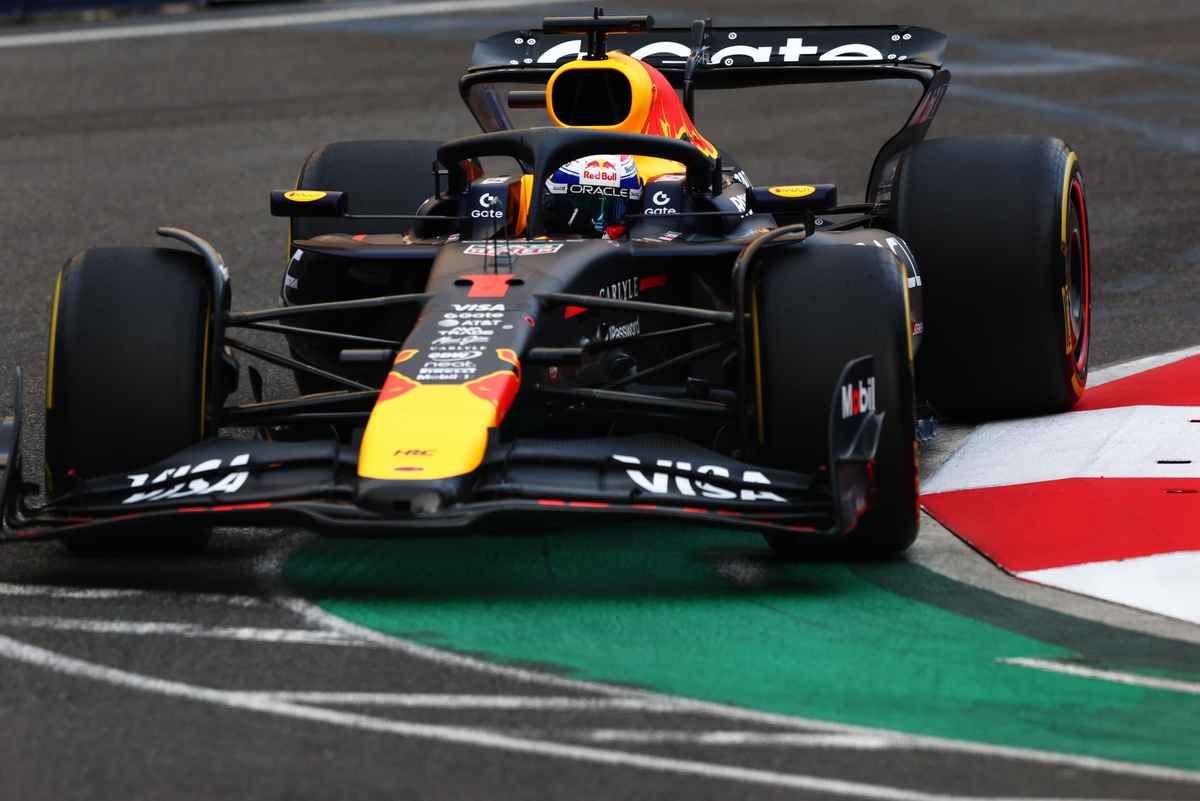
Max Verstappen’s Comeback: A Deep Dive into the 2025 Title Battle
Max Verstappen has been making headlines in the world of Formula 1, particularly after his unexpected declaration in Hungary. He suggested that he wouldn’t secure another race victory this season. However, following that statement, the Dutch driver has remarkably clinched two wins in the subsequent three races, sparking renewed conversations around his potential challenge for the 2025 drivers’ championship against formidable rivals like McLaren.
Recent Victories and Resurgence
Verstappen’s latest wins in Monza and Baku have reignited discussions about his capabilities on the track. It’s worth highlighting that the recent races have showcased Verstappen’s speed and race pace, with data indicating he was the fastest driver in terms of race pace on two occasions. This performance is significant, as it mirrors earlier victories at tracks like Suzuka, Imola, and Jeddah, although he faced challenges in Saudi Arabia due to a penalty.
The resurgence of Verstappen and the Red Bull Racing team can be attributed to several interrelated factors. One of the most notable changes has been a shift in Red Bull’s strategy. The team has started to place less emphasis on data-driven decisions and more on the valuable feedback from their drivers. This adjustment has allowed Verstappen to leverage his growing understanding of the RB21, making it easier to find the optimal setup for the car, even if the ideal setup window is minimal.
Another critical factor in Verstappen’s recent performance is the introduction of a new floor design during the Monza race. Helmut Marko, a prominent figure in the Red Bull team, noted that this upgrade not only enhanced the car’s raw performance but also improved its balance and broadened its operational range. This change has been instrumental in allowing Verstappen to navigate different tracks more effectively.
After the victory in Monza, questions arose regarding whether the performance was specific to that track. Laurent Mekies, the sporting director for Ferrari, addressed this inquiry following the Azerbaijan Grand Prix. Mekies noted that the characteristics at Baku—primarily slow-speed corners and low downforce—played to Red Bull’s strengths. This adaptability suggests that while different tracks may present unique challenges, the team has found ways to optimize their performance across varied circuits.
The Race Pace Analysis
Examining the average race pace in Baku, it is evident that Verstappen had a notable advantage, leading George Russell by over three-tenths of a second per lap. However, it’s essential to recognize that not all performance figures are entirely indicative. On Friday, both McLaren and Ferrari demonstrated potential speeds that could surpass what was observed during the race, hindered by poor qualifying sessions and the challenges of racing in dirty air.
Mekies confirmed that while the gap to Russell was relatively straightforward to analyze, assessing McLaren’s true pace proved more complicated. Throughout the practice sessions, McLaren displayed impressive speed, but their inability to find clear air during the race made it challenging to gauge their actual performance.
The Upcoming Challenge: Singapore GP
Looking ahead, the Singapore Grand Prix presents a new set of challenges that Red Bull must navigate. On the surface, the track layout and conditions appear less favorable to the team. The circuit’s bumpy nature and requirement for a high downforce setup could pose significant hurdles for Verstappen. Marko humorously pointed out that not only does the track demand high downforce, but it also tends to be extremely hot, which has historically been a disadvantage for Red Bull’s car.
Heat management is a crucial consideration, as the rear tires in Red Bull’s cars are prone to overheating, a factor that does not affect McLaren in the same way. While the lower degradation rates in Monza and Baku mitigated this issue, the hotter conditions in Singapore could bring these challenges back to the forefront.
Mekies acknowledged that the transition to Singapore would require a reevaluation of their strategies. While they need to maintain focus on slow-speed corners, maximizing downforce will be essential. The struggles faced in Budapest earlier this season serve as a stark reminder of the potential pitfalls awaiting them in Singapore, especially given the challenges presented by a hotter track.
Reflections on Past Performance
The Budapest race stands out as a low point for Red Bull, where they lost over a second per lap to McLaren on the tight circuit. This substantial gap highlights the difficulties they faced in high-downforce conditions. With the Singapore GP being the next high-downforce track on the calendar, it raises questions about whether Red Bull can overcome the challenges they encountered in Hungary.
Mekies remains optimistic, asserting that the team has unlocked additional performance from the car since the Budapest race. He is confident that Singapore will not replicate the disastrous outcomes of Hungary. However, he also admitted that it is impossible to predict whether this newfound performance would be sufficient to contend for the win.
Marko expressed that the team has a clear understanding of what went wrong in Budapest, although they were unable to make necessary adjustments due to parc ferme regulations. As they prepare for Singapore, the team views this race as an essential test of their current capabilities and a chance to assess what is functioning well and what is not.
The Significance of the Singapore GP
The upcoming Singapore GP will serve as a crucial benchmark for Verstappen and Red Bull Racing, not only to gauge their position in the title race but also to evaluate their overall performance against competitors like McLaren. Last year, Lando Norris showcased his prowess under the floodlights, although Verstappen managed to finish second, albeit 20 seconds behind.
With each race, the pressure mounts, and the stakes escalate. Formula 1 is notoriously unpredictable, and every race can dramatically alter the trajectory of the championship battle. For Verstappen, the Singapore GP represents an opportunity to solidify his position as a contender for the title, while for Red Bull, it’s a chance to prove that they can adapt and overcome the challenges presented by different circuits.
As the season progresses, the narrative surrounding Verstappen’s potential to reclaim a championship title will continue to evolve. The combination of strategic adjustments, technical upgrades, and driver skill will play pivotal roles in shaping the outcome of the remaining races. The spotlight will undoubtedly be on Verstappen as he navigates the challenges of the Singapore circuit, with fans and analysts alike eagerly awaiting to see if he can translate his recent successes into sustained championship contention.
In summary, Max Verstappen’s recent performances have reignited interest in his ability to challenge for the 2025 drivers’ title. With ongoing adjustments to Red Bull’s strategy and car performance, the upcoming Singapore GP promises to be a critical juncture in the championship race, and all eyes will be on Verstappen as he attempts to further solidify his standing among the elite drivers in Formula 1.
