McLaren’s Disqualification at the Las Vegas Grand Prix: A Detailed Overview
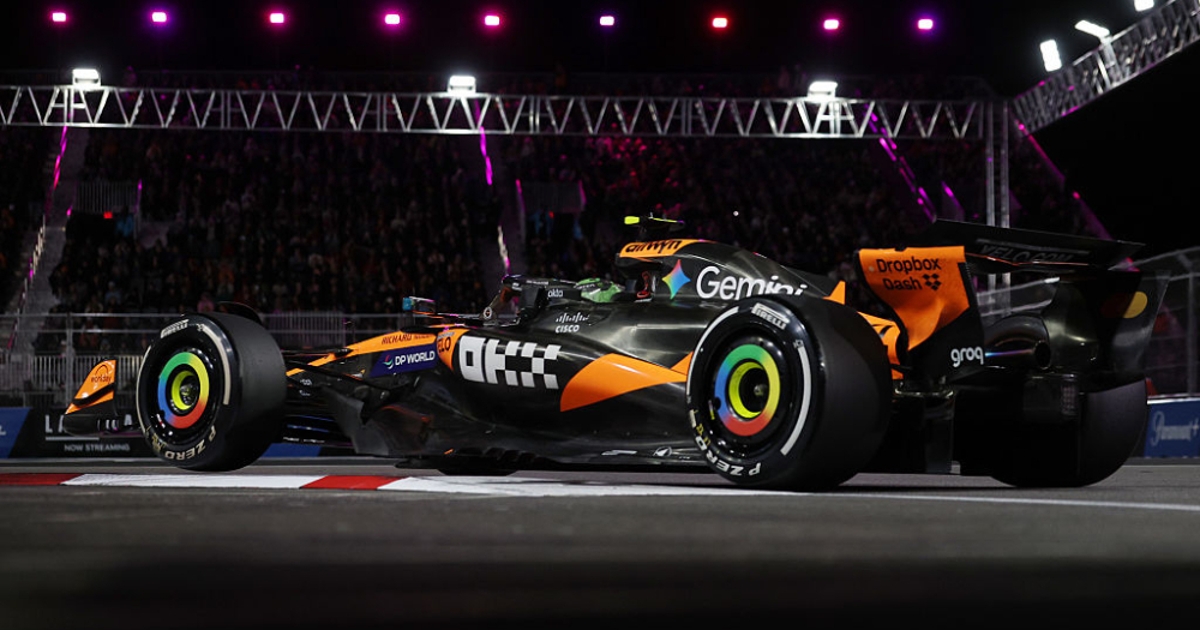
In a surprising turn of events during the Las Vegas Grand Prix, both drivers from the McLaren team faced disqualification. This incident has not only reshaped the race results but has also significantly impacted the championship standings. The disqualification comes at a critical juncture in the season, with Max Verstappen now finding himself tied on points with Oscar Piastri, while Lando Norris extends his lead in the title race.
Race Recap: A Competitive Atmosphere
The Las Vegas Grand Prix was marked by intense competition. Lando Norris, who started the race in pole position, initially showcased a strong performance, maintaining his lead until he was overtaken by Verstappen at the very first turn. Max Verstappen, known for his aggressive driving style, dominated the early laps, leading the race and setting a pace that kept him ahead of his competitors.
As the race progressed, it became evident that Norris and Piastri were not simply going to concede defeat easily. Both McLaren drivers fought hard, with Norris finishing the race in second place and Piastri closely following in fourth. However, the post-race analysis revealed issues that would change the outcome dramatically.
Technical Inspections: The Cause of Disqualification
Following the race, the FIA conducted thorough technical inspections, a standard procedure to ensure compliance with racing regulations. During these inspections, it was discovered that both McLaren cars exhibited excessive wear on their plank components, a critical aspect of car regulation. The legal minimum thickness for these components is set at 9mm. It was found that Norris’ car registered measurements of 0.12mm and 0.07mm below the required thickness in two different positions, while Piastri’s car showed even more significant discrepancies, with measurements of 0.12mm, 0.26mm, and 0.10mm under the minimum threshold across three positions.
The FIA stewards made it clear that while they did not believe the breaches were intentional, the regulations dictate a strict penalty for such infractions. Technical disqualifications are taken seriously in Formula 1, and the governing body has little discretion when it comes to enforcing penalties for violations of this nature.
McLaren’s Defense: Mitigating Circumstances
In light of the disqualifications, McLaren’s management put forth a defense. They argued that there were mitigating circumstances that contributed to the excessive plank wear. The team cited unexpected porpoising during the event, which can impact the car’s performance and stability. Additionally, they pointed out that the adverse weather conditions on the first day of the event limited their testing opportunities, which may have led to unforeseen issues during the race.
Despite these arguments, the FIA maintained that the regulations did not provide any leeway for avoiding disqualification due to such mitigating factors. They emphasized that while there was no evidence of deliberate intent to break the rules, the technical breaches were clear and warranted the standard penalty of disqualification.
Impact on Championship Standings
The immediate consequences of the disqualification were significant. With both McLaren drivers now out of the race results, the standings shifted dramatically. Max Verstappen, who had initially been leading the race, found himself tied in points with Oscar Piastri, creating a more competitive atmosphere as the championship heads into the final stages of the season. Lando Norris, by finishing second, extended his lead, putting him in a more favorable position as the season progresses.
The disqualification also benefitted other drivers on the grid. George Russell, who finished behind the McLaren duo, was promoted to second place, and Kimi Antonelli moved up to third. This reshuffling of the leaderboard allowed several drivers to score valuable points, including Charles Leclerc, Carlos Sainz, Isack Hadjar, Nico Hulkenberg, Lewis Hamilton, Esteban Ocon, and Ollie Bearman, all of whom finished in the top ten and earned points for their respective teams.
Historical Context: Technical Disqualifications in F1
This incident is not an isolated occurrence in the world of Formula 1. Throughout the history of the sport, numerous teams have faced disqualifications due to technical infractions. The FIA has a long-standing reputation for enforcing its regulations to maintain fairness and integrity within the sport.
In recent seasons, several drivers have faced similar penalties for excessive plank wear. For instance, Lewis Hamilton faced disqualification in China, and Nico Hulkenberg was similarly penalized in Bahrain for violations of this nature. These incidents highlight the stringent nature of technical regulations in Formula 1, ensuring that all teams operate within the defined parameters for safety and performance.
Looking Ahead: What’s Next for McLaren?
As the dust settles from the Las Vegas Grand Prix, McLaren must regroup and refocus its efforts for the remaining races in the season. The team will undoubtedly analyze the circumstances that led to the disqualification and work on strategies to prevent similar issues in the future. With the championship now tighter than ever, every point counts, and McLaren will have to ensure that its cars meet all technical specifications in the upcoming races.
The team’s drivers, Lando Norris and Oscar Piastri, will also need to maintain their competitive edge. Both drivers have shown remarkable skill and determination throughout the season, and with the added pressure of the championship standings, their performance in the remaining races will be critical.
The Role of Technology in Modern F1 Racing
The incident at the Las Vegas Grand Prix serves as a reminder of the complex interplay between technology and racing regulations in Formula 1. Teams invest millions of dollars in advanced engineering and technology to gain even the slightest edge on the track. However, this relentless pursuit of performance can sometimes lead to unintended consequences, as seen with the excessive plank wear on the McLaren cars.
As teams continue to innovate and develop their vehicles, the FIA must balance the need for technological advancement with the necessity of enforcing regulations. The future of Formula 1 will likely see ongoing discussions about how to adapt rules to accommodate new technologies while still ensuring a level playing field for all competitors.
Conclusion
The disqualification of both McLaren drivers at the Las Vegas Grand Prix has sent shockwaves through the Formula 1 community. It serves as a stark reminder of the importance of compliance with technical regulations and the potential consequences of oversight in an intensely competitive environment. As the championship battle intensifies, teams will need to remain vigilant and proactive in addressing any technical challenges that may arise.
With the season continuing to unfold, fans and analysts alike will be closely watching how McLaren responds to this setback and what strategies they will implement to regain their footing in the championship race. As the story develops, the Las Vegas Grand Prix will undoubtedly remain a pivotal moment in the 2025 Formula 1 season.
