Shane van Gisbergen Dominates at Sonoma: A Road Course Masterclass
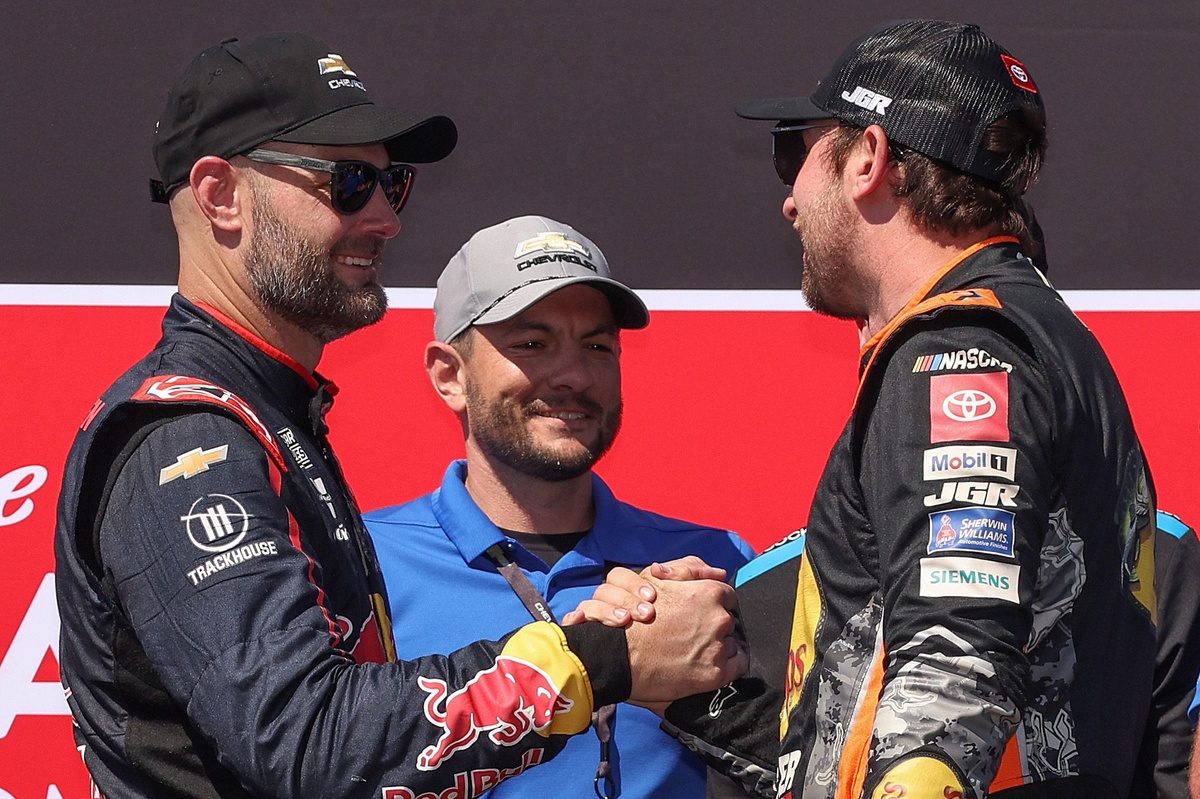
The NASCAR Cup Series race at Sonoma concluded in a manner that mirrored its beginning: with Shane van Gisbergen firmly in the lead and Chase Briscoe closely trailing in second place. Throughout the race, the two competitors found themselves navigating the twists and turns of the road course in close proximity. Despite facing several late-race restarts, Briscoe was unable to surpass the three-time Supercars champion. Following the race, Briscoe made his way to Victory Lane to extend his congratulations to van Gisbergen after securing a commendable second place.
Raising the Standard on Road Courses
Shane van Gisbergen, driving for Trackhouse Racing in his Chevrolet, showcased an exceptional performance, while Briscoe represented Joe Gibbs Racing in his Toyota. Briscoe expressed his admiration for van Gisbergen’s driving skills, stating, "The only opportunity I had was on the restarts." He went on to draw a parallel to basketball, reminiscing, "I never played basketball against Michael Jordan in his prime, but I feel like that’s probably what it was like. That guy is unbelievable on road courses. He’s just so good. He’s really raised the bar on this entire series."
Briscoe’s sentiments reflect the growing recognition of van Gisbergen’s prowess on road courses, suggesting that his performance is setting a new standard for competitors in the series. He continued, "Proud of the effort. I thought there was one restart I was maybe going to get clear of him, but truthfully even if I cleared him, he was probably going to pass me back by the end of the lap. Yeah, proud of the effort. We were a second-place car all day and obviously ended up second with it."
The Challenge of Competition
Briscoe believed his No. 19 Toyota possessed impressive speed, but it still fell short when it came to challenging van Gisbergen’s authority on the track. He conveyed his feeling that van Gisbergen was sometimes playing with his competitors, stating, "I honestly don’t know what more I need. I feel like my car is extremely good, and I feel like every time I would run down Shane he would just pick up the pace himself and start driving back away. It was frustrating at times, but I was honestly happy with the effort."
The interaction between the two drivers highlighted the competitive spirit that defines the NASCAR Cup Series. Briscoe’s respect for van Gisbergen’s skill is palpable, as he recognizes the challenges posed by a driver who has demonstrated such consistent excellence on road courses.
The Road Course Landscape
Sonoma is well-known for its unique challenges as a road course, requiring drivers to navigate a series of sharp turns and elevation changes. The combination of skill and strategy plays a crucial role in determining success at this venue. Van Gisbergen’s ability to manage these elements effectively has made him a formidable contender, not just in this race but throughout his NASCAR journey.
Racers in the Cup Series must continually adapt their strategies to conquer the intricacies of road courses. The Sonoma race serves as a prime example of how talent and experience can converge to create a captivating spectacle for fans. The dynamics between drivers like van Gisbergen and Briscoe illustrate the competitive landscape that defines professional racing.
Embracing the Challenge
For Briscoe, the race at Sonoma was not just about securing a victory; it was also an opportunity to learn and grow as a driver. Despite finishing in second place, he expressed pride in his performance and the efforts of his team. The experience gained from racing against a competitor like van Gisbergen can be invaluable, providing insights that can be applied in future races.
Briscoe’s acknowledgment of van Gisbergen’s skill speaks to the sportsmanship that exists within NASCAR. While the desire to win remains paramount, there is a mutual respect among drivers that elevates the competition. This camaraderie is an essential element of the sport, fostering an environment where drivers can push each other to excel.
The Impact of Late-Race Restarts
Late-race restarts have the potential to significantly alter the outcome of a race, adding an element of unpredictability. In the case of the Sonoma race, Briscoe capitalized on the restarts to attempt to close the gap to van Gisbergen. However, the latter’s experience and skill allowed him to maintain his lead, demonstrating the importance of not only speed but also composure in high-pressure situations.
The strategic decisions made during these restarts can be critical. Drivers must evaluate their position, assess the competition, and make split-second choices that could ultimately define their race. Briscoe’s near-misses during these moments underscore the intensity of the competition he faced.
Learning from the Experience
For many drivers, the opportunity to race against someone of van Gisbergen’s caliber serves as a learning experience. Briscoe’s comments reflect a keen understanding of the challenges that lie ahead, as he seeks to refine his skills and improve his performance on the track. The respect he shows for his competitors is a hallmark of a true professional, one who understands that each race is a chance to grow.
The Sonoma race not only highlighted van Gisbergen’s dominance but also showcased the competitive spirit of drivers like Briscoe, who are continually striving for improvement. As they face off against top-tier talent, the lessons learned on the track can be instrumental in shaping their careers.
The Future of Road Course Racing
As the NASCAR Cup Series continues to evolve, the significance of road course racing is becoming increasingly apparent. Drivers who excel in this discipline are not only showcasing their skills but also influencing the direction of the series. Van Gisbergen’s impact on the competition is undeniable, as he sets a high benchmark for others to aspire to.
The evolution of road course racing in NASCAR presents both challenges and opportunities for drivers. As they adapt to the unique demands of these tracks, the lessons learned will undoubtedly shape the future of the sport. The competitive landscape is ever-changing, and drivers must remain agile in their approaches.
Conclusion
In summary, the NASCAR Cup race at Sonoma served as a vivid illustration of the competitive spirit that defines the series. Shane van Gisbergen’s commanding performance not only secured him victory but also set a new standard for excellence on road courses. Chase Briscoe’s valiant efforts in pursuit of van Gisbergen underscore the challenges faced by drivers in their quest for success.
The dynamics between these two competitors highlight the respect and admiration that exists within the sport, reminding fans and participants alike of the dedication and skill required to excel in NASCAR. As the series continues to unfold, the lessons learned on the track will undoubtedly play a crucial role in shaping the future of road course racing.
