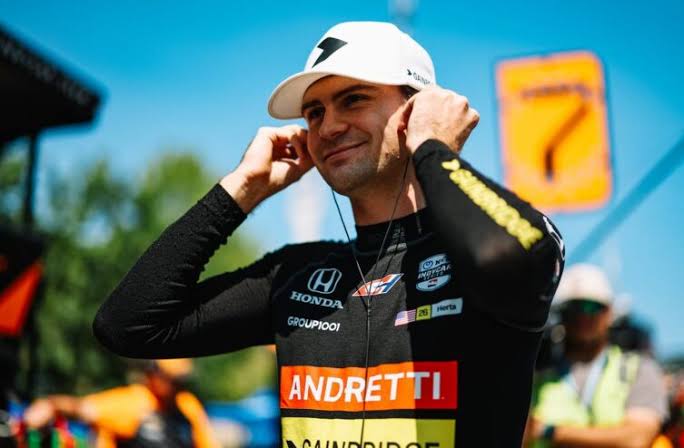
Colton Herta’s Ambitious Journey: Aiming for Formula 1
Colton Herta, a 25-year-old American racing driver, has been a prominent name in the IndyCar Series, especially as the 2025 season comes to a close. While he hasn’t clinched a championship title or a major victory this year, his aspirations are taking a bold turn. Herta is considering a temporary departure from the IndyCar circuit to compete in Formula 2 in 2026. This strategic move aims to accumulate the necessary points for the FIA super license, a crucial requirement for his ultimate dream: racing in Formula 1.
The Challenges of the FIA Points System
Herta’s predicament isn’t due to a lack of talent; rather, it stems from the FIA’s points system, which many critics deem outdated and unfair to IndyCar drivers. Despite securing nine wins in the American series, Herta has amassed only 32 points since 2022, finishing the championship in 10th place that year. To qualify for the super license, a driver must collect 40 points.
The disparity in point allocation between different racing series highlights a significant issue. For instance, Formula 2 awards maximum points to its champions, while IndyCar is positioned between F2 and F3 in terms of point distribution, despite being a superior racing level in practice. This inequity previously hindered Herta’s opportunity to secure a seat with AlphaTauri in 2022, and now it once again threatens his racing career trajectory.
Cadillac F1 and Herta’s Missing Opportunity
When the Cadillac F1 project was announced, Herta seemed poised to be a key figure in the venture. His association with Andretti Global, which has long harbored ambitions of entering Formula 1, made him a natural fit for the team. However, as the 2026 season approaches, Cadillac F1 has opted for a more experienced driver lineup, featuring Valtteri Bottas and Sergio Pérez, leaving Herta without an immediate seat.
Rumors, which have not been denied by Herta or team principal Dan Towriss, suggest that the alternative path for Herta would be to compete in Formula 2. This is a category often viewed as a stepping stone for young drivers but could provide Herta with the points necessary for his super license and lay the groundwork for a potential debut in Formula 1 in 2027.
A Historical Perspective: American Drivers Transitioning to F1
Herta’s potential move to Formula 2 is not unprecedented in the world of motorsport. Throughout the 1990s and 2000s, several champions from IndyCar or CART made successful transitions to Formula 1:
Jacques Villeneuve: The 1995 Indy champion and Indianapolis 500 winner became F1’s 1997 world champion, showcasing a successful transition.
Juan Pablo Montoya: After winning the CART championship in 1999 and the Indy 500 in 2000, Montoya achieved seven victories in F1 and placed third in the championship.
Cristiano da Matta: The 2002 CART champion joined Toyota in F1 in 2003 but was released before completing his second season.
Sébastien Bourdais: With four consecutive Champ Car titles from 2004 to 2007, Bourdais had a brief stint with Toro Rosso before returning to the U.S.
- Michael Andretti: A notable figure in IndyCar, Andretti was the 1991 CART champion but had a challenging run in F1, lasting only 13 races with McLaren in 1993.
The vital distinction between Herta and these past drivers is that they all made the leap to F1 as champions or high-profile winners, while Herta lacks these titles, adding complexity to his situation.
The Risks of Competing in Formula 2
If Herta decides to enter Formula 2 at the age of 26, it would be a unique scenario. The current average age of drivers in this category is around 21, making it a traditional launchpad for younger talents. Many analysts might view an experienced IndyCar driver competing against teenagers and drivers in their early twenties as somewhat out of place.
Additionally, Herta would face technical challenges, including adapting to Pirelli tires, which differ significantly from the Firestone tires used in IndyCar. The dynamics of Formula 2 can also vary widely between teams, and the performance of cars isn’t always consistent across the board. As Alexander Rossi, who raced in five F1 Grands Prix before his shift to IndyCar, noted, "It’s a completely different driving style."
Another concern raised by European experts is the potential risk to Herta’s reputation. If he struggles to achieve consistent results in Formula 2, returning to IndyCar could tarnish his image and hinder future opportunities.
The Potential for Success
On the flip side, a successful season in Formula 2 could provide Herta with the crucial points he needs for the super license, setting the stage for an anticipated debut in Formula 1 in 2027. Moreover, racing at 14 circuits featured in both F2 and F1 would afford him invaluable experience.
Mario Andretti, a legendary figure in motorsport and a staunch advocate for American representation in Formula 1, has expressed strong support for Herta’s ambitions. "The United States produces champions at all levels of motorsport, and we need to be represented in Formula 1. Colton is a special talent who wants to be there — and that’s already half the battle."
Colton Herta’s Dilemma
As the 2025 season concludes, Herta boasts an impressive resume in IndyCar, with nine victories, multiple pole positions, and frequent top-tier finishes. However, he also carries the weight of unfulfilled potential, having never claimed a championship title. Unlike drivers such as Alex Palou or Scott Dixon, who are establishing historic legacies in IndyCar, Herta may feel liberated to take risks without the burden of a championship to anchor him. He might not want to look back in the future and wonder, "What if I had tried?"
Whether Herta’s strategy will pay off remains uncertain, but one thing is clear: he is determined not to be remembered as a driver "with an asterisk." If the cost of pursuing his Formula 1 dream means navigating the challenges of Formula 2 as a veteran among younger competitors, he appears ready to embrace that risk.
In a sport where careers can pivot on decisions made in the blink of an eye, Herta’s journey will be one to watch closely. His ambition to reach the pinnacle of motorsport, coupled with the challenges he faces, encapsulates the spirit of competition that defines the racing world. With each race, he seeks to carve out his legacy and demonstrate that the road to Formula 1 can take many forms, even if it means stepping into a category often associated with rising stars.
