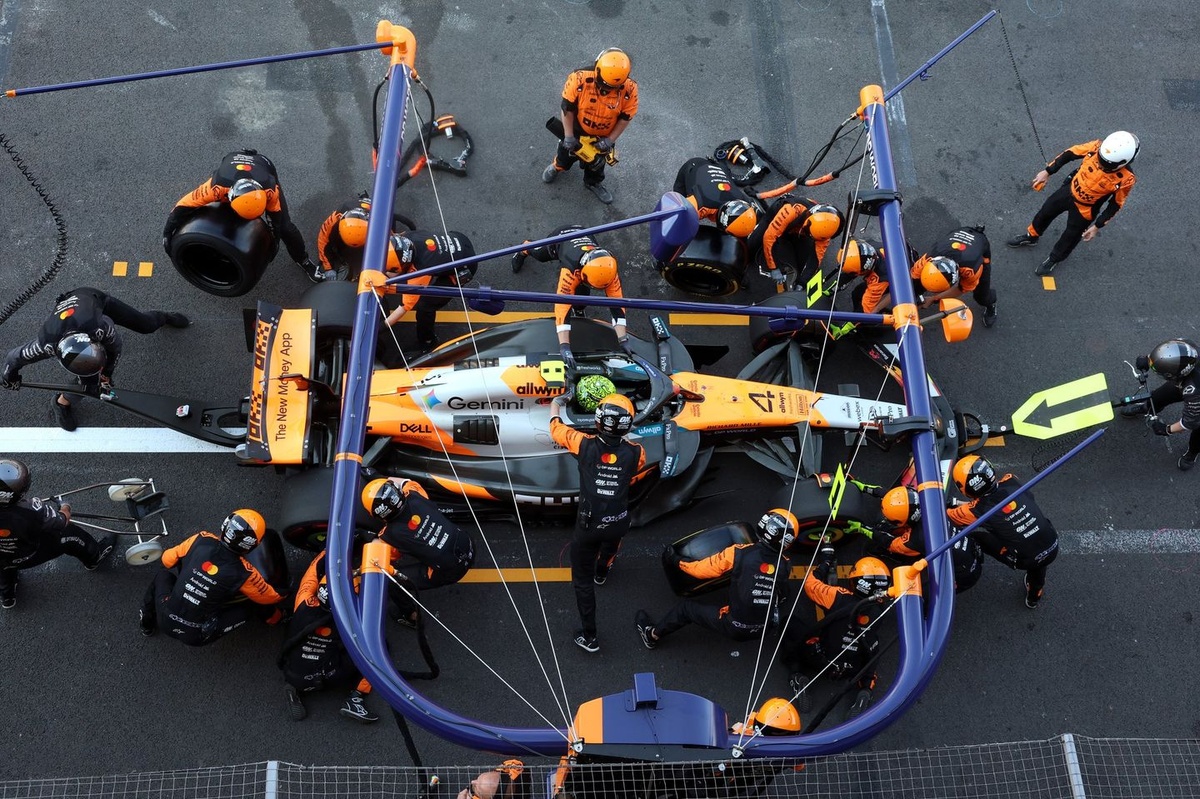
Exploring the Future of Formula 1 Strategies: The Case for Mandatory Pit Stops
Formula 1 is renowned for its exhilarating races and strategic depth, yet recent seasons have seen a trend where one-stop strategies dominate. This trend has sparked discussions among teams, drivers, and Pirelli, the tire supplier, about the need for more dynamic racing strategies. With the 2023 racing season in full swing, the conversation around mandatory pit stops is gaining traction, leading to an examination of how the rules might evolve to enhance the competition.
The Current State of Race Strategies
In several recent races, the competition has followed a predictable pattern, with drivers and teams gravitating towards a single pit stop. George Russell, a prominent driver, succinctly summarized the situation, suggesting that many races have essentially become a sprint to the first turn. This phenomenon is largely influenced by the increasing significance of dirty air and the prevailing preference for conservative race strategies.
The 2023 Pirelli tires, designed to be more durable than their predecessors, have allowed drivers to push their limits more effectively. However, this robustness has also led to a reduction in tire degradation, diminishing the variety of strategic options available to teams. Russell observed that regardless of the situation—whether there’s significant tire wear or none at all—there seems to be dissatisfaction. He articulated a desire for a tire that offers a balance: one that allows for aggressive driving but doesn’t last the entire race.
The trend of one-stop strategies has been evident, with the last five races won using this approach. The only exceptions were races affected by changing weather conditions, such as the Silverstone and Zandvoort events. The last notable two-stop race was the Austrian Grand Prix, indicating a shift in how teams approach their race strategies in recent times.
The Challenges of Encouraging Two-Stop Races
Attempts to encourage two-stop races have not met with success in the past. Pirelli has tested various tire compounds in an effort to generate more strategic diversity. For instance, they introduced softer tire options compared to previous seasons and modified their allocation strategy by skipping certain compounds. However, despite these efforts, teams have primarily continued to favor one-stop strategies by managing tire usage more effectively.
A notable example of this was seen in Austin, where virtually all drivers, except Alex Albon, completed the race with just one pit stop. Pirelli’s Motorsport Manager, Mario Isola, acknowledged that teams consistently strive to minimize the number of pit stops due to the inherent risks involved during these critical moments in a race. Mistakes can occur, and the potential for losing time in traffic upon re-entering the track further incentivizes teams to adopt a conservative approach to pit stops.
The Push for Mandated Pit Stops
To address the current trend of one-stop races, there have been suggestions within the paddock to implement regulations that would mandate two pit stops during a race. Max Verstappen, a key figure in the sport, made a compelling case for this during discussions in Baku, arguing that a regulation requiring two stops would be more beneficial than introducing a tire compound he deemed ineffective.
Isola acknowledged the value of fostering an engaging race environment, suggesting that a two-stop strategy could enhance unpredictability and excitement. However, he emphasized the challenges of enforcing such a regulation, as teams would likely resist constraints if they feel they could achieve better results through alternative strategies.
The Regulatory Dialogue
In recent weeks, the topic of mandatory pit stops has gained momentum, particularly during the drivers’ briefing at the Mexican Grand Prix. The FIA has stated that this issue will be discussed further in upcoming meetings, including the Sporting Advisory Committee and the F1 Commission. While the discussions are still in the early stages, there is interest among several teams and Liberty Media to explore potential changes for the upcoming seasons.
Isola elaborated on previous discussions, noting that simulations conducted by teams indicated a convergence towards similar strategies, regardless of the tire compounds chosen. This observation raises concerns that imposing more restrictions could lead to a lack of variety in race strategies, as teams would likely gravitate towards the most efficient options available.
The Need for Variety in Race Strategies
The ideal racing scenarios are those where the two-stop strategy provides an advantage, while also allowing for bold drivers to attempt alternative strategies. Isola cited last year’s Monza Grand Prix as a prime example, where Charles Leclerc secured victory with a one-stop strategy while others opted for two stops. Such instances illustrate the potential for strategic variety to enhance the overall spectacle of a race.
One potential direction for future regulations could involve mandating two pit stops without requiring the use of different tire compounds. Isola suggested that this approach would enable teams to select the best compounds for their strategies, fostering a more diverse range of race tactics. For instance, a team starting from the back might choose to begin on hard tires to maximize their early race duration, while a mid-grid team might opt for soft tires to navigate through traffic more effectively.
Exploring the Implications of Two-Stop Regulations
If Formula 1 decides to move towards a two-stop requirement, various options exist for implementing such changes. The idea of allowing teams the freedom to select their tire compounds, even with a two-stop mandate, could lead to more dynamic racing and strategic choices. Isola stressed that any regulatory changes would need thorough examination and consideration from all stakeholders involved in the sport.
Reflecting on his extensive experience in motorsport, Isola suggested that a collaborative approach involving teams, FIA, and F1 stakeholders would be crucial in shaping any future regulations. It would be essential to simulate various scenarios to gauge how teams would respond to proposed changes and to ensure that the integrity of the championship is preserved.
The 2026 Season and Beyond
As Formula 1 prepares for the 2026 season, there are two critical considerations to bear in mind. First, the previous experiment with mandatory two-stop strategies in Monaco did not yield the desired results. However, Isola cautioned against using Monaco as a benchmark, given its unique track characteristics and the risks associated with cutting corners.
On the other hand, the recent Qatar Grand Prix demonstrated that two mandatory stops could work under certain conditions, particularly for safety reasons. While this led to physical challenges for drivers due to extreme heat, it also allowed for more aggressive racing without the constraints of tire management. Liberty Media is intrigued by this possibility, as it aligns with their goal of enhancing the excitement of Formula 1 races.
The second significant consideration is whether any changes are necessary if the new cars introduced in 2026 can follow each other more closely. The anticipated reduction in the impact of dirty air could make interventions regarding pit stop regulations premature. Isola acknowledged the uncertainty surrounding the 2026 regulations but emphasized the importance of approaching any changes cautiously to avoid disrupting the current competitive balance.
Conclusion: A Path Forward
The conversations surrounding potential mandatory pit stops in Formula 1 highlight the ongoing quest for improvement and excitement in the sport. As teams, drivers, and governing bodies continue to explore various strategies and regulations, the focus remains on fostering a competitive environment that captivates fans and enhances the spectacle of racing. With the right balance of regulation and strategic freedom, Formula 1 can continue to evolve while maintaining the thrilling essence that has captivated audiences for decades.
