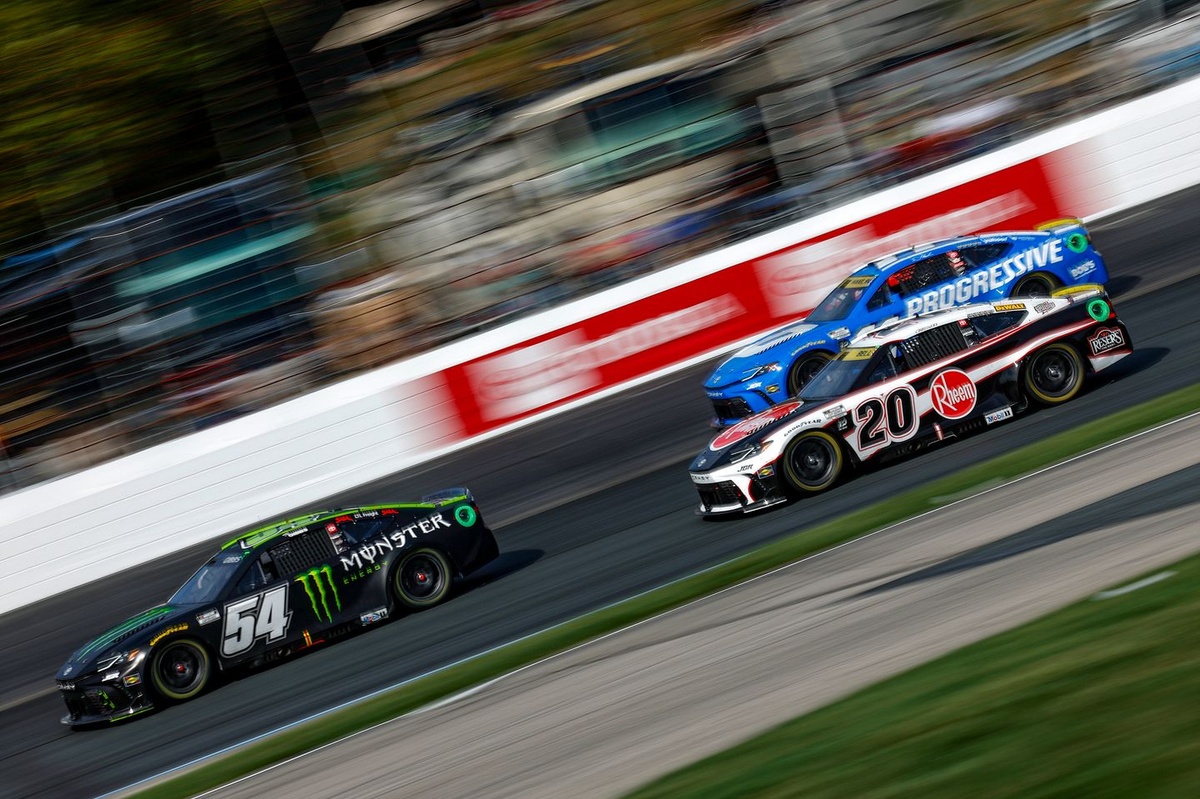
Denny Hamlin Discusses Ty Gibbs Incident at New Hampshire Motor Speedway
Denny Hamlin, a seasoned NASCAR driver, recently shared his thoughts on the incident involving Ty Gibbs during the race at New Hampshire Motor Speedway. His comments, made on his podcast, reiterated sentiments he expressed shortly after the event unfolded. The crux of his message revolves around teamwork, competition, and the need for guidance from team leadership in high-stakes situations.
The Incident: A Breakdown of Events
During the race, Hamlin and his Joe Gibbs Racing teammate, Christopher Bell, found themselves in a challenging situation with Ty Gibbs. Gibbs was pushing hard against both drivers early in the race, competing fiercely for positions that, while important, were not pivotal in the grand scheme of the championship chase. Hamlin emphasized that the intensity of Gibbs’ racing was unwarranted given that they were battling for inconsequential positions.
This aggressive racing style continued for over ten laps, culminating in a significant incident on Lap 111, where Gibbs collided with the wall, resulting in him being sidelined for the remainder of the race. For Hamlin and Bell, who are both contenders for the championship, this situation was not just a matter of racing etiquette; it was about securing crucial stage points that could make or break their chances of advancing in the playoffs.
Hamlin articulated his frustration by stating that Gibbs was "racing entirely too hard," particularly when considering the context of their positions on the track. He mentioned that it was vital for teammates to work together, especially when competing for a championship. "We were racing for 11th place," he said. "Bell and I are fighting for stage points that are essential for our playoff hopes. It just felt wrong that a teammate would be the hardest car to pass."
The Importance of Team Strategy
Reflecting on the incident, Hamlin noted the importance of strategy within a racing team. He drew a parallel to another driver, Ross Chastain, who, despite being a rival, chose to let Hamlin pass instead of holding him up. This strategic decision not only facilitated Hamlin’s progress but also opened the door for Chastain to avoid unnecessary battles that would not benefit either driver in the long run.
Hamlin expressed that this type of racecraft is somewhat lacking within his own team. He pointed out that understanding when to cooperate and when to compete fiercely is crucial, especially in a high-pressure environment like the NASCAR playoffs. "If you’re going to have to race your teammates harder than anyone else on the track, it complicates things significantly," he stated, emphasizing the need for a unified team approach.
A Call for Leadership
One of the primary points Hamlin made was the necessity for leadership within Joe Gibbs Racing to intervene in situations like these. He recalled that discussions had previously taken place within the team regarding the expectations for non-playoff drivers to assist their teammates who are vying for the championship. Hamlin believes this message needs to be reiterated to Gibbs, who, as the grandson of team owner Joe Gibbs, is still learning the ropes of competitive racing.
"What I want to see is leadership stepping in and guiding us on how to handle these situations," Hamlin explained. He believes that if the team is expected to race with cutthroat intensity, that should be the standard set for all drivers, regardless of their standings. However, he also argued that if they are to compete fiercely against each other, it could hinder their chances of winning as a team.
The competitive landscape in NASCAR, according to Hamlin, is already challenging enough without teammates complicating matters further. "If we’re all racing against each other as if we’re not teammates, it makes winning even harder," he stated. Hamlin also pointed out that other successful teams, such as Hendrick Motorsports and Team Penske, effectively manage the dynamics between their drivers to ensure that they support one another in their championship pursuits.
The Role of Communication
Communication, or the lack thereof, also played a significant role in the incident. Hamlin noted that he and Gibbs had not spoken since the incident occurred, highlighting a gap that could lead to further misunderstandings. He believes that the drivers should not be left to navigate these complex situations on their own, as differing perspectives can create friction within the team.
"The challenge is that I think Ty and I will have different opinions about what happened, so we need leadership to step in and clarify how we should be racing each other," Hamlin explained. He expressed a desire for a clear set of guidelines that all drivers could follow, creating cohesion within the team. "Whatever the rules are, I’ll adhere to them, but it’s essential for everyone to be on the same page," he said.
The Bigger Picture
Hamlin’s reflections extend beyond the immediate incident; they touch on the broader implications for Joe Gibbs Racing and how the team can maintain competitiveness while fostering a collaborative environment. He underscored that winning a championship is a collective effort and that every team member, including Gibbs, should ideally want to see their teammates succeed.
"From my perspective, I would think Ty would want one of us to win the championship because it’s his name on the building," Hamlin remarked, alluding to the familial ties and legacy associated with the team. This comment encapsulates the essence of teamwork in NASCAR, where individual success often hinges on collective support and strategy.
Conclusion: A Path Forward for Joe Gibbs Racing
The incident at New Hampshire Motor Speedway serves as a poignant reminder of the intricate balance between competition and cooperation within a racing team. As the playoff season progresses, the importance of teamwork, clear communication, and effective leadership becomes paramount. Hamlin’s insights into the dynamics of racing at Joe Gibbs Racing underscore the need for a strategic approach that prioritizes collaboration while maintaining the competitive spirit necessary to succeed in NASCAR.
With the right guidance and a commitment to supporting one another, the drivers at Joe Gibbs Racing can navigate the challenges ahead and strive for championship success together, reinforcing the idea that teamwork is just as crucial as individual talent in achieving their goals on the track.
