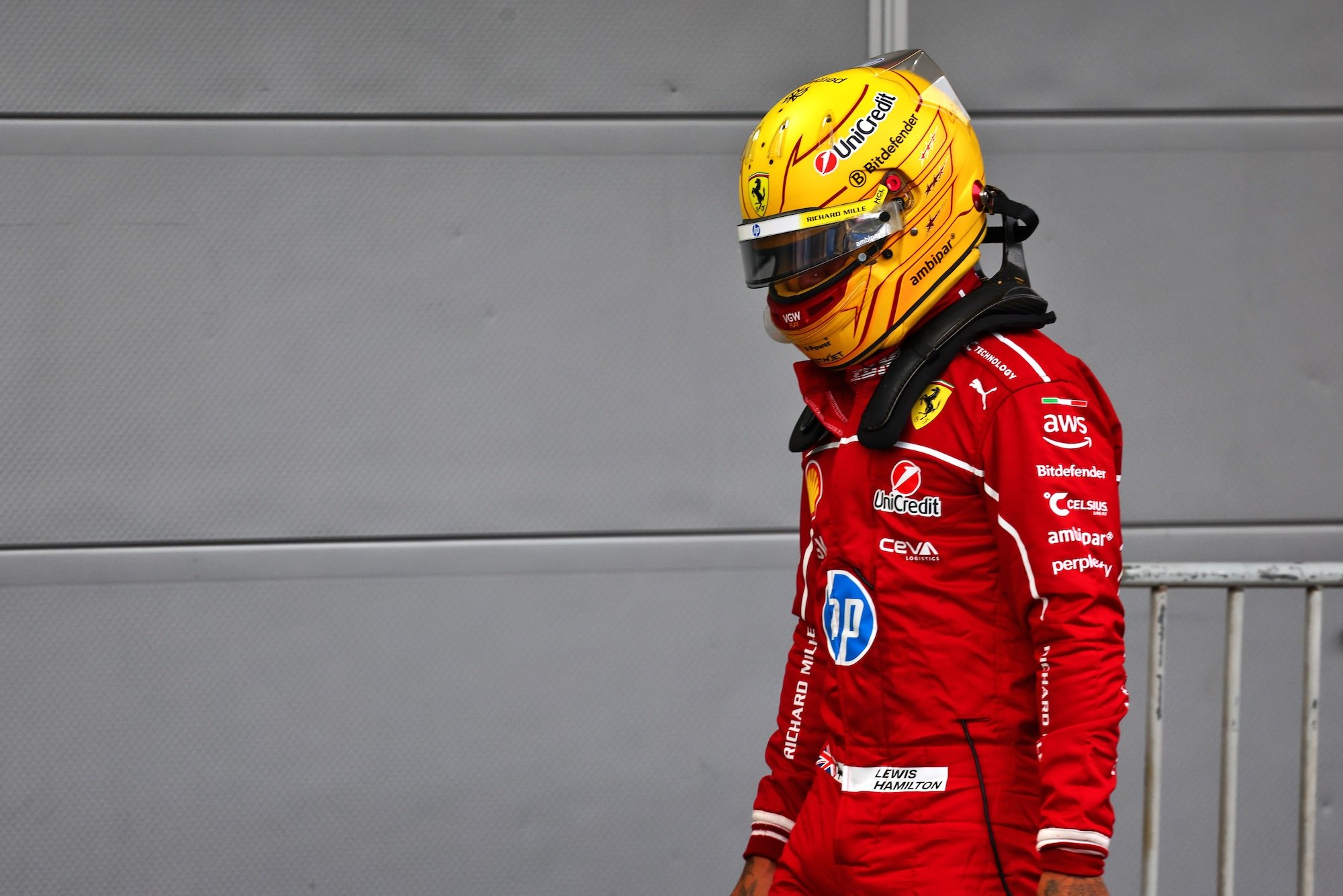
Ferrari’s Fred Vasseur Discusses Lewis Hamilton’s Singapore Grand Prix Challenges
In a recent discussion about the Singapore Grand Prix, Fred Vasseur, the team principal of Ferrari in Formula 1, addressed the challenges faced by Lewis Hamilton during the race. Hamilton, a seven-time world champion, encountered significant brake issues that impacted his performance, forcing him to adopt a strategy known as "lift and coast." This technique involves easing off the accelerator before entering braking zones, allowing the car to coast on its momentum instead. Despite these challenges, Hamilton managed to set the fastest lap of the race on Sunday.
Brake Issues Complicate Hamilton’s Race
Vasseur began by explaining the difficulties Hamilton encountered, stating that the brake problems arose not during the initial laps but rather in the second or third lap of the race. The need for Hamilton to continuously employ the lift and coast strategy throughout the competition presented a considerable challenge for him. Vasseur commented, "It’s hard to start on a positive note. Yes, we had an issue not on the first lap but on the second or third lap. We had to engage in lift and coast for the entire race, and even for them, in the end, it’s not easy to drive like that because you have to adjust your braking point every lap."
This comment illustrates the complexity of racing at such a high level, where even minor issues can lead to significant performance deficits. Vasseur pointed out that while they were able to push for a few laps with Hamilton, the overall pace was decent, but the constant adjustments made it difficult to compete effectively. "Clearly, when we pushed for a few laps with Lewis, I think the pace was reasonable. But you cannot spend 95% of the race at a disadvantage," he added.
Hamilton’s Fastest Lap: A Contextual Achievement
Despite the hurdles, Hamilton’s ability to clock the fastest lap towards the end of the race is noteworthy. After switching to softer tires, he managed to secure the fastest lap time. However, Vasseur downplayed the significance of this achievement, referring to it as a "false fastest lap." He elaborated, stating, "We were in a different situation with fresh tires, so it doesn’t truly reflect the actual pace. When he could push, the performance was decent, but it wasn’t enough to change the outcome."
This perspective sheds light on the nuances of racing strategy and tire management. While securing the fastest lap can be a morale booster, it does not necessarily equate to a competitive advantage in the overall standings, especially when a driver is grappling with mechanical issues.
Safety Concerns Addressed
In light of comments made by Fernando Alonso regarding potential safety concerns surrounding Hamilton’s car, Vasseur was quick to reassure that there was no risk involved. "In terms of safety, yes, because we adjusted the pace. It’s not like Lewis was pushing to the limit on the last lap; he was 30 seconds slower. From a safety perspective, we were on the safe side, but that was not the goal. The goal is to be safe, but it’s not just about safety," he humorously noted.
This statement emphasizes the balance between performance and safety in Formula 1. While teams strive to push their cars to the limit, ensuring the drivers’ safety remains a paramount concern. Vasseur’s comments reflect a broader understanding within the sport about the importance of managing both competitive edge and driver well-being.
Race Outcome and Penalties
Ultimately, Hamilton concluded the Singapore Grand Prix in eighth place after receiving a five-second penalty for exceeding track limits. This penalty further complicated his race, adding to the challenges already posed by the brake issues and the required driving adjustments. As a result, Hamilton ended up contributing four points to Ferrari’s overall tally, a modest return given the circumstances.
The outcome of the race raises questions about how penalties and technical difficulties can influence a driver’s performance and the team’s overall strategy. In a sport where every second counts, these variables can have profound implications on championship standings and team morale.
The Bigger Picture
Vasseur’s insights into Hamilton’s race experience highlight the intricate interplay between driver skill, vehicle performance, and strategic decision-making. As teams continue to refine their approaches in a highly competitive environment, understanding these dynamics becomes crucial for success.
In the world of Formula 1, where the margins for victory are often razor-thin, even the slightest mechanical issue can result in significant consequences. Teams need to be prepared for such eventualities, and drivers must adapt quickly to changing conditions. Hamilton’s experience in Singapore serves as a reminder of the unpredictability inherent in the sport, where even the best can face unforeseen challenges.
As the season progresses, the Ferrari team will undoubtedly analyze the data from the Singapore Grand Prix to enhance their performance in upcoming races. Continuous improvement in both car technology and race strategy will be vital as they strive for better results on the track.
Conclusion: Looking Ahead
As Formula 1 evolves, the challenges faced by teams and drivers will continue to shape the narrative of the sport. Vasseur’s reflections on Hamilton’s race serve as a valuable case study in resilience and adaptability. With the right adjustments and a focus on both safety and performance, Ferrari aims to overcome the obstacles presented in Singapore and look forward to future races with renewed determination.
In summary, the Singapore Grand Prix was a testament to the unpredictable nature of Formula 1, where technical issues can derail even the most skilled drivers. As teams like Ferrari work to refine their strategies and improve their vehicles, the insights gained from races like this will be crucial in navigating the complexities of the sport.
