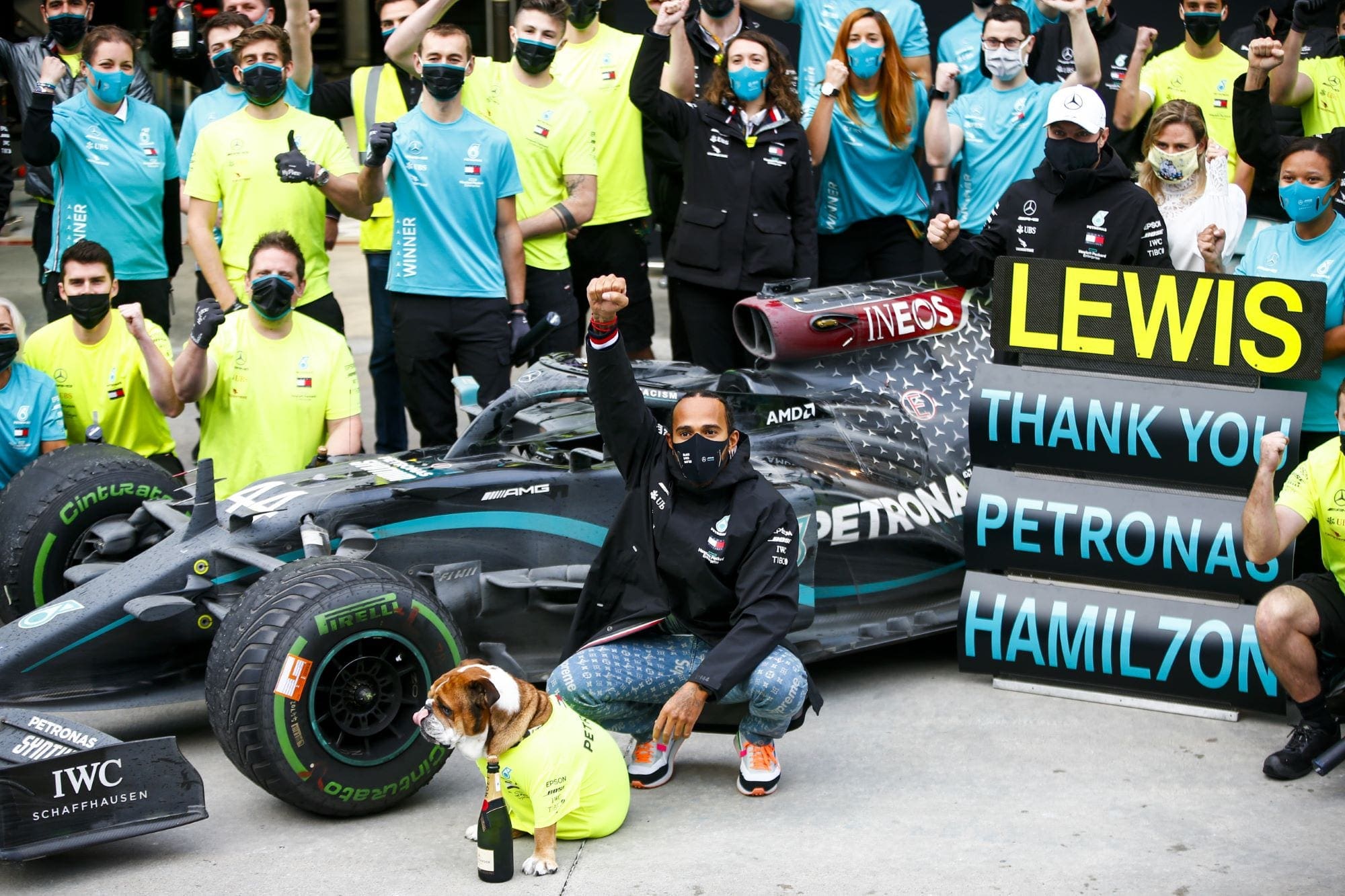
Lewis Hamilton’s Historic Victory: A Look Back at the 2020 Turkish Grand Prix
On November 15, 2020, the world of Formula 1 witnessed a remarkable chapter in its history. The Turkish Grand Prix was not just another race; it was a pivotal moment for Lewis Hamilton, who achieved his seventh World Championship title, equaling the legendary Michael Schumacher’s record. The circumstances surrounding that season were anything but ordinary, as the COVID-19 pandemic created unprecedented challenges for the sport and its athletes.
The Unpredictable 2020 Season
The 2020 Formula 1 season was marked by uncertainty and disruption due to the global pandemic. The schedule was drastically shortened, and many traditional races were canceled or postponed. Despite these challenges, Hamilton demonstrated exceptional skill and determination throughout the season. As he arrived in Turkey, he had already claimed victory in the three preceding races, showcasing his dominance and consistency.
This was the first time since 2011 that Formula 1 returned to Turkey, and the excitement surrounding the event was palpable. The Istanbul Park circuit had undergone resurfacing, resulting in a track with limited grip, especially under the wet conditions that day. This added an extra layer of complexity to the race, making it an unpredictable and thrilling spectacle.
Lance Stroll’s Breakthrough Performance
As the race weekend unfolded, it became evident that it would be a memorable event for multiple reasons. Lance Stroll, driving for Racing Point, achieved his first-ever pole position during the qualifying session. This was a significant milestone for the young driver, who had been striving to make a name for himself in the highly competitive world of Formula 1.
Starting from the sixth position, Hamilton faced a challenging task ahead. He knew that to secure his title, he would need to navigate the difficult conditions and execute a flawless race strategy.
The Race Begins
The start of the race was intense, with drivers jostling for position. As the cars approached the first turn, Hamilton quickly moved up to third place, demonstrating his aggressive racing style and skillful maneuvering. However, a small miscalculation shortly afterward caused him to drop back to sixth position. This early setback could have derailed his championship hopes, but Hamilton remained composed, focusing on the race ahead.
Hamilton’s strategy played a crucial role in his recovery. He made strategic decisions that allowed him to regain positions on the track. His experience and racing acumen shone through as he navigated the treacherous conditions, ultimately allowing him to make his way back to the front of the pack.
A Race for the Ages
As the race progressed, it became clear that Hamilton was on a mission. He was not only racing against his competitors but also against the clock and the challenging conditions on the track. The weather continued to evolve, leading to a complicated race where tire management and timing were paramount.
Hamilton’s determination paid off as he carved his way through the field, eventually finding himself in a position to contend for the lead. Meanwhile, his main rival, Valtteri Bottas, had a disastrous race. Bottas struggled throughout the event, spinning out multiple times and finishing in a disappointing 14th place. This outcome further solidified Hamilton’s lead in the championship standings.
A Historic Finish
As the race neared its conclusion, the tension was palpable. Hamilton crossed the finish line with an impressive lead of 31.6 seconds over Sergio Pérez, who finished in second place. Sebastian Vettel rounded out the podium, completing a dramatic day in Istanbul.
This victory marked the 94th career win for Hamilton, a testament to his unparalleled talent and hard work. More importantly, it secured his seventh World Championship title, thus tying him with Michael Schumacher, who had held the record since 2004.
In the aftermath of the race, Hamilton expressed his emotions in a heartfelt statement. "I’m speechless. I dreamed of this when I was younger, and this goes beyond my wildest dreams," he said, reflecting on the significance of the moment. His words resonated with fans and aspiring drivers alike, highlighting the dream of achieving greatness in the world of motorsport.
The Legacy of a Champion
Hamilton’s accomplishment at the Turkish Grand Prix was not just a personal triumph; it also added another chapter to the rich history of Formula 1. His ability to perform under pressure and adapt to challenging circumstances exemplifies what it means to be a champion.
As the 2020 season came to a close, Hamilton’s legacy was further solidified. His achievements inspired a new generation of drivers and fans, proving that hard work, dedication, and a passion for racing can lead to extraordinary success.
The Road Ahead
Looking beyond the 2020 season, Hamilton’s victory in Turkey set the stage for the future of Formula 1. As he continued to compete at the highest level, discussions about his potential retirement and the next generation of drivers began to emerge. Fans and analysts alike speculated about who would rise to the challenge and fill the void left by one of the sport’s greatest icons.
Hamilton’s impact on the sport extends beyond his racing achievements. He has been an outspoken advocate for diversity and inclusion within motorsport, using his platform to bring attention to important social issues. His commitment to making the sport more accessible and representative has garnered respect and admiration from fans around the world.
Conclusion
The 2020 Turkish Grand Prix will be remembered as a pivotal moment in the history of Formula 1. Lewis Hamilton’s incredible performance not only secured his seventh World Championship title but also showcased the resilience and determination of a true champion. As the sport continues to evolve, Hamilton’s legacy will undoubtedly leave a lasting impact, inspiring future generations of drivers to chase their dreams and strive for greatness on the racetrack.
