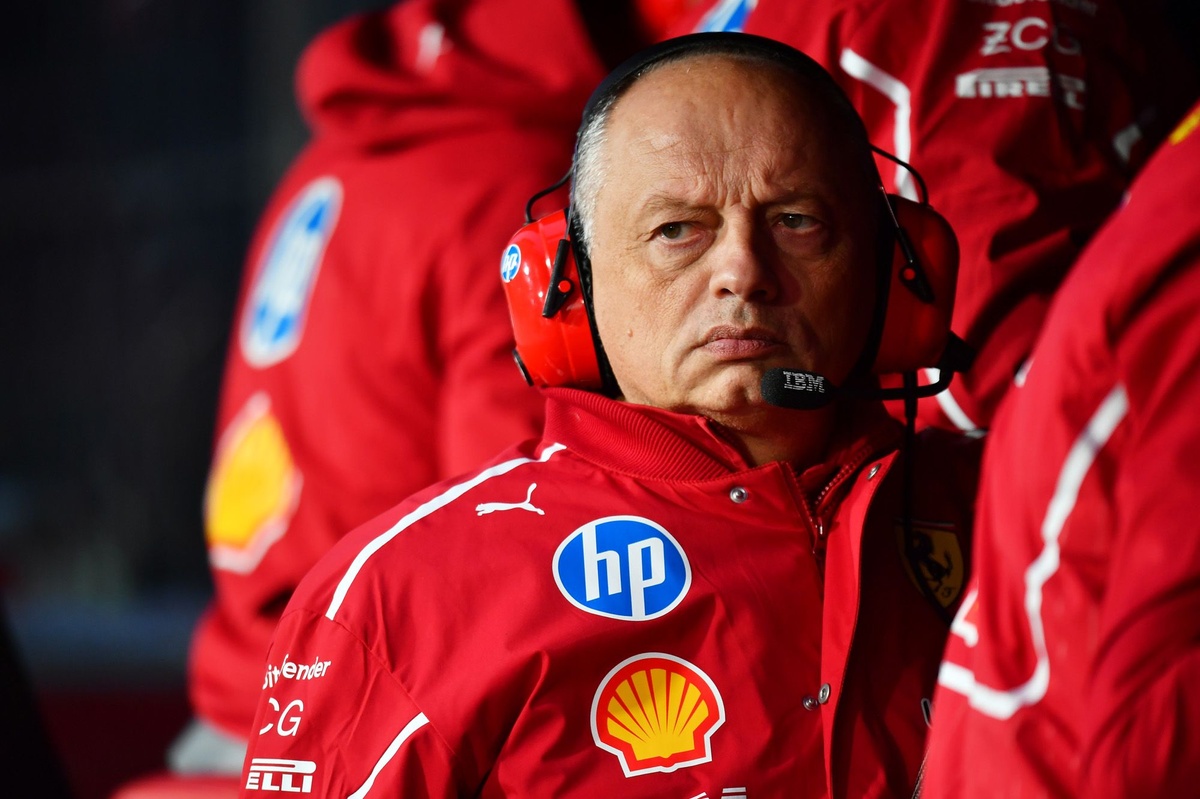
Ferrari’s Team Principal Responds to Hamilton’s Frustrations After Las Vegas Grand Prix
Ferrari’s team principal, Fred Vasseur, has addressed the recent comments made by Lewis Hamilton following the Las Vegas Grand Prix, where the seven-time world champion expressed significant disappointment regarding his performance. Vasseur urged everyone to remain calm and focus on the upcoming races instead of dwelling on the past.
Hamilton finished the race in 10th place after starting from the back row due to a challenging qualifying session. His attempts to set a competitive lap time were thwarted during the wet conditions of Q1, resulting in a frustrating outing. Despite gaining nine positions during the race and benefiting from McLaren’s subsequent disqualification of both drivers, Hamilton left the circuit feeling disheartened. He described the weekend as yielding “zero” positives and referred to it as the "worst season ever" in his illustrious career.
Hamilton’s Challenging Season
This season has been particularly tough for Hamilton, who, at 40 years old, finds himself in sixth place in the 2025 championship standings. He has yet to secure a podium finish during the current campaign and trails his teammate Charles Leclerc by a staggering 74 points. The challenges he has faced with Ferrari have led to increased scrutiny and pressure, especially after the high expectations that came with his move to the team.
The Las Vegas result was particularly disappointing, especially given Hamilton’s promising performance during the practice sessions leading up to the race. He had shown competitive pace, raising hopes for a strong showing in the race. However, the missteps during qualifying ultimately overshadowed his preparations, leading to a race that did not reflect his potential.
Vasseur’s Perspective on the Situation
In response to Hamilton’s comments, Vasseur emphasized the need for patience and perspective. He acknowledged Hamilton’s feelings in the immediate aftermath of the race but suggested that the situation may not be as dire as it seems. Vasseur noted that Hamilton had demonstrated competitive speed in both FP1 and FP2 and that the team must build on that momentum moving forward.
“It’s essential for us to stay level-headed,” Vasseur said. “We need to focus on the next two races, which are crucial for us. We believe that we can rebound and perform better.” With races in Qatar and Abu Dhabi still to come, Vasseur is hopeful that the team can turn things around and deliver improved results.
The Importance of Media Interactions
Vasseur also pointed out the challenging nature of the media environment in Formula 1, particularly the immediate requirement for drivers to engage with the press following a race. He noted that the adrenaline and emotions from a tough race can lead to heightened reactions, which may not always reflect the drivers’ true feelings or the situation’s reality.
“Having drivers go straight to the media pen just five minutes after a difficult race is quite harsh,” Vasseur remarked. “It’s understandable that emotions run high in those moments.” He believes that such immediate interactions can lead to comments that may seem overly harsh or negative, which can further amplify the situation.
Vasseur expressed his preference for drivers to be candid about their frustrations rather than putting on a facade of positivity when the team has not performed well. “It’s natural for drivers to express their feelings, especially after a challenging race. I’d rather hear them say they’re frustrated rather than simply offering platitudes about how everything is perfect,” he explained.
Looking Ahead to Future Races
As the team prepares for the upcoming races, Vasseur emphasized the importance of collaboration between the drivers and the engineering team. He believes that the most critical aspect is not the immediate media comments but the constructive discussions that take place within the team afterward. “What matters is what they do on Monday morning with the team to analyze and improve,” he stated.
Hamilton’s frustrations are indicative of the intense pressure that comes with competing at such a high level. For a driver of his caliber, the expectation to perform consistently is immense, and the transition to a new team can add additional complexities. Vasseur’s approach aims to foster an environment where drivers can express their concerns while also focusing on the collective goal of improvement.
The Role of Team Dynamics
The dynamics within the Ferrari team play a crucial role in navigating such challenging times. Vasseur, who has taken the helm at Ferrari, understands the intricacies of team dynamics and the need for open communication. He is committed to fostering an environment where drivers feel supported and empowered to share their thoughts and feelings.
With Hamilton and Leclerc both striving for success, Vasseur’s leadership will be instrumental in guiding the team through the remainder of the season. The ability to balance individual driver needs with the overall team strategy will be vital for achieving their goals.
Emphasizing Improvement and Growth
In the world of Formula 1, each race presents an opportunity for learning and growth. Vasseur highlighted the necessity for the team to focus on continuous improvement. “Every race weekend is a chance for us to learn and adapt. We need to take the lessons from Las Vegas and ensure we apply them moving forward,” he stated.
As the season progresses, the team will be looking to capitalize on their strengths while addressing any weaknesses that have been exposed. The collaborative effort between drivers and engineers will be crucial in refining the car’s setup, optimizing performance, and ultimately achieving better results on the track.
Conclusion
Ferrari’s journey in the 2025 season is far from over, and both Fred Vasseur and Lewis Hamilton recognize the importance of resilience and teamwork. While the challenges have been significant, the potential for success remains. With a focus on collaboration, open communication, and a strategic approach to the upcoming races, Ferrari aims to turn the tide and regain their competitive edge in Formula 1.
