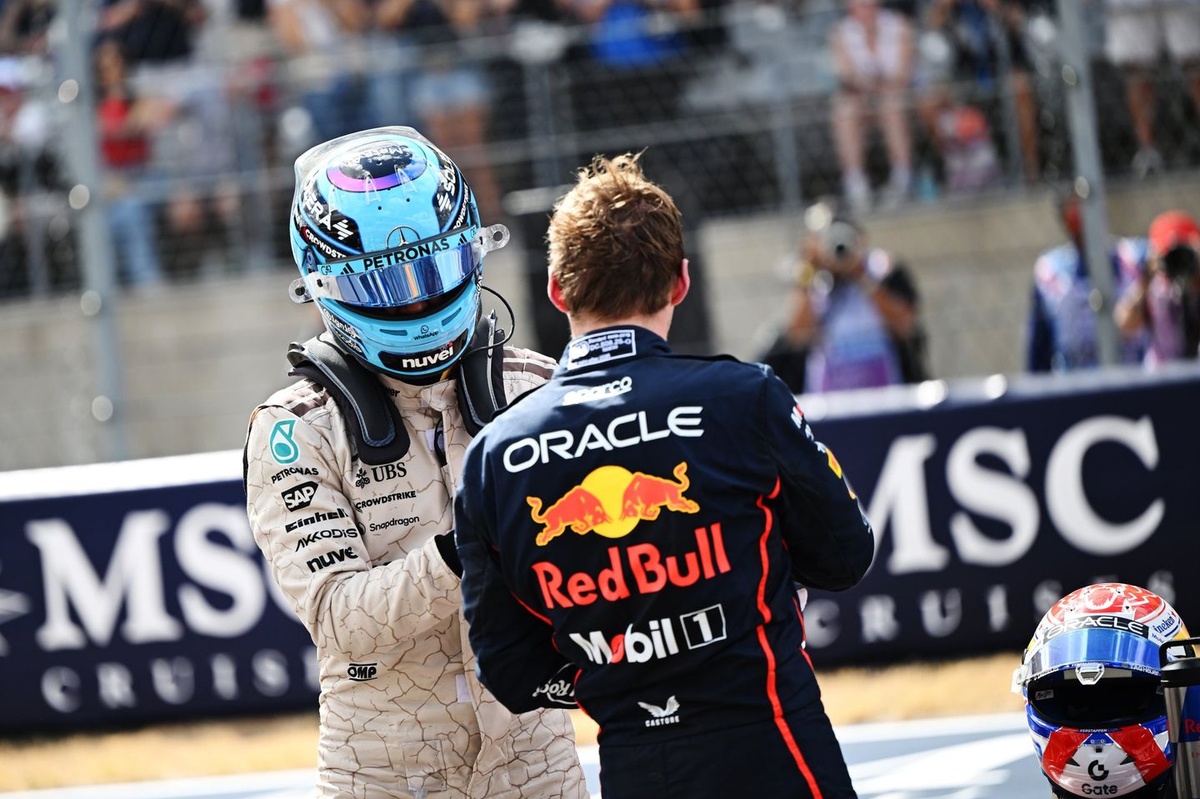
Max Verstappen’s Championship Aspirations Strengthened in Austin
On Saturday in Austin, Max Verstappen’s hopes for winning the championship received a significant boost. The Dutch driver witnessed both McLaren cars exit the sprint race early. In addition to scoring eight points for himself, Verstappen later clinched the pole position for the upcoming grand prix.
Despite these achievements, there were lingering concerns for Verstappen and his team, Red Bull Racing, regarding the car’s balance during the sprint event. The current world champion expressed that the ride quality, particularly at the rear of the vehicle, was not up to par. Helmut Marko, a key advisor for Red Bull, also noted that the team experienced higher-than-anticipated tire degradation, which could pose a challenge in the race.
Analyzing the Car’s Performance
The issues identified by the team were primarily attributed to the car’s setup. During the post-sprint press conference, Verstappen noted that, unlike earlier seasons, the team no longer felt adrift in their approach. However, he acknowledged the need for adjustments after the parc ferme was opened for modifications. These tweaks have since been implemented, and Marko is optimistic about improving the team’s race pace compared to their sprint performance.
Understanding the Qualifying Advantage
While Red Bull had an impressive qualifying session, Mercedes driver George Russell pointed out another contributing factor to the team’s performance at Circuit of the Americas (COTA). Russell believes that the disparity between Red Bull’s qualifying speed and their sprint race execution is more a reflection of the car’s inherent characteristics rather than just setup adjustments.
“Max was obviously super quick. It’s not the first time we’ve seen them excel in qualifying on high-speed tracks. They were on pole in Silverstone, Suzuka, and now here. Their downforce seems particularly effective when the car is at a low ride height, which is advantageous in high-speed corners,” Russell commented.
He elaborated on how this characteristic becomes especially pronounced during qualifying when teams push their cars to the limit, resulting in peak cornering speeds. In these moments, the ground-effect suction helps draw the car close to the track, enhancing performance.
Sprint Race Dynamics
During the weekend’s shorter race, Russell was able to maintain a closer proximity to Verstappen and even attempted to make a pass. When questioned about this surprising proximity given Red Bull’s qualifying advantage, Russell clarified his thoughts.
“No, not really. I think their aerodynamic setup is very effective when the car is low to the ground, especially in high-speed corners. For us, it’s quite the opposite; we struggle under those conditions,” he noted. “In the race scenario, drivers navigate high-speed corners at a lower speed, which means the cars are raised higher. Consequently, we’re not experiencing a drastic drop-off in performance, allowing us to stay competitive.”
Russell suggested that Red Bull’s strengths at COTA diminish in race conditions. While the car is pushed to its limits during qualifying and benefits from low ground clearance, the dynamics change during the race. The continuous demands of race conditions lead to tire wear and diminished performance, thus narrowing the gap between the two teams.
Mercedes’ Podium Aspirations
With this understanding, Russell expressed his hopes of being competitive in Sunday’s race, starting from fourth on the grid. “I hope to contend for a podium finish. There are several teams around us that could make for an exciting battle. Oscar is starting out of position, and I anticipate he’ll be quick, so he needs to make a clean start around Turn 1,” he said.
Meanwhile, McLaren faced a challenge due to limited data from the sprint race, which they viewed as a disadvantage. However, Russell was less concerned, pointing out that the race featured two safety car periods, which prevented teams from gaining a comprehensive long-run reference.
“We finished two and a half seconds ahead of a Williams. We expected to perform better than that, and we still haven’t fully grasped what McLaren can achieve. They tend to thrive in these hot conditions. In the sprint, we only completed about 10 or 11 laps. Tomorrow, we have a full 55 laps to navigate,” Russell remarked, indicating that the main race would present an element of uncertainty for all teams, not just McLaren.
The Competitive Landscape in Austin
As the race day approached, it became evident that several factors could influence the outcomes for each team. With Red Bull’s performance being scrutinized and Mercedes showing signs of competitiveness, the dynamics of the race promised to be complex.
The Role of Strategy
Strategy plays a crucial role in Formula 1. Teams must decide when to pit for tire changes, which can significantly affect their overall performance. The varying tire degradation levels observed during the sprint could influence decisions made by the teams during the grand prix. If Red Bull did indeed experience higher degradation than anticipated, they might need to adjust their pit strategy to maintain their advantage.
Weather Conditions
Weather can also impact performance on race day. The temperature and humidity levels can influence tire behavior and overall car performance. Teams that adapt quickly to these changing conditions often find themselves at an advantage. Understanding how their cars respond to varying temperatures will be key for both Red Bull and Mercedes.
The Importance of Driver Skill
Driver skill and experience also play significant roles in the race. While car performance is essential, the ability of drivers to maximize their vehicle’s potential and make split-second decisions can be the difference between finishing in the points or struggling to gain positions. Verstappen’s ability to manage tire wear while maintaining pace will be critical, particularly if Red Bull is indeed facing higher degradation.
Fan Engagement and Anticipation
The excitement surrounding the race weekend was palpable, with fans eager to see how the competitive landscape would unfold. Social media buzzed with predictions and discussions about potential outcomes, and the atmosphere at the Circuit of the Americas was electric, with supporters from various teams showing their colors and rallying behind their favorites.
Engaging with the Audience
Engaging with fans is vital for the teams, as their support can significantly influence a driver’s performance. The energy from the crowd can motivate drivers, pushing them to perform at their best. Verstappen, known for his passionate fan base, often draws on this energy to fuel his performance on the track.
Conclusion
With the race day looming, it was clear that the competition at COTA would not be a straightforward affair. Verstappen’s strong qualifying performance and the ongoing rivalry with Mercedes set the stage for an exciting grand prix. As teams and drivers prepared for what would unfold, fans and pundits alike were eager to witness the next chapter in this thrilling season of Formula 1.
