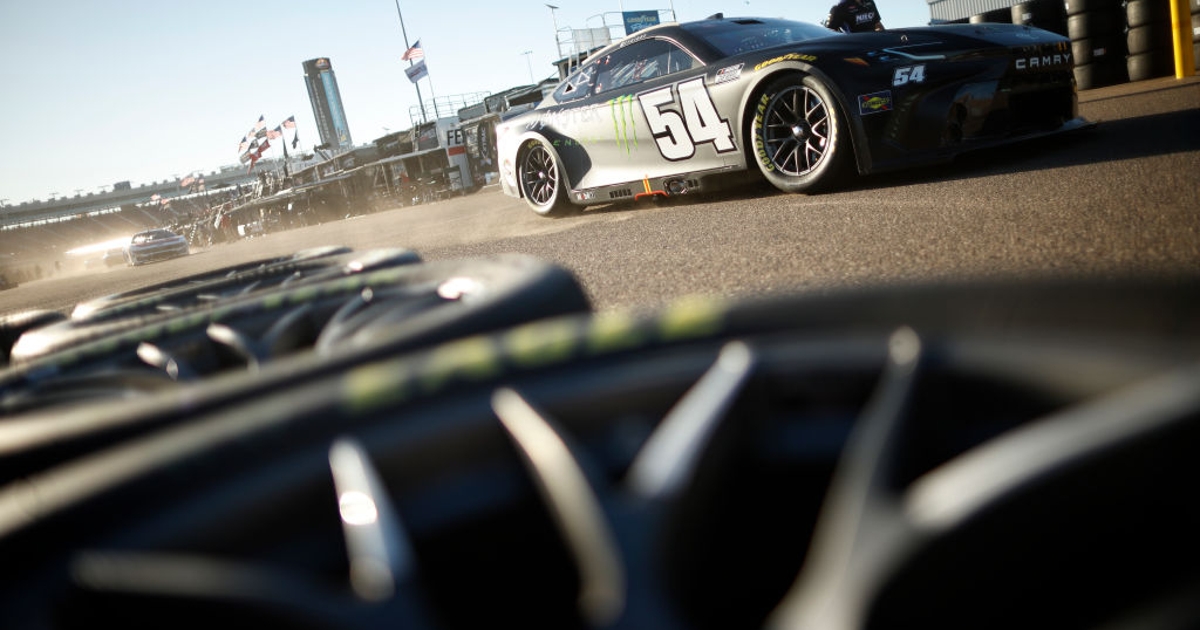
2025 NASCAR Cup Series Final Practice: An Eventful Session for Title Contenders
The final practice session for the 2025 NASCAR Cup Series was nothing short of thrilling, especially for those competing for the championship title. With a mix of speed, strategy, and unexpected challenges, the session set the stage for an exciting weekend ahead.
Ty Gibbs Leads the Pack
Ty Gibbs emerged as the fastest driver during this critical practice, clocking an impressive speed of 131.868 mph, which translates to a lap time of 27.300 seconds. This noteworthy performance not only highlighted Gibbs’ prowess on the track but also positioned him as a serious contender for the championship title. His speed was closely followed by Ryan Blaney, who recorded a speed of 131.406 mph, making him the second-fastest driver in the session.
Competitive Spirit Among Title Contenders
The competitive nature of the session was evident, with several title contenders showcasing their skills. Austin Cindric secured the third-fastest lap with a speed of 131.377 mph, while Ryan Preece followed closely in fourth place with a speed of 131.353 mph. Denny Hamlin, another key player in the championship battle, rounded out the top five with a speed of 131.262 mph. Though Hamlin expressed concerns about clutch issues during the practice, his pace on the track remained strong, indicating that his team would likely address any lingering concerns before the crucial qualifying rounds on Saturday.
Chase Elliott and Other Key Players
Chase Elliott, a fan-favorite and former champion, recorded the sixth-fastest time at 131.147 mph. His performance, along with that of Ross Chastain, who clocked in at seventh with a speed of 131.137 mph, underscored the depth of talent present in the session. Josh Berry and William Byron also performed admirably, finishing eighth and ninth, respectively, with speeds of 131.104 mph and 131.099 mph. Rounding out the top ten was Christopher Bell, who achieved a speed of 130.971 mph.
Kyle Larson, another championship contender, faced a bit of adversity during the session. Although he was ranked 11th on the speed chart, Larson brushed the wall during practice. Fortunately, it appeared that his car sustained no significant damage, allowing him to continue his preparations for the upcoming race.
Chase Briscoe’s Challenges
Chase Briscoe, who is also in contention for the championship, had a more challenging practice session. He ended up as the slowest championship contender, finishing in 16th place. Briscoe’s No. 19 Toyota faced difficulties early on when a left rear tire went down, leading to multiple vibration issues throughout the session. Ultimately, he completed only 24 laps, one of the lowest totals among the drivers. In contrast, Kyle Larson managed to complete 69 laps, Denny Hamlin ran 65 laps, and William Byron finished with 64 laps.
Briscoe expressed his frustrations about the issues, noting the importance of finding a solution before the race. He mentioned that while it was unfortunate to face such challenges, it was comforting to know that other drivers were also experiencing similar tire issues. The team’s crew chief, James Small, would need to work diligently to address these concerns before race day.
Tire Troubles for Other Drivers
Tire issues plagued several other drivers during the practice session, which added an extra layer of unpredictability. Daniel Suarez experienced two left rear tire failures, while AJ Allmendinger faced a similar fate, with his second tire failure resulting in a hard crash for his Kaulig Racing team. Kyle Busch also encountered tire problems late in the session, highlighting the critical role that tire management plays in NASCAR racing.
Riley Herbst had his share of troubles as well, hitting the wall in Turns 1 and 2 due to a tire issue. These incidents served as a reminder of the potential hazards that can arise during high-speed racing and the importance of maintaining a well-functioning vehicle.
Briscoe’s Outlook
Despite the challenges faced during practice, Briscoe remained optimistic about his team’s ability to address the issues before the race. He acknowledged the need for adjustments and emphasized the importance of collaboration with his crew to find solutions. The extended hour-long practice session provided an opportunity for teams to make necessary changes, which is a crucial advantage over typical race weekends with tighter schedules.
Briscoe’s determination to improve his performance showcases the resilience required in NASCAR racing. He expressed confidence that his team could overcome the obstacles they faced in practice, ultimately setting themselves up for a competitive showing in the race.
Average Lap Times and Performance Metrics
As the practice session progressed, several drivers stood out in terms of their average lap times. Ryan Blaney demonstrated consistency, achieving the best consecutive lap averages across five, ten, and twenty-lap counts. This performance indicated that he not only had speed but also reliability, which is essential for a successful race strategy.
Kyle Larson, known for his skill in managing longer runs, excelled in the 15 and 25-lap averages, showcasing his ability to maintain competitive speeds over extended periods. William Byron, another strong contender, topped the 30-lap average, suggesting that he is well-prepared for the endurance demands of the race.
A Competitive Field
With 38 teams entered for the season finale at Phoenix Raceway, the competition is fierce. Each team is vying for the top positions, and the stakes are particularly high for those in contention for the championship title. The combination of skilled drivers, strategic teams, and the unpredictable nature of racing ensures that fans will be treated to an exhilarating event.
As the weekend unfolds, the focus will shift to qualifying, where drivers will have the opportunity to secure their starting positions for the race. With the lessons learned from practice, teams will fine-tune their strategies and make necessary adjustments to maximize their chances of success.
Preparation for the Race Ahead
In the lead-up to the race, teams will analyze data collected during practice to inform their strategies. This includes assessing tire wear, fuel consumption, and handling characteristics of their cars. The ability to adapt and make informed decisions will be crucial for drivers as they navigate the complexities of the race.
Each team will also consider factors such as weather conditions, track temperature, and tire compounds when formulating their race strategies. These elements can significantly influence performance and may determine the outcome of the race.
Fan Engagement and Anticipation
As the race weekend approaches, fans are eagerly anticipating the action on the track. The excitement surrounding the championship battle adds an extra layer of intrigue, with supporters rallying behind their favorite drivers. The atmosphere at Phoenix Raceway is expected to be electric, with fans keen to witness the culmination of the NASCAR Cup Series season.
Social media platforms and various fan engagement initiatives will also play a role in heightening the excitement. Fans will have the opportunity to interact with teams and drivers, providing a sense of connection and involvement in the racing community.
Conclusion
The final practice session for the 2025 NASCAR Cup Series was a pivotal moment for title contenders as they prepared for the championship race. With a mix of speed, strategy, and challenges, the session showcased the talent and determination of the drivers and their teams. As they head into qualifying and the race, the focus will be on overcoming obstacles and seizing the opportunity for victory. The stage is set for an unforgettable conclusion to the NASCAR Cup Series season.
