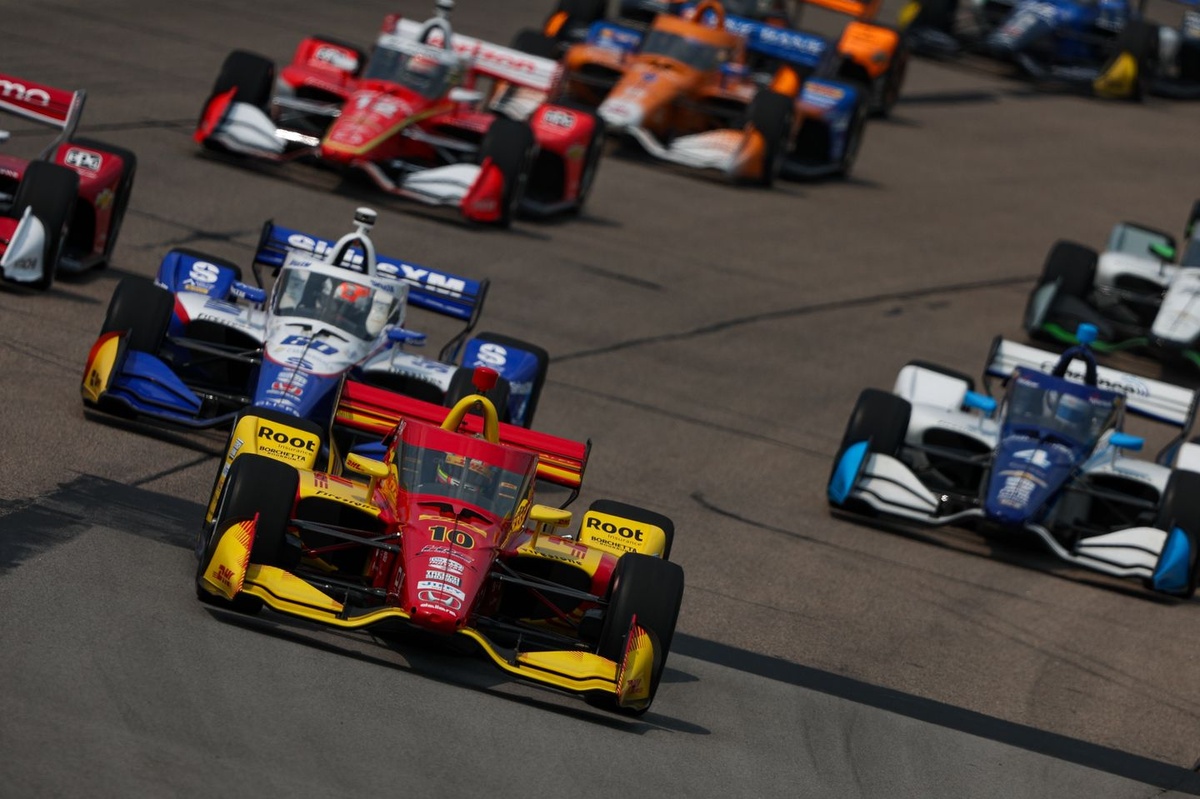
Changes to Superlicence Points Allocation for IndyCar Ahead of 2026 Season
The FIA has announced a revised allocation of superlicence points for the IndyCar series as it prepares for the upcoming 2026 season. This adjustment has sparked discussions within the racing community, particularly among team members and drivers who have long felt that the previous points system was not adequately rewarding the efforts and achievements of competitors in the series.
New Points System Overview
Under the newly established guidelines, the top ten finishers in the IndyCar championship will now receive superlicence points, with a modified distribution. The new points structure is as follows: 40 points for first place, 30 for second, 25 for third, 20 for fourth, 15 for fifth, 10 for sixth, 8 for seventh, 6 for eighth, 3 for ninth, and 1 point for tenth. This is a significant change from the earlier system, which awarded points as 40-30-20-10-8-6-4-3-2-1.
This new allocation strengthens IndyCar’s position as a secondary "feeder series" to Formula 1 in terms of superlicence points. While Formula 2 holds the top spot with its own point distribution of 40-40-40-30-20-10-8-6-4-3, IndyCar now ranks above Formula 3, which has a points allocation of 30-25-20-15-12-9-7-5-3-2. It is important to note that while IndyCar is gaining recognition in this context, its primary intention is not to serve merely as a stepping stone to F1.
Implications for Drivers
The implications of this new points allocation are significant, particularly for drivers aspiring to transition into Formula 1. In recent years, the superlicence eligibility criteria have posed challenges for several IndyCar competitors. A notable example is Colton Herta, who faced obstacles in his attempted move to F1 with AlphaTauri due to a shortfall in superlicence points. Between 2019 and 2021, Herta secured finishes of seventh, third, and fifth in IndyCar, accumulating just 32 superlicence points.
Under the revised system, however, Herta would have accumulated 48 superlicence points, comfortably surpassing the necessary threshold of 40 points. Despite this positive change, Herta has shifted his focus to the F2 series for 2026, where he aims to secure a seat in F1 by 2027, making the new points system irrelevant to his current situation.
Eligible Drivers Based on Recent Seasons
Looking at the performance of IndyCar drivers over the last three seasons, several stand out as eligible under the new points system. Alex Palou emerges as a leading contender, having amassed an impressive 120 superlicence points through three consecutive championship titles. Scott Dixon follows with 56 points, having achieved finishes of second, sixth, and third in the same timeframe.
Other notable drivers include Pato O’Ward, who secured 48 points with finishes of fourth, fifth, and second, and Scott McLaughlin, who collected 41 points from a third, third, and tenth-place finish. These drivers exemplify the diverse talent present in the IndyCar series, showcasing their potential to compete at the highest levels of motorsport.
Retroactive Application of the New Points System
While the new points allocation will take effect from the 2026 season onwards, it is interesting to consider the potential impact had it been applied retroactively. An analysis of the previous three IndyCar seasons reveals that even with the new system, no additional drivers would have qualified for a superlicence during the 2023-2025 period.
Alex Palou would still lead the way with 120 points, followed by Scott Dixon with 65 points, Pato O’Ward with 65 points, and Scott McLaughlin with 51 points. The closest driver to the eligibility threshold, Colton Herta, would still fall short with 39 points, emphasizing the challenges he faced in securing a superlicence under the old system.
Conclusion
In summary, the FIA’s revision of the superlicence points allocation for IndyCar represents a significant shift in how drivers are rewarded for their performances within the series. By increasing the points available to top finishers, the new system aims to better reflect the dedication and skill of drivers competing in IndyCar. As we look ahead to the 2026 season, it will be intriguing to see how these changes influence the careers of aspiring F1 drivers and the overall competitive landscape of both IndyCar and Formula 1.
