The Ongoing NASCAR Antitrust Trial: A Deep Dive into the Courtroom Drama
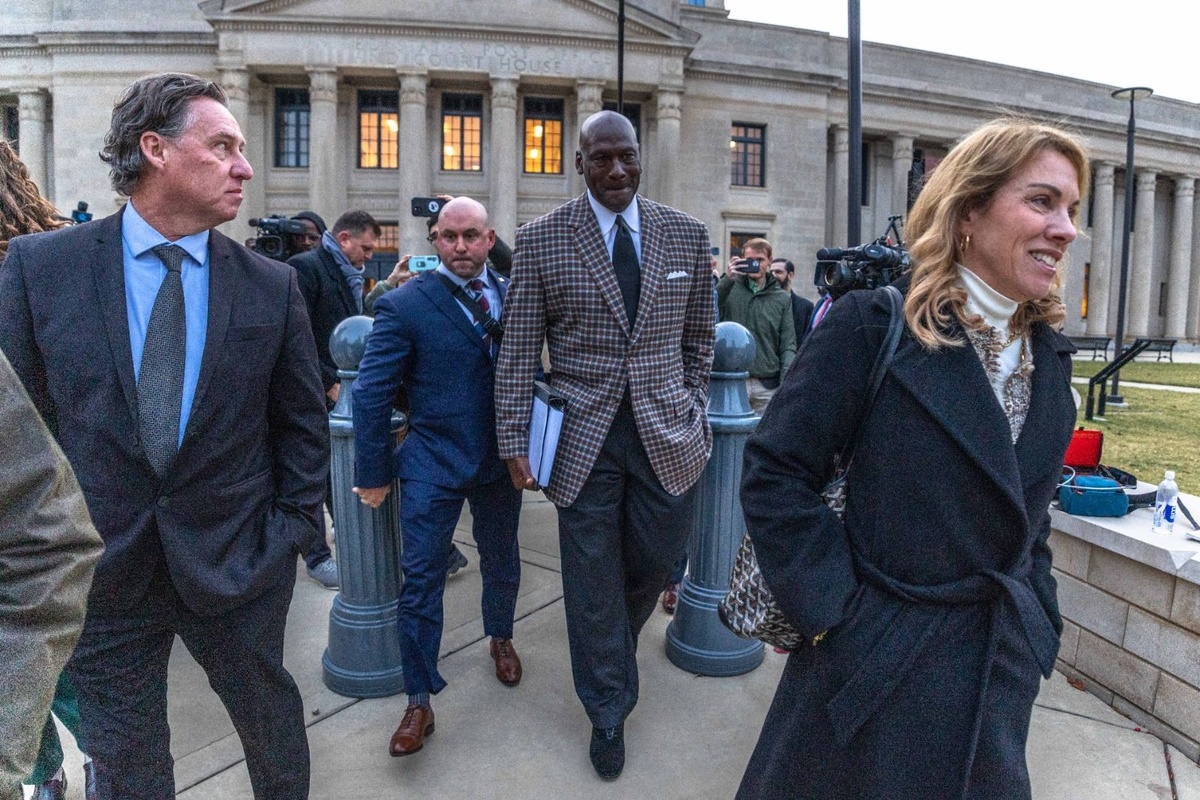
The courtroom drama surrounding the antitrust trial involving 23XI Racing and Front Row Motorsports against NASCAR is captivating and has the potential to significantly alter the landscape of stock car racing. As the case unfolds in a North Carolina courtroom, key moments reveal the complexities and challenges that define the relationship between NASCAR and its affiliated teams. This article provides an extensive overview of the trial’s most significant developments, featuring insights from various testimonies and the implications for the future of the sport.
Day 4: Unpacking the Threat of SRX
On Day 4 of the trial, the focus turned to the now-defunct Superstar Racing Experience (SRX). The courtroom was abuzz as previously sealed communications were revealed, showing that NASCAR executives regarded SRX as a formidable competitor. Testimony from team attorney Jeffrey Kessler emphasized that NASCAR’s actions to suppress SRX could be pivotal in determining whether the organization is misusing its monopoly power to undermine competition in the stock car racing sector.
NASCAR President Steve O’Donnell found himself in the hot seat as Kessler probed into the organization’s concerns about SRX. While NASCAR received accolades for reintroducing revered short tracks like Bowman Gray and North Wilkesboro to its schedule, the trial uncovered that these decisions were, at least partially, influenced by the fear of SRX potentially outperforming them at those venues. Furthermore, NASCAR’s preventative measures against Speedway Motorsports hosting SRX events were scrutinized.
O’Donnell explained that NASCAR was in the midst of negotiating a new broadcasting rights agreement when SRX began to resemble NASCAR in its operations, prompting a swift rejection from their side. He articulated that NASCAR’s intent was to secure maximum television revenue for teams and tracks, expressing concern that SRX could impede those goals. The revelation that drivers and teams were not fully committed to NASCAR by participating in SRX added fuel to the fire.
When questioned about his request for NASCAR’s legal team to investigate SRX, O’Donnell cited concerns over intellectual property infringement. The comparison between SRX’s challenges to NASCAR and LIV Golf’s disruption of the PGA Tour was not lost on the court, highlighting the anxieties of NASCAR’s leadership about potential competition.
In a noteworthy exchange, O’Donnell recalled a discussion from a February 2023 meeting where Jeff Gordon asked Ben Kennedy, a descendant of NASCAR’s founder, whether the family was open to exploring new financial models to support teams. Kennedy’s affirmative response was contradicted by O’Donnell when pressed by Kessler, indicating a disconnect within NASCAR’s leadership regarding its willingness to adapt.
O’Donnell also disclosed that NASCAR incurred a staggering loss of $55 million while operating the Chicago Street Course over three years. Despite the financial setback, NASCAR maintained that the investment was strategic, as it enabled them to secure Amazon as a broadcasting partner. Similarly, NASCAR reported a $6 million loss from a race in Mexico City, justified by the importance of maintaining Amazon’s support, which included an additional $1 million in race purse contributions.
Day 3: Tensions Rise with Key Testimonies
Day 3 of the trial saw Scott Prime, NASCAR’s Executive Vice President and Chief Strategy Officer, facing a rigorous cross-examination. The interactions between Prime and Kessler became heated, with Kessler even apologizing for raising his voice during questioning. The focus was on the goodwill provision in the upcoming 2025 Charter Agreement, which restricts team owners from participating in other racing series without NASCAR’s consent. Kessler argued that this provision represented anti-competitive behavior, drawing objections from NASCAR’s legal team.
Kessler also highlighted the Next Gen car, arguing that its intellectual property restrictions served to limit competition and trade. In a pointed exchange, Kessler referenced an email from NASCAR Commissioner Steve Phelps, in which he adopted a ‘take it or leave it’ stance regarding negotiations. Kessler asserted, "Only a monopolist has the power to say, ‘Take my offer, and if you don’t, you will no longer be in this business.’"
Prime attempted to downplay NASCAR’s exclusivity agreements with race tracks, suggesting that rival series could still compete at alternative venues. Kessler, however, remained skeptical and pressed on this issue. The Amanda Chart, which outlined 22 requests made by race teams during negotiations with NASCAR, was another focal point, revealing that only one request resulted in a favorable outcome for the teams.
Bob Jenkins, owner of Front Row Motorsports, took the stand following Prime’s testimony. Jenkins, whose team stood alongside 23XI in opposition to NASCAR, revealed that he incurs annual losses of $6.8 million and has never achieved profitability. He discussed the substantial costs associated with racing under the Next Gen model, which had escalated from $1.8 million to $4.7 million per year.
When asked why he continued to operate in such challenging circumstances, Jenkins responded, "I believe in it. There are 150 employees at that race shop who believe in me to make this work." He expressed his disdain for the September 6 deadline imposed by NASCAR, describing it as "insulting" and "backwards." Jenkins noted the emotional turmoil among team owners during that time, stating, “No owner said, ‘I was happy to sign it.’ Not a single one.”
As the day drew to a close, Judge Bell expressed concern over the trial’s pace, urging both sides to expedite proceedings. He noted that the jury had been exposed to redundant information and emphasized the need to streamline witness testimonies.
Day 2: Hamlin Under Fire and NASCAR’s Internal Struggles
On Day 2, Denny Hamlin, co-owner of 23XI Racing and a prominent NASCAR driver, faced intense questioning from NASCAR attorneys. The exchanges were notably contentious, as Hamlin repeatedly asserted, "We’re not a monopoly like you are." He shared his frustrations with NASCAR CEO Jim France, which stemmed from a 2022 banquet where France criticized teams for overspending.
Hamlin articulated that cutting costs was not a viable pathway to growth, asserting, "I can’t cut my costs in half. It’s not realistic." His financial success was also highlighted; he reportedly earns $14 million annually with Joe Gibbs Racing. When asked why he earns more than many other drivers, he confidently replied, "I am at the top of my game."
Scott Prime found himself in the spotlight as well, tasked with addressing internal conflicts within NASCAR regarding the charter system. Kessler pressed Prime on the apparent roadblocks posed by CEO Jim France in granting teams better terms. The issue of a potential breakaway series was also raised, along with NASCAR’s efforts to prevent a split akin to the CART/IRL divide in open-wheel racing.
Day 1: The Trial Kicks Off
The trial commenced with jury selection, followed by opening statements that set the tone for the proceedings. Denny Hamlin was the first witness to take the stand, though his testimony was relatively brief, lasting only 40 minutes. Notably, he discussed the competitive landscape for sponsorships, highlighting the challenges teams face in securing funding due to NASCAR’s rival interests.
The opposing sides laid out their cases, with NASCAR attorneys framing 23XI and Front Row Motorsports as challengers to the charter system, suggesting that claims of antitrust violations arose only after the refusal to sign a new agreement. Kessler sought to establish a narrative of a deliberate anti-competitive strategy orchestrated by Jim France, bolstered by revealing text messages from NASCAR leadership.
As the trial progresses, the implications for NASCAR and its teams continue to unfold. The outcome of this legal battle may not only redefine the dynamics within the sport but could also reshape the future of stock car racing as a whole. The stakes are high, and the courtroom remains a battleground where the future of an iconic American sport hangs in the balance.
