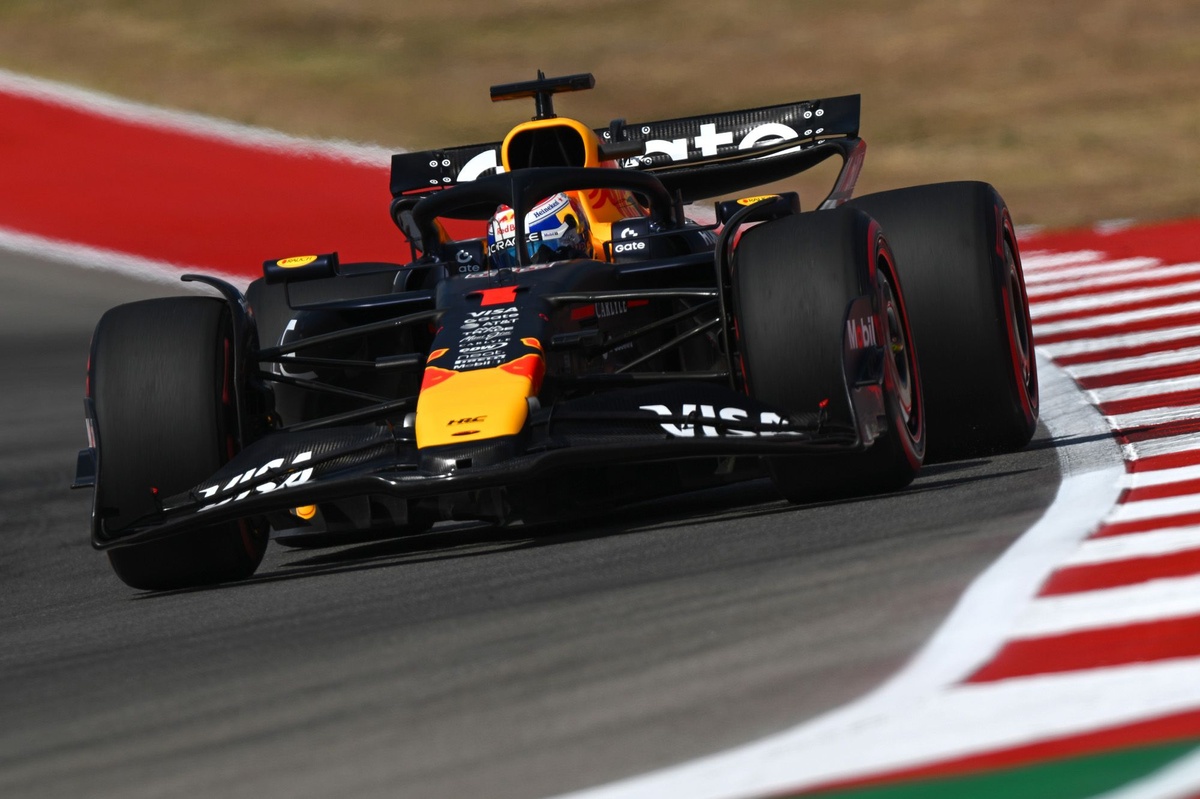
The Resurgence of Red Bull Racing: Analyzing Their Second Half of the F1 Season
Red Bull Racing has demonstrated a remarkable turnaround in performance during the latter half of the Formula 1 season, a transformation that has caught the attention of fans and competitors alike. As noted by Laurent Mekies following the Singapore Grand Prix, their resurgence has been nothing short of "spectacular." Since the summer break, Max Verstappen has consistently finished in the top two, with notable victories at Monza, Baku, and Austin, along with a sprint race win. This string of successes suggests that Red Bull’s improvement is not confined to a specific track type, as they have shown adaptability across various circuits.
Consistent Performance Across Different Tracks
Red Bull’s performance has been impressive across various types of tracks. Although the team faced challenges at Zandvoort, their subsequent victories confirmed their ability to compete effectively on both low-downforce and more technically demanding circuits. Teams and analysts were particularly curious about how Red Bull would fare in Singapore, known for its tight corners and technical demands, and then again in Austin, where medium-speed corners posed a different kind of challenge. Astonishingly, Red Bull managed to emerge from these tests with solid results, even if their race pace in Austin was not significantly better than McLaren’s.
The key question now revolves around the factors contributing to this significant improvement. Verstappen has acknowledged that the new floor introduced during the Monza race has played a role, but he emphasized that it is not the sole reason behind their enhanced performance. "It’s more about a different philosophy," he explained, highlighting a shift in how the team operates both before and during race weekends. This includes increased communication with drivers and a more measured reliance on data.
The Shift in Team Philosophy
The evolution in Red Bull’s approach is a noteworthy aspect of their resurgence. It reflects a more holistic strategy that encompasses both mechanical and aerodynamic elements of the car. Mekies and senior advisor Helmut Marko have pointed out that the way Red Bull "runs the car" has also changed fundamentally. This comprehensive reassessment of their approach has allowed them to maximize the potential of their vehicle.
During the race weekend in Austin, McLaren team principal Andrea Stella shared insights into Red Bull’s advancements. While he acknowledged that Red Bull had extended the development timeline for their 2025 car, he also noted that they might have resolved certain aerodynamic issues that had previously hindered performance. The introduction of the new floor in Monza and a new front wing in Singapore were pivotal changes that contributed to their competitive edge.
Understanding Ride Height Dynamics
A key aspect of Red Bull’s recent success lies in their understanding of ride height. Ground-effect cars are designed to operate as low to the ground as possible, with stiff suspension to extract maximum performance. More than 60% of downforce is generated from beneath the car, and a lower ride height enhances the ground effect, optimizing airflow and pressure differentials.
Stella posits that Red Bull has gained insights into how to run their car at lower ride heights, which has improved their performance. Lowering the ride height effectively increases the suction effect of the ground effect, thereby enhancing downforce without compromising the car’s overall balance.
The Importance of Plank Wear
Another important consideration in car performance is plank wear, particularly at a challenging track like the Circuit of the Americas. Teams strive to maintain as low a ride height as possible, but they must also consider the FIA’s regulations on plank wear. After each race, the FIA conducts checks to ensure that the plank has not worn down excessively. Teams are allowed a maximum wear of 1mm at specific measurement points, but they can theoretically wear other parts of the floor more, provided they pass inspection.
According to Sauber sporting director Inaki Rueda, teams have made various advancements in their ability to lower ride height without exceeding wear limits. Notably, different teams experience varying levels of wear on different parts of the plank. While many teams see the greatest wear on the rear half, McLaren has managed to shift wear to the front, presenting several competitive advantages.
Rueda elaborated on this aspect, explaining that the ability to manage wear toward the front of the car allows teams to run at lower ride heights, which can provide a performance edge. The challenge lies in balancing downforce generation, which predominantly occurs at the rear, while also managing the wear characteristics of the car.
The Technical Challenge of Ride Height Management
This challenge is inherently linked to suspension dynamics and kinematics. Moving wear forward requires maintaining downforce at the rear while ensuring the primary contact point is effective at the front. This delicate balance is a critical puzzle that every F1 team must solve under the current regulations.
McLaren was the first team to successfully shift wear to the front, but there are indications that Red Bull has made strides in this area as well. Their ability to lower the ride height in recent weeks has unlocked additional performance from the RB21, showcasing their technical prowess.
Confirmation from Key Figures
When asked about the theories surrounding ride height in the paddock, Helmut Marko responded affirmatively, indicating that the analysis is accurate. He acknowledged that Red Bull’s new understanding of how to operate the car, paired with the introduction of the Monza floor, has significantly influenced their performance.
However, Mekies prefers a more cautious approach, emphasizing that it is challenging to attribute their resurgence to a single factor. He believes that a comprehensive analysis of performance, along with multiple upgrades and a better understanding of the car’s operational window, has collectively contributed to their recent success.
A Complex Landscape of Performance
While Mekies is correct in stating that modern Formula 1 is intricate and multifaceted, the importance of the floor and ride height cannot be overlooked. Red Bull appears to have made significant advancements in these areas since the summer break, allowing them to find the RB21’s optimal operating window more consistently. Verstappen has suggested that this performance has been latent for some time, indicating a wellspring of potential that has finally been unlocked.
As the season progresses, it remains to be seen whether this newfound performance will be enough for Red Bull to secure a fifth consecutive title. Nonetheless, their resurgence has undeniably established them as a formidable force in Formula 1, particularly following a challenging few months.
Conclusion
The evolution of Red Bull Racing during the latter half of the Formula 1 season serves as a testament to the complexities and intricacies of modern motorsport. Their ability to refine their approach, understand the nuances of ride height and downforce generation, and leverage new technical upgrades has contributed to their impressive comeback. As they continue to navigate the challenges of the sport, the insights gained from their recent experiences will undoubtedly shape their strategy moving forward.
