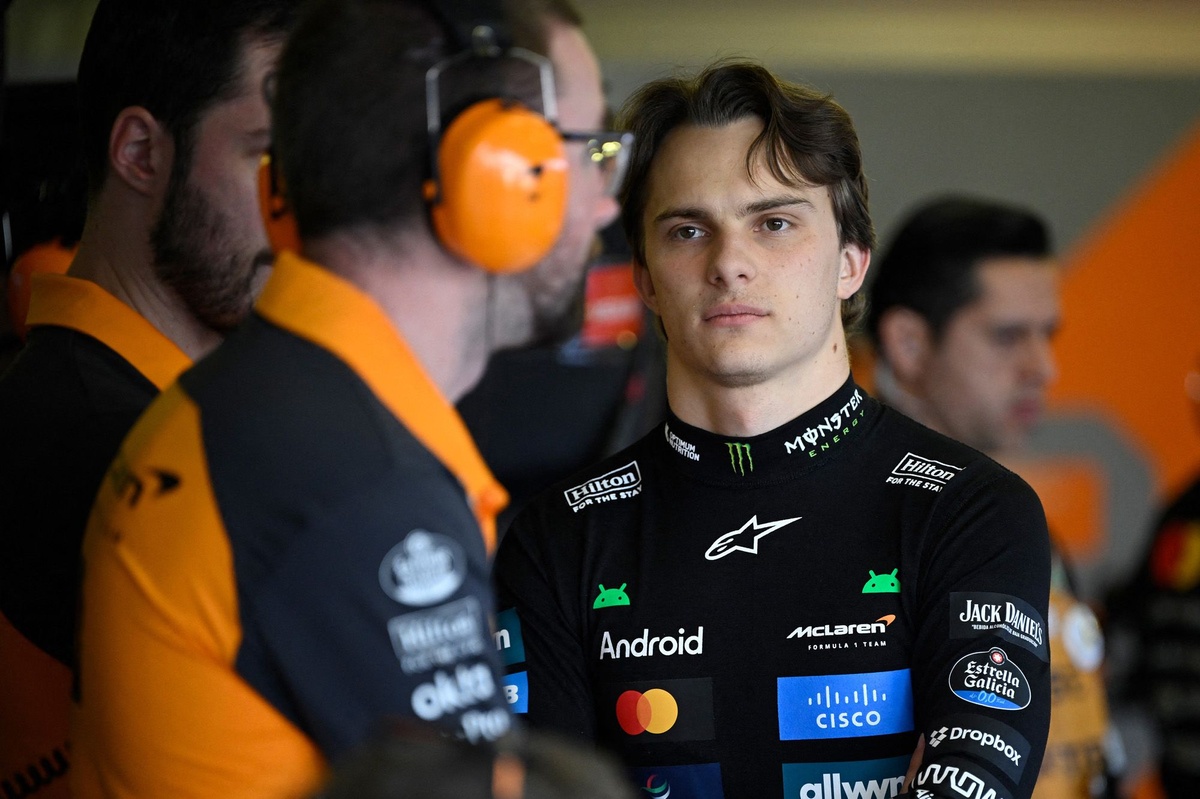
Oscar Piastri’s Formula 1 Journey: Analyzing the Recent Changes in Performance
Oscar Piastri, the young Australian driver competing for McLaren in Formula 1, recently experienced a significant turn in his championship standings. Leading the championship for an impressive 15 consecutive races, Piastri saw his advantage over his teammate Lando Norris peak at 34 points and even extend to 104 points ahead of reigning champion Max Verstappen after securing victory at the Dutch Grand Prix. However, a string of disappointing results has led to a sudden shift in his fortunes, with Norris overtaking him by a single point after the recent Mexican Grand Prix. This article delves into the implications of Piastri’s performance drop and insights shared by former champion Jacques Villeneuve.
The Rise and Fall of Piastri
The initial part of the season showcased Piastri’s remarkable talent, as he consistently outperformed expectations. His ability to maintain a lead in the championship for several rounds was a testament to his skill and adaptability on the track. However, a noticeable decline in performance began to surface after the Dutch GP, where he failed to secure podium finishes in four consecutive races. This unexpected downturn has raised questions about his mental state and competitive edge.
Jacques Villeneuve’s Perspective
Jacques Villeneuve, the 1997 Formula 1 World Champion, has offered a critical analysis of Piastri’s situation. He suggests that the Australian’s initial success may have inadvertently caused a sense of complacency. Villeneuve points out that in sports, it is common for teams or athletes who start strong to falter as the competition intensifies. He likens the phenomenon to teams that, despite a lackluster season, suddenly find their form as playoffs approach.
Villeneuve emphasizes that Piastri’s initial dominance may have led to a false sense of security. While he was performing exceptionally well, his teammate Lando Norris struggled at the start of the season, which may have caused Piastri to ease off on his competitive edge. According to Villeneuve, when drivers become too comfortable, they may not push themselves to achieve their maximum potential.
The Importance of Competitive Pressure
The introduction of competitive pressure can be a double-edged sword in Formula 1. As Villeneuve notes, a scenario where one teammate excels while the other faces challenges can lead to complacency. Piastri’s early success might have dulled his competitive instincts, particularly when he only had Norris to measure himself against. The lack of pressure from other competitors might have contributed to his recent struggle to maintain peak performance.
Villeneuve highlights the importance of continuously pushing oneself to the limits. He argues that when Piastri had to confront Norris’s resurgence in performance, the sudden realization of needing to do more may have disrupted his focus. This kind of mental shift can lead to a decline in performance, as drivers start to doubt their capabilities and make unnecessary adjustments to their driving styles.
The Impact of Team Dynamics
In Formula 1, team dynamics play a crucial role in shaping a driver’s performance. The relationship between teammates can greatly influence individual results, and the competitive environment within the team can spur drivers to reach new heights or hinder their progress.
Piastri’s Adaptation Strategies
During the Mexican Grand Prix, Piastri acknowledged that he attempted to adapt his driving style in response to the challenges he faced. "We certainly tried a lot of different things," he remarked. "I felt like I stared at the back of a lot of cars as well, so it was difficult to get a read on whether what I was changing in my driving was working that well or not."
This admission highlights how drivers often experiment with their techniques to gain an edge. However, such experimentation can also lead to confusion, especially when results do not align with expectations. The pressure to keep up with a teammate who is performing well can result in a series of adjustments that may not be beneficial, ultimately complicating a driver’s performance.
Mental Resilience in Motorsport
The mental aspect of racing is often underappreciated, yet it is a fundamental component of success in Formula 1. Piastri’s struggle reflects the mental toll that competitive pressure can exert on drivers. When faced with the need to improve, drivers may overthink their strategies, leading to a decline in their natural abilities. Villeneuve’s analysis underscores the importance of maintaining focus and confidence, particularly when navigating through challenging periods.
The Role of Consistency in Performance
Consistency is a vital element in achieving success in Formula 1. Piastri’s early season performance showcased a high level of consistency, which is often what separates champions from their competitors. However, the recent inconsistency in his results raises questions about his ability to maintain that standard over time.
The Challenge of Maintaining Momentum
One of the key challenges for any driver is maintaining momentum throughout the season. As Piastri experienced a series of podium-less races, the psychological burden of not achieving results can compound, leading to a downward spiral. Villeneuve’s observations about the correlation between mental state and performance are particularly relevant in this context. When drivers become fixated on their struggles, it can lead to a cycle of doubt and further declines in performance.
Learning from Adversity
While the current challenges may feel daunting, they also present an opportunity for growth. Piastri has the chance to learn from this experience and develop the mental resilience needed to navigate the pressures of Formula 1. Recognizing the need to push beyond comfort zones and addressing any complacency can be instrumental in regaining his competitive edge.
The Path Forward for Piastri
As the season progresses, Piastri must find ways to regain his confidence and performance levels. This involves not just technical adjustments but also a mindful approach to mental resilience and competitive strategy.
Embracing the Challenge
Moving forward, Piastri should view the current situation as a challenge rather than a setback. Embracing the competitive nature of Formula 1 and using it to fuel his drive can help him regain his momentum. By focusing on his strengths and maintaining a growth mindset, he can navigate through this rough patch and reclaim his position among the top competitors.
Strategic Adjustments
In addition to psychological resilience, making strategic adjustments to his racing style can also be beneficial. Piastri should focus on understanding where he can improve without overcomplicating his approach. Simplifying his technique and returning to the fundamentals that brought him success earlier in the season could allow him to regain confidence and improve his performance on the track.
Conclusion
Oscar Piastri’s journey in Formula 1 is a testament to the unpredictable nature of the sport. His initial success was followed by a challenging period that has raised questions about his mental state and competitive drive. Insights from Jacques Villeneuve highlight the complexities of performance under pressure and the importance of maintaining focus and confidence. As Piastri navigates this challenging phase, he has the opportunity to learn and grow, ultimately setting the stage for future success in his career.
