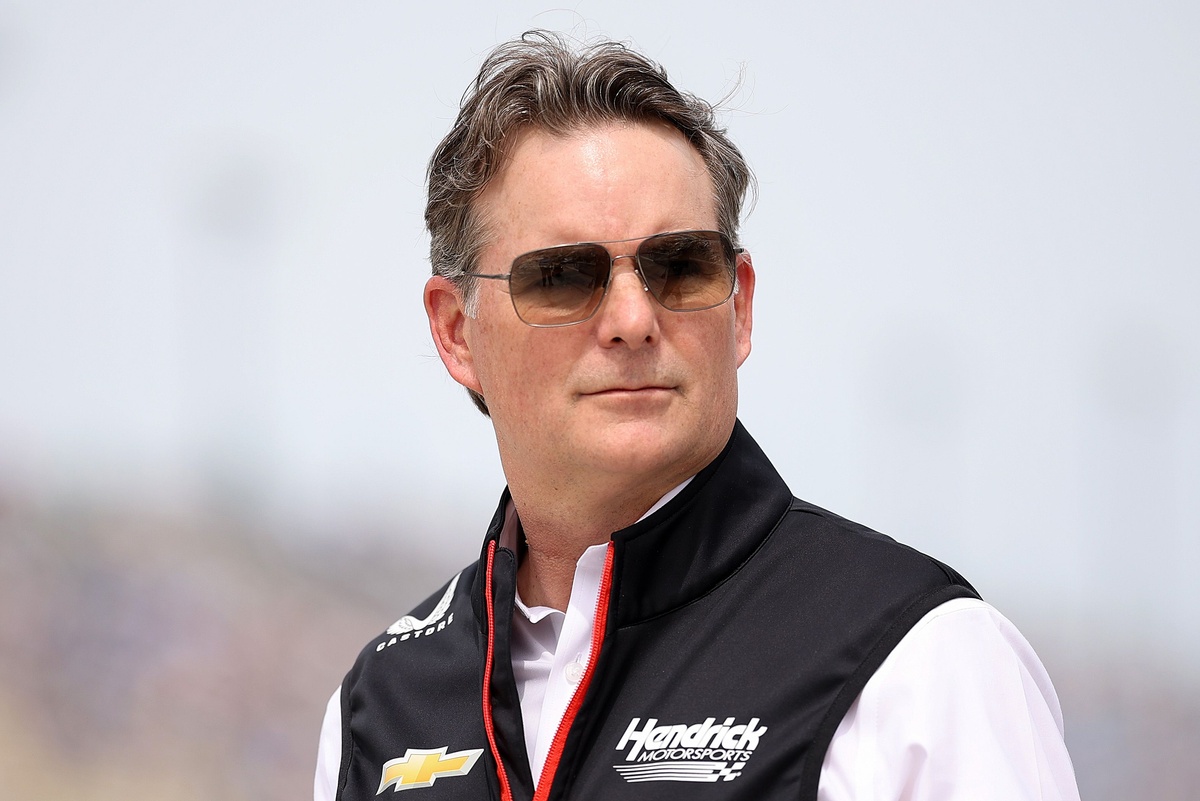
The Emotional Landscape of Race Car Drivers: A Look at Jeff Gordon and Denny Hamlin
Race car drivers are often seen as fierce competitors, driven by the adrenaline of high-speed pursuits and the thrill of victory. Yet, beneath the surface of this competitive spirit lies a complex emotional landscape, where memories of defeats often linger long after the cheers of triumph have faded. This phenomenon was poignantly illustrated by Jeff Gordon, a four-time Cup Series champion, during a recent post-race interview following a race at Kansas Speedway. His reflections on the nature of winning and losing provide valuable insights into the psyche of professional racers, particularly in the context of Denny Hamlin’s ongoing career.
The Weight of Defeat
In a candid moment, Gordon expressed a sentiment familiar to many athletes: the tendency to remember losses far more vividly than victories. “I can’t remember many of the ones I won, but I can tell you all the ones I lost,” he stated, encapsulating the emotional weight that defeats carry for competitors. This insight came in response to a question about how he relates to Hamlin, who is currently focused on achieving significant milestones in his career. Gordon’s words highlight a universal truth in sports: the sting of defeat often lingers longer than the sweetness of victory.
For drivers like Gordon and Hamlin, every race is not just a competition against others, but also a battle against their own memories and emotions. The losses, particularly those that come after strong performances, can haunt them. Miscalculations, poor decisions during crucial moments—these are the memories that replay in their minds long after the checkered flag has waved. Gordon’s acknowledgment of this shared experience with Hamlin adds a layer of empathy to the competitive landscape, reminding us that behind the wheel, these athletes are human.
The Race at Kansas Speedway
The recent race at Kansas Speedway showcased not only the competitive spirit of these drivers but also the unpredictability of motorsport. Denny Hamlin, driving for Joe Gibbs Racing in the No. 11 car, appeared poised for victory. He had dominated both stages of the race and was leading as the laps dwindled. However, just as it seemed that a win was within his grasp, adversity struck. Hamlin experienced a loss of power steering, a mechanical failure that can significantly impact performance and control on the track.
Even with this setback, Hamlin managed to maintain his lead with just 14 laps remaining. However, the race was interrupted by a caution due to a tire carcass on the track, which added another layer of unpredictability. Caution flags in racing can change the dynamics of a race, allowing competitors to regroup and strategize. Unfortunately for Hamlin, this particular caution came at a moment when he was looking to secure a win, adding to the frustration of an already challenging race.
The Impact of Pit Strategy and Mistakes
Pit stops are critical moments in racing, where teams must execute flawless strategies under immense pressure. During the Kansas race, a mistake on pit road compounded Hamlin’s difficulties. A substitute jack man, stepping in due to a previous penalty related to a loose wheel, made an error that cost Hamlin four positions. Such mistakes can be particularly disheartening for drivers who have invested so much in their performance leading up to the pit stops.
The emotional toll of these mistakes is palpable. As Gordon pointed out, decisions made during the race can haunt drivers, especially when they feel they could have done better. The pressure to perform well not only falls on the drivers but also on their teams, who must work in perfect harmony to ensure success.
Chase Elliott’s Victory
In the midst of Hamlin’s struggles, Chase Elliott emerged victorious, taking advantage of the situation to secure the win. His triumph was the result of a series of fortunate circumstances, including the misfortunes faced by Hamlin. As the race progressed, Elliott capitalized on his fresh tires and a strong run into the final turns, showcasing the importance of strategy and timing in racing.
Gordon’s insights into the race reflect the nuances of competitive motorsport. He acknowledged that while Hamlin faced significant challenges, Elliott’s performance was impressive. “Chase had a great shot at it because of the new tires and the run he had going into (Turn) 3,” he noted. This observation underscores the unpredictable nature of racing, where multiple factors can influence the outcome, often in ways that are beyond a driver’s control.
Looking Ahead: Denny Hamlin’s Future
Despite the setbacks at Kansas, Gordon remains optimistic about Hamlin’s prospects for the remainder of the season. “Denny’s having a great year. He signed a new contract. I don’t think he’s done winning,” he remarked, emphasizing Hamlin’s ongoing potential as a competitor. The resilience that Hamlin has shown throughout his career suggests that he will continue to be a formidable presence on the racetrack.
Gordon’s perspective is rooted in experience. Having been in similar situations throughout his career, he understands the ebb and flow of racing seasons. The ability to bounce back from disappointments is crucial for any driver, and Hamlin’s history of success indicates that he is more than capable of overcoming these challenges.
As the season progresses, it will be interesting to see how Hamlin and his team adapt to the challenges they face. The competitive landscape of NASCAR is constantly evolving, and drivers must remain agile and responsive to both their own performance and that of their competitors.
Conclusion
The world of race car driving is as much about mental fortitude as it is about speed and skill. Jeff Gordon’s reflections on his own experiences, coupled with his observations of Denny Hamlin’s current challenges, highlight the emotional complexities athletes face in high-stakes environments. The memories of losses can weigh heavily, but they also serve as motivators for drivers to push harder and strive for greatness.
As the narrative of Hamlin’s career unfolds, fans and competitors alike will undoubtedly continue to witness the highs and lows that come with the sport. The emotional landscape of racing is intricate, filled with moments of joy and despair, all of which contribute to the rich tapestry of motorsport history. Whether celebrating victories or grappling with defeats, the journey of a race car driver is one of resilience, passion, and an unyielding drive to succeed.
