The Journey of Ron Dennis: From Junior Motorsport to McLaren’s Success
Ron Dennis is a name that resonates deeply within the motorsport world, particularly for his pivotal role in shaping McLaren into one of the most successful teams in Formula 1 history. To understand Dennis’s remarkable journey, we must first look back at his early ventures, particularly his experiences with junior motorsport and the formative years that preceded his association with McLaren.
The Early Days: A Dream Interrupted
In the early 1970s, the world of motorsport was beginning to change rapidly, particularly in the wake of the 1973 oil crisis. During this period, Motul, a key financial backer, pulled its sponsorship from Rondel Racing, a team co-founded by Ron Dennis and Neil Trundle. This withdrawal marked a significant setback for Dennis, who had high aspirations of making his mark in Formula 1. Despite this challenge, the design of the racing car was already in place, thanks to the efforts of Ray Jessop. The team’s remaining supporters, Tony Vlassopulos and Ken Grob, decided to carry on in 1974, rebranding the outfit as Token Racing.
Simultaneously, Dennis was on a quest for new funding to launch a fresh project. Surprisingly, he found support from an unexpected source: Ecuador. This South American nation, often recognized today for its motorsport talent like Juan Manuel Correa, had a rich racing heritage. In the late 1960s, Guillermo Ortega emerged as one of Ecuador’s premier drivers, making his mark in Europe. With backing from Marlboro’s local operations, Ortega established the Ortega Ecuador Racing Team, which competed in the 1973 24 Hours of Le Mans, achieving a commendable seventh place overall alongside Fausto Merello.
The 1974 plan was ambitious, aiming for a full European season in Formula 2. Marlboro representatives turned to Ron Dennis, impressed by his professionalism demonstrated during his time with Rondel Racing. Initially, Dennis hesitated, feeling that the team would be too inexperienced with two unproven drivers. However, Marlboro was eager to invest significantly, persuading Dennis to take on the project. The team acquired two Surtees TS15-BMW cars for Ortega and Merello.
Unfortunately, both drivers struggled to be competitive. Recognizing the need for experienced leadership, Dennis suggested bringing in a seasoned driver to mentor the newcomers. With sufficient funding, they acquired another Surtees and signed Tim Schenken. Schenken delivered solid performances, consistently finishing in the top six, while Ortega and Merello had difficulties qualifying. Eventually, Dennis advised Merello to step back from F2, opting instead to rotate more experienced drivers in his place. Despite some speculation about Emerson Fittipaldi making appearances, he ultimately opted not to participate. The latter half of the season saw improvements, with Ortega qualifying for four of the final five races and even securing a top-10 finish.
As the season concluded, Ortega and Dennis parted ways. Ortega chose to focus on endurance racing, while Dennis, buoyed by the financial support from Marlboro, was ready to launch a more formidable comeback. He founded Project Three Racing and purchased three March 752-BMW cars, intending to field two full-time for renowned drivers Ronnie Peterson and Vittorio Brambilla. However, financial constraints soon forced Peterson to leave after just one race. With Brambilla’s commitments in both F1 and endurance racing, Dennis opted to enlist two Italian pay-drivers, Sandro Cinotti and Bruno Pescia, while rotating the third car among Brambilla and other F1 drivers. Though it wasn’t a stellar season, Brambilla did manage to win the last race at Vallelunga, providing a satisfying conclusion.
Evolution of Project Four Racing
In 1976, Dennis rebranded his team once again as Project Four Racing. The initial strategy involved becoming a semi-works March team utilizing Lancia/Ferrari Dino V6 engines, with Eddie Cheever and Vittorio Brambilla as the primary drivers. Unfortunately, the engine proved to be neither reliable nor powerful, causing Brambilla to leave mid-season to focus on other commitments. Dennis pivoted away from Ferrari and opted for Ralt, where Cheever delivered impressive results with the Hart-powered RT1 towards the season’s end.
Maintaining his collaboration with Ron Tauranac, Dennis transitioned to a semi-works Ralt team, this time adopting BMW engines, which were regarded as the most powerful of that era. They secured increased sponsorship from MS cigarettes and retained Cheever, who was emerging as one of the most promising talents in junior formulae. Ingo Hoffmann joined as the second driver, and the team enjoyed considerable success. Cheever competed fiercely for the championship against the formidable Écurie Renault Elf Martini team, ultimately finishing second in the standings. Hoffmann also performed admirably, securing three podium finishes in the latter portion of the season and concluding in eighth overall.
For the 1978 season, Project Four retained both drivers but switched back to March cars, again under semi-works status with the 782-BMWs. However, Dennis’s team struggled to compete with the works squad, which was dominant throughout the season. Cheever ended up fourth in the overall standings without winning a race, while Hoffmann finished sixth. Nevertheless, the team also ventured into British F3, where young Brazilian driver Chico Serra excelled in a March 783-Toyota, finishing third in both the BARC BP and BRDC Vandervell series.
As March expanded its works team in 1979, it divided its resources between the BMW Junior Team and Project Four. Thanks to Ron Dennis’s networking with Guy Edwards, he secured ICI sponsorship from Chevron, allowing him to field two cars for Stephen South and Derek Daly. Despite the ground-effect March 792 facing handling problems, Dennis’s team managed to remain competitive. Daly, despite missing three races due to F1 commitments, was a title contender until the penultimate round and finished third overall after winning the last race at Donington. South, despite some ups and downs, also shone with a win and finished sixth overall. Meanwhile, in British F3, Chico Serra claimed the championship title after a season-long rivalry with Andrea de Cesaris.
The Road to Formula 1
Following what many considered his best season since the Rondel days, Ron Dennis looked towards the future with optimism and a new backer in Marlboro, who aimed to expand its sponsorship presence. For the 1980 season, Dennis promoted Serra to Formula 2 and brought in his rival, Andrea de Cesaris, whose career had been supported by Marlboro. Although the March 802-BMW struggled to compete with Toleman’s superior performance, de Cesaris still managed to win a race at Misano, finishing fifth overall, while Serra experienced a challenging season, ending up in eleventh.
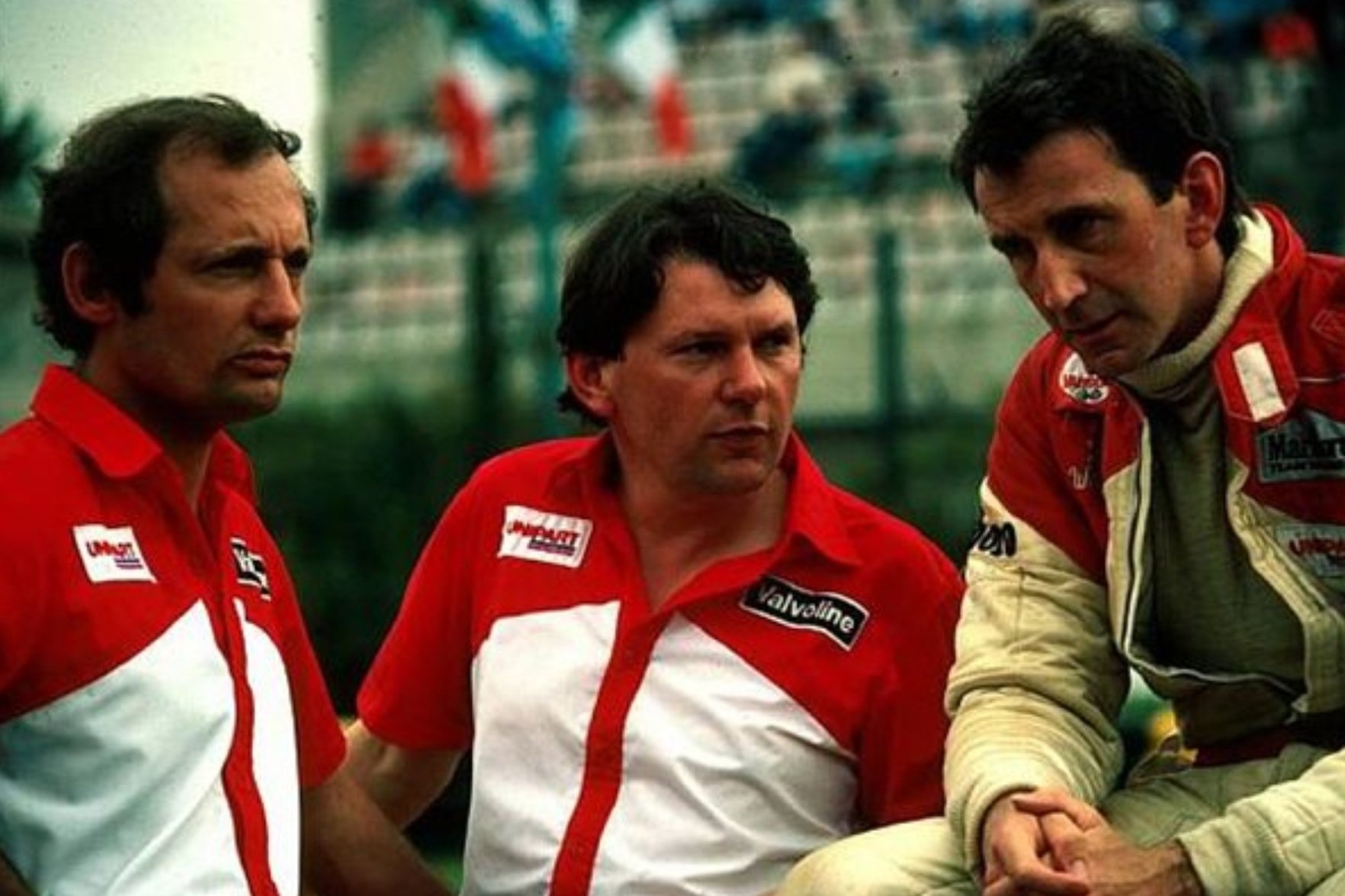
By mid-1980, Dennis was already strategizing for a second attempt at entering Formula 1. He enlisted John Barnard, who was concurrently working on the Chaparral IndyCar project, and sought Marlboro’s backing for this ambitious endeavor. Philip Morris, who had supported McLaren since 1974, recognized the potential of a merger between McLaren and Project Four, especially with Barnard’s design expertise in the mix. However, Teddy Mayer, McLaren’s major shareholder, was initially resistant to the idea.
Following a lackluster 1980 season, during which McLaren struggled to adapt to rapid advancements in ground-effect technology, Mayer acknowledged the necessity for significant changes. Ronald Dennis, keen to make his move into F1, continued to persuade Marlboro to shift its allegiance from McLaren. Eventually, after negotiations, Mayer agreed to merge the two teams, with Dennis assuming the role of joint manager for McLaren International and Barnard taking charge of designing the new car.
This partnership culminated in the late 1980 agreement, leading to the creation of the MP4 car, an innovative design that utilized a carbon fiber composite monocoque, marking a significant technological advancement in F1. This collaboration established the “MP4” nomenclature for McLaren’s vehicles, a legacy that would persist until Dennis’s departure in 2016.
Triumphs and Challenges
With the new MP4 car, McLaren quickly became a force to be reckoned with in Formula 1. The innovative design brought about new levels of performance and efficiency, propelling the team to numerous victories and championships. The transition from Project Four to McLaren marked a turning point not just for Dennis but for the entire landscape of motorsport.
Over the years, Dennis navigated the complexities of F1, managing to maintain McLaren’s competitive edge amid evolving technologies and fierce rivalries. His ability to foster talent and embrace innovation was key to the team’s sustained success. Under his leadership, McLaren secured multiple Constructors’ and Drivers’ Championships, solidifying its position as a powerhouse in the sport.
However, the journey was not without its challenges. Dennis faced numerous obstacles, including shifts in sponsorship dynamics, the rise of rival teams, and the constant pressure to innovate. Yet, through it all, his vision for excellence and unwavering commitment to the sport propelled McLaren to new heights.
Legacy and Impact on Motorsport
Ron Dennis’s journey from junior motorsport to the pinnacle of Formula 1 is a testament to his determination, talent, and resilience. His early experiences shaped his approach to team management and driver development, laying the groundwork for the success he would later achieve with McLaren. Dennis’s legacy is not merely about the trophies won or the championships secured; it is about the transformative impact he had on the sport itself.
Under Dennis’s stewardship, McLaren became synonymous with innovation and excellence, setting benchmarks that would influence future generations of
