Analyzing the Dynamics of McLaren’s Team Strategy during the Singapore Grand Prix
In the world of Formula 1, the dynamics between teammates can often influence both individual performance and the overall success of the team. This was particularly evident during the recent Singapore Grand Prix, where McLaren drivers Lando Norris and Oscar Piastri found themselves at the center of a controversial incident that sparked much debate among fans and analysts alike. The situation unfolded in a way that highlighted the delicate balance between competition and teamwork, especially in a racing environment known for its aggressive strategies and high stakes.
The Incident at Turn 3: A Closer Look
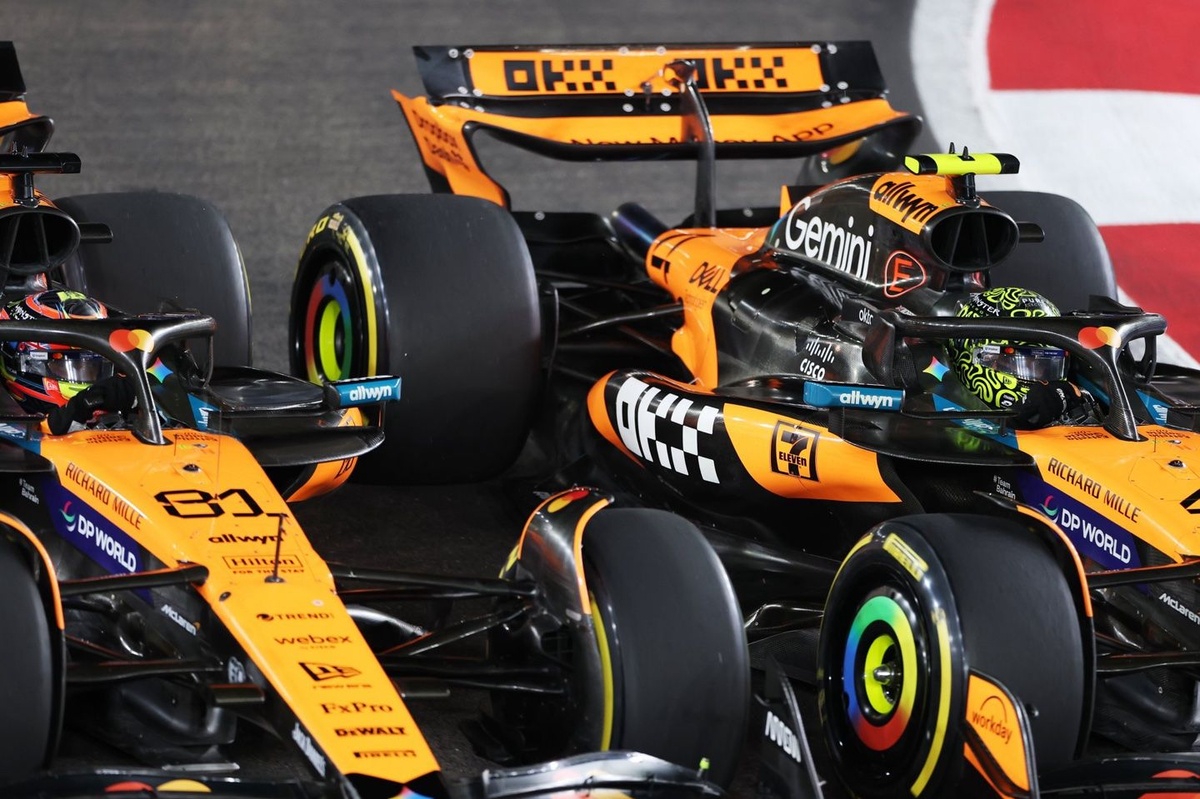
During the opening lap of the race, a significant clash occurred between Norris and Piastri at Turn 3. The incident involved some wheel contact, leading to Piastri expressing frustration over what he perceived as an aggressive maneuver by Norris. This moment raised questions about the team dynamics at McLaren, particularly concerning their policy of equal treatment among drivers.
Norris, however, dismissed the notion that his actions were aggressive. Initially, he claimed not to recall the details of the lap but later reflected on the sequence of events. He noted that his start had been strong, which positioned him advantageously on the grid. This positioning allowed him to make a bold move as he approached his teammate, Piastri.
As Norris described it, there was a significant gap on the inside line that he aimed to exploit. He acknowledged the track conditions were tricky due to damp patches, which made cornering difficult. The contact with Piastri, he argued, was a consequence of an earlier interaction with another competitor, Max Verstappen. Norris contended that this contact forced him into a situation where he came into contact with Piastri, suggesting that external factors contributed to the incident rather than an outright aggressive intent.
Team Dynamics and Internal Policies
The clash between Norris and Piastri illustrates the inherent tensions within a team that prides itself on equality. McLaren has a reputation for maintaining a balanced approach to driver competition, meaning both drivers are expected to push their limits while also respecting each other’s space on the track. The notion of "blue on blue" incidents—where teammates collide—can lead to discord within the team, particularly when one driver feels wronged by the other’s actions.
Piastri’s reaction to the incident speaks volumes about the pressures faced by drivers in such environments. His rhetorical question, "So are we cool with Lando just barging me out of the way?" underscores the emotional stakes involved in racing. It reflects not only his immediate frustration but also the broader implications for team relationships. The optics of such incidents can be damaging, leading to a rift that could affect collaborative efforts in future races.
The Aftermath: Reflections and Reactions
Following the race, a post-race press conference provided an opportunity for both drivers to share their perspectives. Norris attempted to clarify his position, stating that he did not intend to act aggressively towards Piastri. Instead, he framed his actions within the context of racing strategy, arguing that the aggressive maneuvering was necessary given the circumstances of the race.
Interestingly, Norris noted that while he made contact with Verstappen, he did not believe his actions towards Piastri were out of line. This perspective highlights how drivers often rationalize their decisions in the heat of competition. He maintained that if he had not taken the risk to move ahead, he would likely have missed an opportunity to gain crucial positions on the track, especially in a race where overtaking proved to be challenging.
On the other side, Piastri’s feelings about the incident were understandably more nuanced, given his position and the limited visibility that drivers have in such situations. The stress of racing, combined with the immediate aftermath of the incident, likely colored his initial reactions. Reflecting on the event later, he might reassess his viewpoint with a cooler head, especially once he reviews the footage from different angles.
The Role of Team Leadership
In the wake of the incident, McLaren’s team principal, Andrea Stella, faces the challenge of mediating the conflicting perspectives of his drivers. Maintaining harmony within the team is crucial for their performance and overall morale. The relationship between Norris and Piastri is particularly vital, as both are formidable talents who can significantly contribute to McLaren’s success in the Constructors’ Championship.
Stella’s role involves not just managing on-track performance but also ensuring that interpersonal dynamics do not deteriorate into a rivalry that could hinder the team’s progress. The incident at the Singapore Grand Prix may serve as a litmus test for how effectively the team can navigate internal conflicts and reinforce a culture of collaboration.
Racing Culture: The Balance Between Aggression and Teamwork
The incident between Norris and Piastri raises broader questions about the culture of racing. Formula 1 is inherently competitive, and drivers are often encouraged to take calculated risks. Ayrton Senna’s famous quote about going for gaps is frequently cited as a justification for aggressive driving. While this mindset is part of what makes racing thrilling, it also underscores the need for drivers to balance ambition with caution, particularly when racing side by side with a teammate.
Both Norris and Piastri are aware that their performance on the track reflects not only their skills but also their commitment to the team’s success. In a sport where every point counts, the pressure to perform can sometimes lead to decisions that create friction between teammates.
The Singapore Grand Prix incident serves as a reminder that while racing is about speed and competition, it also requires a strong sense of teamwork and communication. Teams like McLaren must foster an environment where drivers can challenge each other without crossing lines that could jeopardize their relationship and the team’s objectives.
Looking Ahead: Future Implications for McLaren
As McLaren continues its quest for success in the Formula 1 season, the dynamics between Norris and Piastri will be under close scrutiny. This incident may not be the last time we see tensions arise in high-stakes situations, but how the team handles these moments will be crucial for their development and performance moving forward.
The ability to maintain a cohesive team environment is essential, especially as both drivers aim to improve and contribute to the team’s championship aspirations. With the ever-changing landscape of Formula 1, embracing a culture of mutual respect and understanding will be critical for McLaren’s future success.
In conclusion, the incident during the Singapore Grand Prix serves as a microcosm of the challenges faced by Formula 1 teams. It highlights the need for a delicate balance between individual ambition and team cohesion, reminding us that in the pursuit of victory, maintaining strong relationships and effective communication is just as vital as speed on the track.
