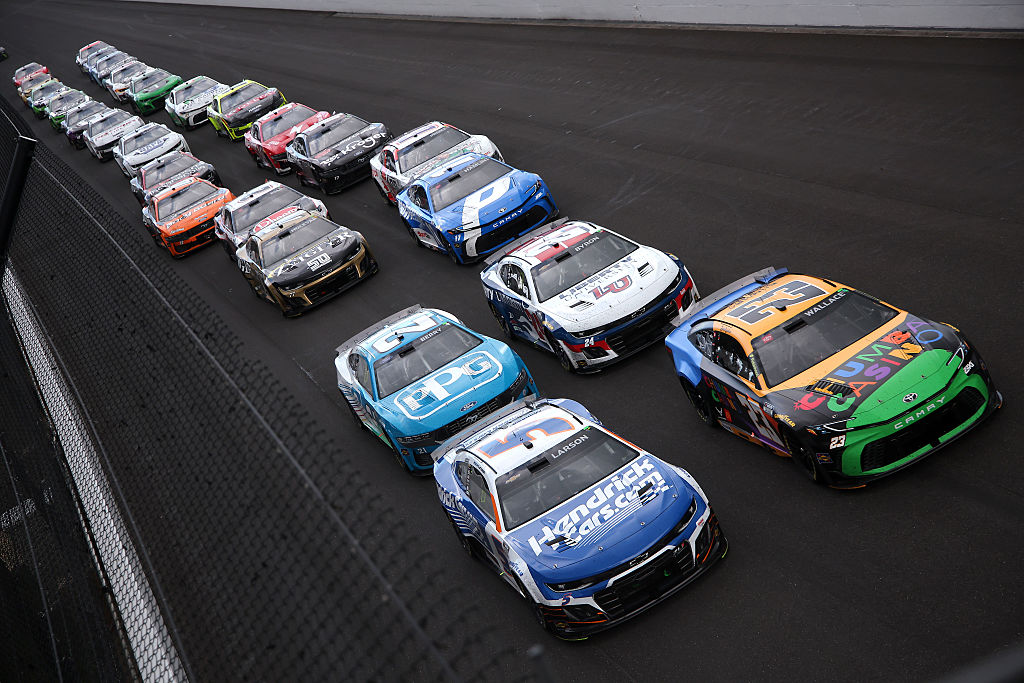
Kyle Larson and Bubba Wallace: A Thrilling Showdown at the Indianapolis Motor Speedway
The Indianapolis Motor Speedway recently witnessed an exhilarating race that showcased the competitive spirit and strategic prowess of two prominent NASCAR drivers, Kyle Larson and Bubba Wallace. As Larson aimed to secure back-to-back victories in the Brickyard 400, he found himself in a challenging battle against Wallace, who ultimately emerged victorious. This article delves into the details of the race, highlighting the strategies employed by both drivers, the dynamics of the race, and the implications of their performances moving forward.
The Race Dynamics
From the very beginning, it was clear that the Indianapolis Motor Speedway posed a unique set of challenges for the drivers. Kyle Larson, starting from a thirteenth position, was determined to make a significant impact. Larson’s Hendrick Motorsports team prepared meticulously, ensuring they were ready to maximize their performance under the circumstances. As the race progressed, Larson’s skill and the team’s strategy became evident.
Larson’s journey to the front was not without its hurdles. He faced a field packed with talented drivers, each vying for the coveted top position. At various points during the race, Larson demonstrated not only his driving abilities but also his understanding of race strategy, which played a crucial role in his performance.
The Overtime Restarts
The race took a thrilling turn with two overtime restarts, a scenario that often adds tension and excitement. Bubba Wallace, who had been strong throughout the race, found himself in a prime position during these restarts. He had the advantage of choosing his lane, a critical factor in the outcome of the race.
Larson acknowledged the difficulty of overtaking during these restarts, especially when Wallace was in control. "It was going to be hard to beat him," Larson remarked, recognizing the strategic edge Wallace had. During the first overtime restart, Larson attempted to maintain his position on the outside of the front row. Despite his best efforts, Wallace’s speed and execution proved to be formidable.
The dynamics of the restarts highlighted the skill and precision required in NASCAR racing. Larson’s determination to challenge Wallace was commendable, but the reality of passing on such a challenging track became evident. "It’s just really hard to pass here, especially on restarts when he has the preferred lane," Larson noted, reflecting on the strategic implications of the race’s layout.
Strategic Decisions and Pit Stops
One of the defining moments of the race was the strategic decision-making regarding pit stops. Larson, along with Denny Hamlin and Carson Hocevar, pitted on lap 122. This decision came at a critical juncture, as the drivers aimed to optimize their performance by managing fuel and tire wear effectively. However, Larson was taken by surprise when drivers who opted for two tires blended into the race in front of him, complicating his strategy.
As the race unfolded, Larson’s team worked diligently to execute their pit strategy. The importance of communication and timing became apparent, as pit stops can dramatically affect a driver’s position on the track. Larson’s crew managed to navigate these challenges effectively, allowing him to remain competitive throughout the race.
The Impact of Fuel Strategy
Fuel strategy played a pivotal role in the final laps of the race. As the caution flag waved with just six laps remaining, the field was bunched up for the overtime restarts. Larson found himself in a position where he was closing the gap on Wallace, but the uncertainty of fuel mileage loomed large. "I was praying he would run out of fuel, but I also didn’t want to run out of fuel myself," Larson admitted, illustrating the delicate balance drivers must strike between pushing for speed and managing fuel consumption.
Wallace’s ability to conserve fuel while maintaining his lead showcased his racing acumen. As the laps dwindled, Larson’s hope for a fuel miscalculation on Wallace’s part became a focal point of his strategy. The tension built as the race approached its conclusion, with both drivers vying for the top spot under pressure.
Larson’s Reflections on the Race
In reflecting on his performance, Larson expressed satisfaction despite finishing second. "We’ll take our second and go on to next week, and hopefully we can keep another good run going," he stated, emphasizing the importance of maintaining momentum in the season. Larson’s attitude exemplifies a key aspect of competitive racing: the ability to learn from each experience and build on it for future races.
Larson’s acknowledgment of his team’s efforts was also significant. He recognized that their strategy and execution were instrumental in maximizing his performance on race day. The collaborative nature of racing, where driver and team work together to achieve success, was evident in his comments.
The Road Ahead for Both Drivers
As the race concluded, both Larson and Wallace looked ahead to future competitions. Larson’s strong showing at the Brickyard 400 will undoubtedly serve as motivation for the upcoming races. His ability to adapt and strategize in challenging situations will be crucial as he moves forward in the season.
For Wallace, the victory at the Indianapolis Motor Speedway marked a significant achievement. Winning in such a prestigious event not only boosts his confidence but also solidifies his status as a formidable competitor in NASCAR. The challenges he faced against Larson will likely serve as valuable experience, helping him refine his approach in future races.
Conclusion: A Competitive Spirit
The Brickyard 400 at the Indianapolis Motor Speedway was a testament to the competitive spirit of NASCAR. The race highlighted the importance of strategy, skill, and teamwork in achieving success on the track. As drivers like Kyle Larson and Bubba Wallace continue to push the limits of their abilities, fans can anticipate more thrilling moments in the races to come.
Both drivers have set the stage for an exciting season ahead, with their performances at the Brickyard 400 serving as a reminder of the high stakes and intense competition that define NASCAR. As they prepare for their next challenges, the lessons learned from this race will undoubtedly influence their strategies and performances in the future.
