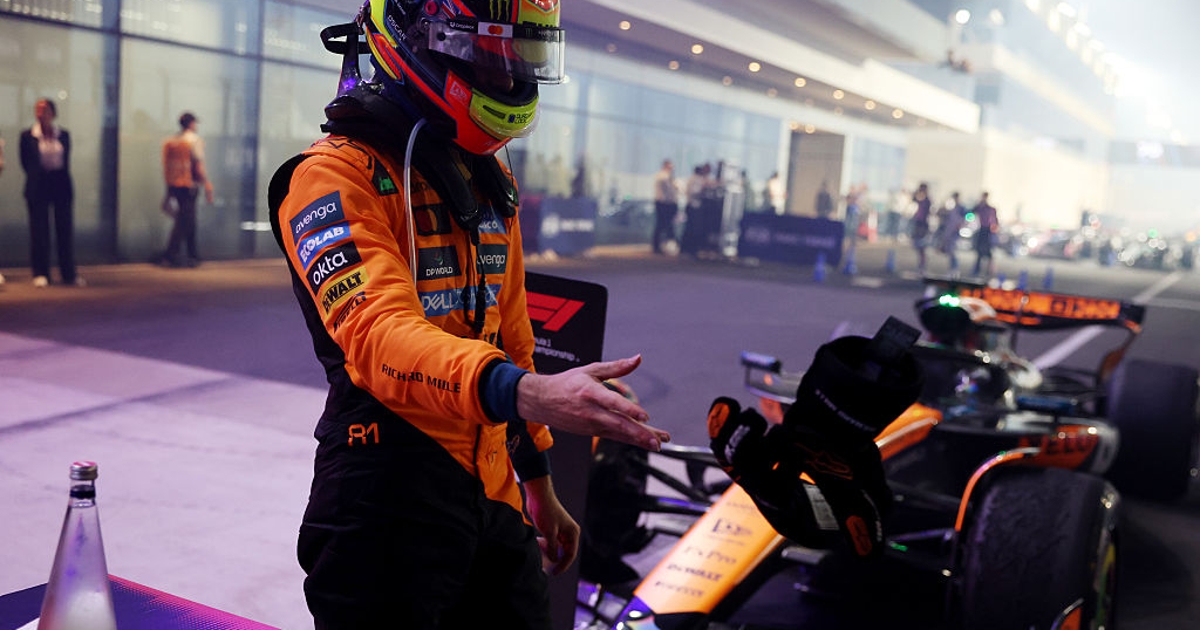
The Qatar Grand Prix and McLaren’s Missed Opportunity: A Deep Dive
The Qatar Grand Prix recently showcased high-octane racing, featuring dramatic moments that left fans on the edge of their seats. At the center of this thrilling event was Max Verstappen, who managed to seize victory while McLaren’s team faced strategic blunders that ultimately cost them a potential win. This race serves as a case study in the complexities of Formula 1 racing, highlighting the importance of strategy, team communication, and adaptability under pressure.
Verstappen’s Victory: A Testament to Skill and Strategy
Max Verstappen’s performance during the Qatar Grand Prix was nothing short of extraordinary. Starting from a challenging position, Verstappen demonstrated exceptional skill and determination throughout the race. After a quick start, he overtook Lando Norris, setting himself up in a strong position behind Oscar Piastri, who had taken pole position. The race unfolded with high expectations for McLaren, given their competitive pace leading up to this event. However, the race dynamics changed dramatically on lap seven when an incident involving Nico Hulkenberg and Pierre Gasly brought out the safety car.
The Safety Car Incident and McLaren’s Strategic Misstep
When the safety car was deployed, the field was presented with a crucial decision point: to pit or stay out. Most teams opted to take advantage of this opportunity to switch tires without losing significant time. However, McLaren made the controversial choice to keep both of their drivers, Piastri and Norris, on the track. This decision raised eyebrows as it not only left them vulnerable but also allowed Verstappen and his rivals to capitalize on the situation.
Oscar Piastri, who found himself in a precarious position, later expressed his confusion about the strategy. The lack of immediate communication from the team left him uncertain about whether to pit. "I asked, ‘What are we doing?’" he recalled. The absence of a clear directive during a critical moment resulted in McLaren missing the chance for a strategic advantage that could have altered the race’s outcome.
Analyzing McLaren’s Decision
The decision to stay out during the safety car period was influenced by a desire to avoid potential traffic during the pit stop. Team principal Andrea Stella later explained that their strategy was aimed at maintaining track position and avoiding congestion. However, this rationale did not account for the fact that nearly every other team had chosen to pit, creating a stark contrast in race strategies. As the race progressed, it became evident that the decision was flawed, as McLaren found themselves at a disadvantage compared to their competitors.
Stella acknowledged the misjudgment, stating, "We effectively conceded one pit stop to a rival that was fast today." This statement encapsulates the essence of the race, where strategic decisions can make or break a team’s performance. The aftermath of the race saw McLaren’s drivers struggling to regain lost ground, ultimately leading to a disappointing finish.
The Fallout: A Missed Win and Its Implications
For McLaren, the Qatar Grand Prix represented a significant missed opportunity. Piastri, who had been in control of the race, saw his prospects for victory vanish due to the team’s decision-making. The frustration was palpable as he realized the impact of the strategic blunder on his championship aspirations. "Clearly, we didn’t get it right today," he lamented, reflecting on the potential for a win that could have bolstered his title hopes.
Norris, while finishing fourth, also recognized the implications of the decision. He managed to limit the damage to his points tally but understood that the outcome could have been significantly better. This race was particularly poignant for both drivers, as it followed a challenging series of performances and a disqualification from the Las Vegas Grand Prix. The pressure to perform was mounting, and the Qatar Grand Prix only added to the weight of expectations.
Lessons Learned: McLaren’s Path Forward
In the wake of the Qatar Grand Prix, the McLaren team is now faced with the task of introspection and analysis. Team principal Andrea Stella emphasized the importance of reviewing their decisions and learning from the experience. "We will have to assess some factors like, for instance, whether there was a certain bias in the way we were thinking," he noted. This self-reflective approach is essential for growth and improvement, especially in a highly competitive sport like Formula 1.
Stella also highlighted the team’s commitment to fostering a culture of continuous improvement. The lessons learned from the Qatar Grand Prix, as well as the previous disqualification in Las Vegas, are crucial for their future endeavors. The nature of racing demands resilience and adaptability, and McLaren is determined to rise to the challenge. By analyzing their missteps and refining their strategies, they aim to emerge stronger in upcoming races.
Verstappen’s Dominance: A Challenge for McLaren
As McLaren grapples with its recent challenges, Verstappen’s continued dominance poses a significant hurdle. His ability to capitalize on McLaren’s errors has allowed him to close the gap in the championship standings. The recent races have seen Verstappen take full advantage of every opportunity presented, and McLaren must navigate the pressure of competing against such a formidable opponent.
Stella’s acknowledgment of this reality is telling. He expressed a desire to ensure that McLaren not only competes for the championship but also seeks to disrupt Verstappen’s current dominance. "We want to face it at the best of ourselves," he affirmed, signaling a commitment to excellence.
The Road Ahead: Preparing for Future Races
Looking forward, McLaren’s focus will be on refining their strategy and enhancing communication within the team. The lessons learned from the Qatar Grand Prix will serve as a foundation for future races. As they prepare for upcoming challenges, the team will need to prioritize collaboration and clarity in their decision-making processes.
Piastri and Norris, both talented drivers, have the potential to deliver strong performances if given the right tools and strategies. The experience gained from this race will be invaluable as they seek to regain momentum and challenge for victories in the remaining races of the season.
Conclusion: A Turning Point for McLaren
The Qatar Grand Prix was a turning point for McLaren, illustrating the fine line between success and failure in Formula 1 racing. The strategic misstep during the safety car period highlights the critical nature of decision-making in high-stakes situations. As the team reflects on this experience and prepares for the future, their ability to learn and adapt will be key to their success.
In the competitive landscape of Formula 1, every race presents an opportunity for growth and redemption. McLaren’s journey is far from over, and their determination to rise above challenges will be essential as they aim to reclaim their position among the frontrunners. The road ahead may be fraught with obstacles, but with the right mindset and strategies, McLaren can aspire to reclaim its former glory and challenge for championships in the seasons to come.
