Red Bull Racing’s Ongoing Challenges and Strategies Amidst Recent Success
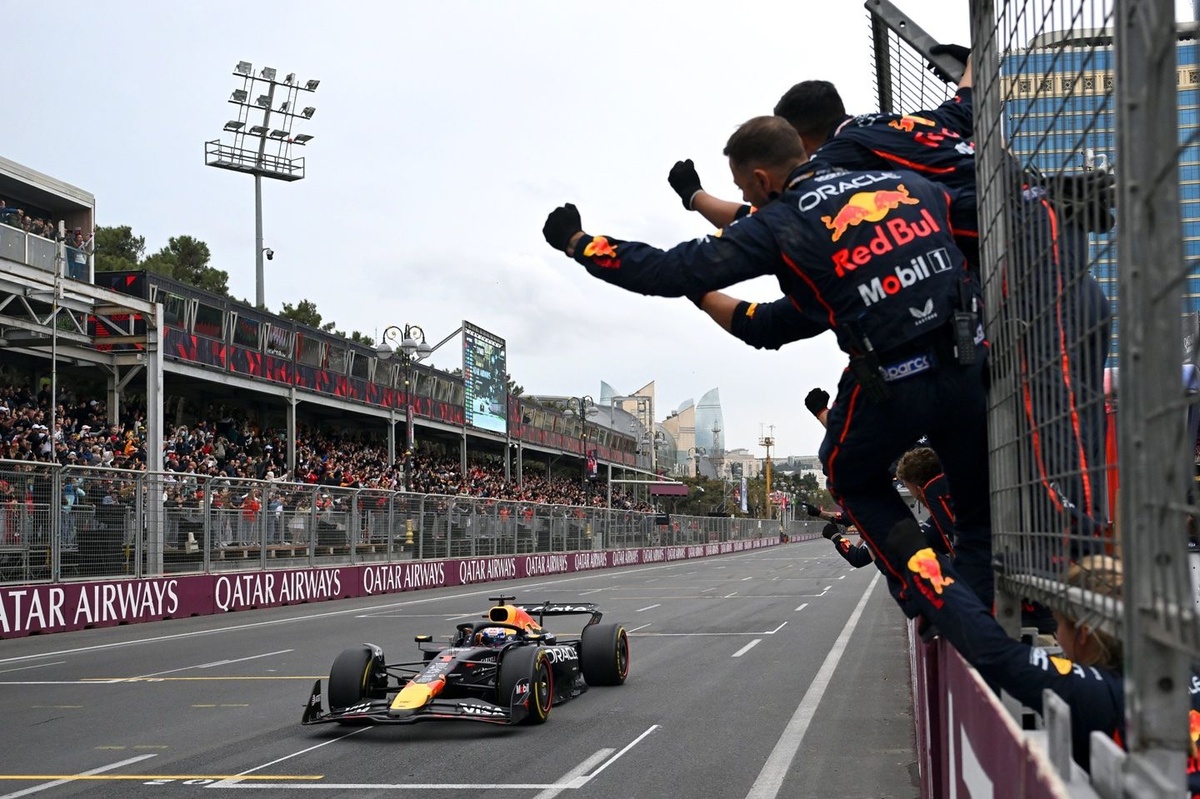
Red Bull Racing is currently enjoying a period of success, highlighted by Max Verstappen’s impressive back-to-back victories in the Formula 1 circuit. Alongside Verstappen’s achievements, Yuki Tsunoda has also demonstrated significant improvement, achieving his best result of the season at the Azerbaijan Grand Prix. However, despite this wave of optimism, team principal Laurent Mekies has expressed caution regarding the potential resurgence of McLaren, a formidable competitor in the racing world.
Max Verstappen’s Dominance
In a spectacular display of skill and speed, Verstappen secured the largest winning margin of the season at the Monza Grand Prix, finishing 19 seconds ahead of McLaren’s Lando Norris. This victory not only showcased Verstappen’s driving prowess but also tightened the points race against the two McLaren drivers in the standings. The Dutch driver continued his winning streak with another commanding performance in Baku, further solidifying his status as a top contender this season.
However, Mekies remains grounded in his assessment of the team’s performance, emphasizing a cautious, race-by-race approach. After the Azerbaijan Grand Prix, he stated, “We feel today that some of the positive elements we observed in Monza carried over here. In Baku, the slow-speed corners and low downforce worked in our favor.” This acknowledgment of their strengths is balanced by an awareness of the challenges that lie ahead.
Identifying Weaknesses in the RB21
Despite the recent successes, Red Bull Racing is acutely aware of the inherent weaknesses in the RB21 model. The introduction of new components, such as a revised floor, has not completely resolved the issues plaguing the car. The team is particularly vulnerable to high temperatures and circuits that require high downforce, which may impact their performance in the upcoming races, especially at the notoriously challenging Singapore Grand Prix. Mekies remarked, “We accept the challenge of Singapore, a track that has historically posed difficulties for our team.”
The Singapore circuit presents unique challenges that could expose the RB21’s weaknesses, prompting Mekies to stress the importance of analyzing what might not work in that environment. He also pointed out that the team will soon face tracks with medium-speed corners, where McLaren previously outperformed Red Bull, leaving the team to reflect on their performance in Zandvoort and Spa.
Limited Development Ahead of 2026 Regulations
As is the case with many teams in the grid, Red Bull has intentionally limited the development of its 2025 car to refocus efforts on the upcoming regulatory changes set to take effect in 2026. This strategic decision means that significant upgrades to the RB21 are unlikely in the latter part of the season. Mekies noted, “We’ve been compelled to prioritize our preparations for the 2026 reset, which results in fewer upgrades for the remaining races.”
The decision to scale back development on the current car is not taken lightly. It reflects a broader strategy to position Red Bull favorably for the future, even if it means facing immediate challenges with the existing machine. This forward-thinking approach aims to ensure that the team is not only competitive this season but also well-prepared for the next generation of Formula 1 racing.
Adapting Operational Strategies for Better Performance
In light of their current situation, Red Bull Racing is making adjustments to its operational strategies. The focus has shifted toward enhancing the collaboration between drivers and engineers, with an increased emphasis on driver feedback in car setup. Tsunoda, in particular, has dedicated considerable time in the simulator following a disappointing performance in Monza to extract more performance from the RB21.
Mekies elaborated on the team’s philosophy, stating, “We do not believe there is a singular ‘silver bullet’ solution. Instead, we view it as a combination of various small improvements that contribute to better performance.” This multifaceted approach involves leveraging the new floor design, implementing changes based on driver input, and continuously evaluating their impact in different racing scenarios.
The Importance of Understanding the RB21
Mekies has consistently emphasized that Red Bull Racing’s primary focus is on fully understanding the intricacies of the RB21. Despite the challenges, the team remains hopeful that through this process, they can improve their performance and potentially secure a higher position in the championship standings. Currently, there is an 18-point gap to second-placed Mercedes, and while the goal is to enhance competitiveness, Mekies insists that the team does not focus solely on the constructor standings.
The emphasis on understanding the car’s capabilities and limitations is crucial for Red Bull. By honing in on the car’s performance characteristics, the team hopes to identify areas for improvement and adapt their strategies accordingly.
Looking Ahead: The Next Challenges
As the season progresses, Red Bull Racing faces a series of critical challenges that will test the resilience and adaptability of their team. The upcoming Singapore Grand Prix will serve as a critical litmus test for the RB21, providing insight into how well the team can navigate the demanding street circuit. Mekies acknowledges that this race will be pivotal in determining whether the recent successes can be sustained in different conditions.
Following Singapore, Red Bull will encounter a mix of tracks that will further challenge their car’s performance. The team must remain vigilant, especially in circuits where they have previously struggled. The dual focus on immediate performance and long-term preparation for the 2026 regulations will be essential for maintaining competitiveness in the ever-evolving landscape of Formula 1 racing.
Conclusion
In summary, Red Bull Racing is navigating a complex landscape characterized by recent successes and ongoing challenges. With Max Verstappen’s back-to-back victories bringing a sense of optimism, the team remains grounded in its approach, focusing on understanding the RB21 and adapting its strategies. As they prepare for upcoming races, particularly the Singapore Grand Prix, the emphasis on collaboration, driver feedback, and small improvements will be essential for achieving their goals in both the short and long term. The journey ahead promises to be both challenging and rewarding for the team as they strive to solidify their position in the competitive world of Formula 1.
