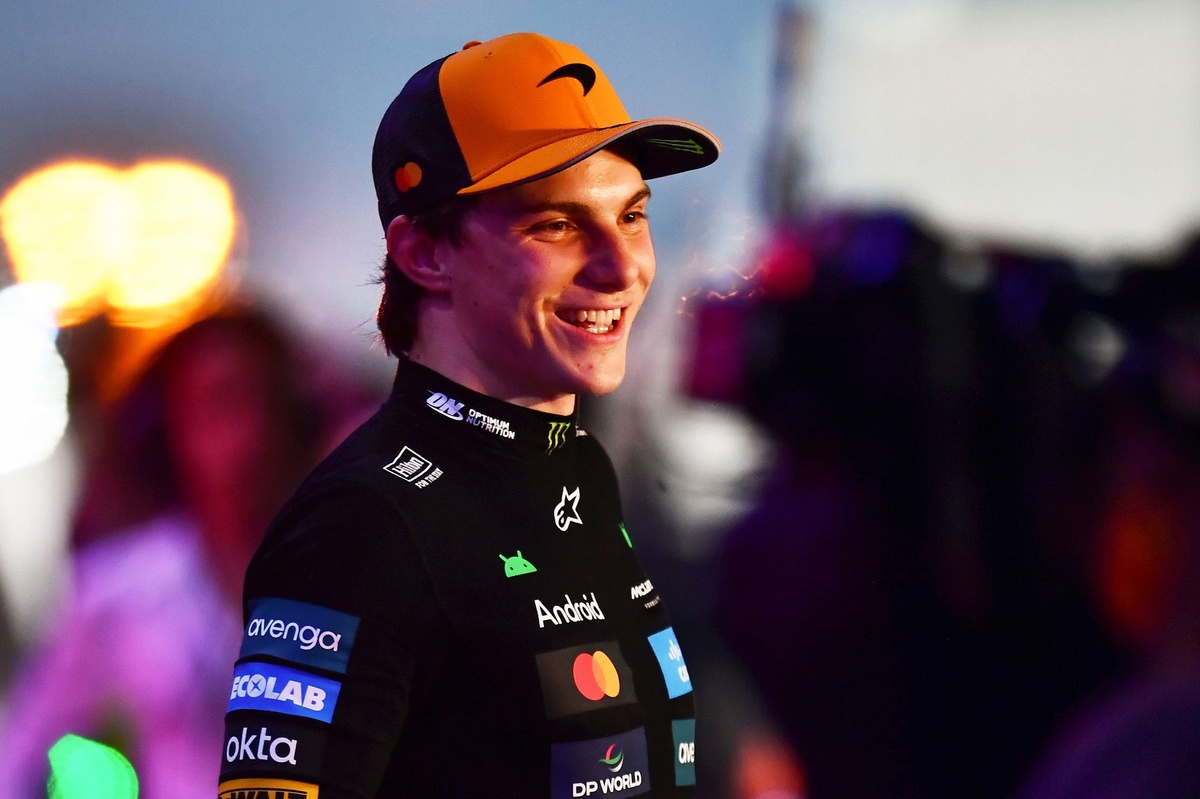
Oscar Piastri’s Impressive Comeback: Insights from McLaren’s Andrea Stella
Oscar Piastri, the talented driver for McLaren, has recently showcased a remarkable return to form during the Formula 1 weekend in Qatar. This resurgence aligns with team principal Andrea Stella’s theory concerning Piastri’s performance in relation to circuit grip levels. Following a series of challenging races in low-grip environments such as Austin and Mexico, where he found it difficult to keep pace with his teammate Lando Norris, Piastri turned things around in Qatar. He dominated the weekend, securing victory in sprint qualifying, the sprint race, and ultimately achieving pole position for the grand prix—his first since the Zandvoort race at the end of August.
Understanding Grip and Performance
Stella’s observations provide valuable insight into how grip levels on different circuits impact driver performance. He noted that while Piastri faced difficulties in the previous races, this was not a reflection of his mental state but rather a technical issue connected to how drivers interact with the car and the track. In high-downforce environments like the Losail circuit in Qatar, Piastri seemed to flourish, demonstrating his natural driving style and maximizing the potential of the car.
The challenges at circuits with low grip, such as Austin and Mexico, required drivers to adapt their techniques significantly. Stella explained that these tracks necessitate a different style of driving, particularly in terms of braking and the rotation of the vehicle. This contrasts sharply with Qatar’s high-grip surface, which allows Piastri to drive in a manner that suits his strengths.
The Importance of Technical Adaptation
Stella’s evaluation underscores the significance of technical adaptation in professional motorsport. He emphasized that at this elite level, even a minor technical miscalculation can lead to losing positions. Piastri’s performance in Qatar was a testament to his ability to adapt to the specific demands of the track, showcasing his potential when conditions align with his driving style.
The differences in performance between circuits highlight the complexity of Formula 1 racing. While some drivers excel in certain conditions, others may struggle. For instance, while Piastri was able to perform well in Qatar, he faced challenges in tracks that required a different approach. This variability in performance illustrates the intricate relationship between driver skill, car setup, and track characteristics.
McLaren’s Competitive Edge
One of the most intriguing aspects of the Qatar race was McLaren’s competitive advantage over other teams, particularly Red Bull and Mercedes. Traditionally, McLaren has excelled in long, medium-speed corners, an area where Red Bull has shown vulnerabilities. However, in Qatar, McLaren’s strength was particularly evident in the high-speed final sector, where they consistently set the fastest times.
Stella remarked on the unexpected nature of McLaren’s speed in Qatar. While the team anticipated that the track would favor their car’s characteristics, the specific areas where they excelled were not what they had predicted. Instead of dominating in medium-speed corners, as expected, McLaren found its advantage in high-speed sections of the track, demonstrating the effectiveness of their car setup and development.
Analyzing Team Strategies
The variations in performance among the teams can also be attributed to their strategies regarding car setup and development. Stella indicated that McLaren had put significant effort into enhancing their car’s high-speed capabilities. In contrast, it seems that Red Bull may have opted to focus on improving their low-speed performance, potentially sacrificing some high-speed strengths in the process.
The competitive landscape in Formula 1 is continually evolving, and teams must adapt their strategies to maintain an edge over their rivals. The close competition observed in Qatar, where Mercedes excelled in medium-speed corners while McLaren dominated in high-speed sections, highlights the intricate balancing act that teams must navigate.
Stella’s insights suggest that the current regulations in Formula 1 have matured, leading to a convergence of performance levels among the leading teams. This environment means that teams need to be vigilant and innovative to remain competitive.
The Role of Driver Dynamics
In addition to the technical aspects, the relationship between teammates plays a crucial role in a team’s overall performance. Piastri’s competition with Norris has been a focal point of McLaren’s season, with both drivers pushing each other to achieve their best. The dynamics within the team can influence performance on and off the track, contributing to a more competitive environment.
As Piastri continues to develop his skills and adapt to the demands of different circuits, his rivalry with Norris will likely be a key factor in shaping McLaren’s success. The ability to learn from one another and capitalize on each driver’s strengths will be essential as the season progresses.
Looking Ahead
As the Formula 1 season continues, the implications of Piastri’s performance in Qatar may have a lasting impact on both his career and McLaren’s trajectory. With a newfound confidence and a better understanding of how to navigate different track conditions, Piastri is poised to build on this momentum in the upcoming races.
Furthermore, McLaren’s ability to refine their car’s performance in response to track characteristics will be critical as they face a diverse array of circuits in the season ahead. The competition among teams is fierce, and each race presents new challenges that require quick adaptation and strategic planning.
In conclusion, Oscar Piastri’s impressive comeback in Qatar not only reflects his driving capabilities but also highlights the intricate relationship between driver performance, car setup, and track conditions. With insights from Andrea Stella, it is clear that the dynamics of Formula 1 racing are complex and ever-evolving. As Piastri continues to hone his skills and McLaren refines their strategies, the future looks promising for both the driver and the team.
