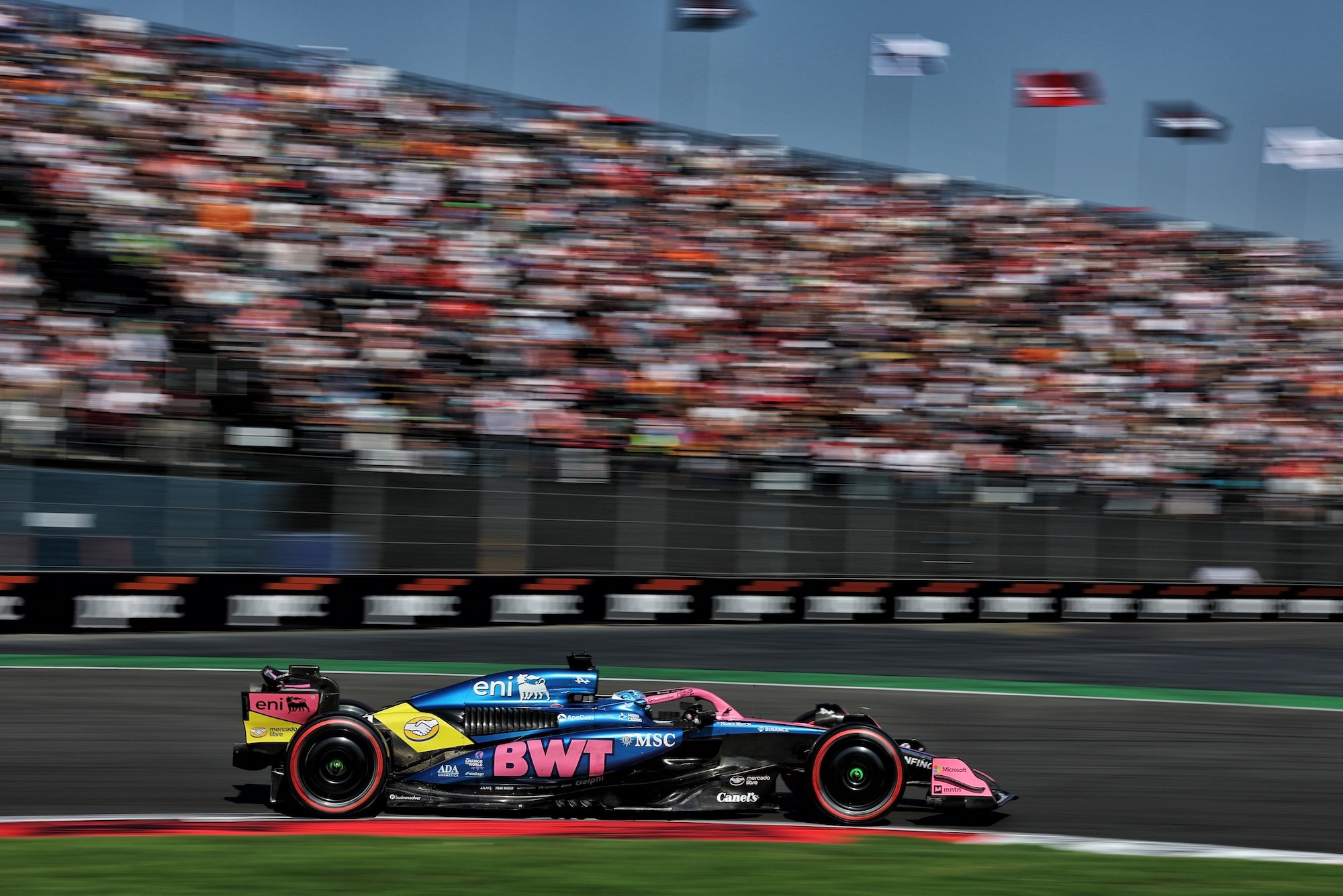
Alpine’s Challenging Weekend at the Mexican Grand Prix
The Mexican Grand Prix presented a formidable challenge for the Alpine F1 Team, as both drivers faced a myriad of technical difficulties that negatively impacted their race performance. Pierre Gasly and Franco Colapinto struggled to keep pace with their competitors, ultimately finishing in the lower ranks of the classified drivers; Gasly crossed the line in 15th place, while Colapinto followed closely behind in 16th, trailing Lance Stroll from Aston Martin by a significant 37 seconds.
The Challenges of Racing at High Altitude
One of the most daunting aspects of the Autódromo Hermanos Rodríguez circuit is its high altitude, situated in Mexico City. This unique geographical feature results in a substantial decrease in air density—approximately 30% lower than at sea level. Such a reduction has far-reaching implications for the aerodynamics and cooling systems of the race cars. When air density drops, the aerodynamic downforce generated by the cars diminishes, which can lead to decreased stability and grip on the track. This situation becomes even more critical when considering the cooling requirements of the car’s systems, especially the brakes and the engine.
As the race unfolded, Alpine encountered significant cooling issues, particularly with the brakes. Ineffective brake cooling led to elevated tire temperatures, which, in turn, accelerated tire degradation throughout the race. This compounded the team’s difficulties, as tire performance is crucial for maintaining competitive lap times. The inability to manage tire wear effectively put Gasly and Colapinto at a further disadvantage.
Power Unit Challenges
In addition to the cooling issues, the performance of the A525’s power unit emerged as a significant hurdle for the Alpine team. The car struggled to keep up with its rivals in terms of acceleration, particularly noticeable in the initial stages of the main straight. This lack of power became a glaring weakness against the backdrop of the high-speed sections of the Mexican circuit, where every fraction of a second counts.
The deficiencies in the power unit were exacerbated by the overall design philosophy of the A525. While the car is engineered to produce substantial downforce, this attribute became a limitation in the high-altitude conditions of Mexico. The reduced air density meant that the aerodynamic advantages typically gained from downforce were not fully realized, leaving the car vulnerable in various aspects of performance.
Design Philosophy and Its Impact
The design philosophy behind the A525 was intended to capitalize on high downforce, which is typically advantageous in many circuits. However, the specific characteristics of the Mexican Grand Prix circuit, combined with the challenges posed by high altitude, meant that this design would not yield the expected benefits. Instead of leveraging its aerodynamic strengths, the A525’s design became a liability.
The combination of poor cooling management, an unsuitable chassis design for the circuit, and a subpar power unit resulted in a tough weekend for the Alpine team. Each of these factors contributed to the overall performance issues faced by Gasly and Colapinto, culminating in a race that fell short of expectations.
Navigating the Circuit
The Autódromo Hermanos Rodríguez is known for its unique layout and challenging corners, which require precision and skill from the drivers. The circuit features a blend of long straights and tight turns, demanding a well-balanced car that can adapt to varying speeds. Unfortunately for the Alpine team, the A525’s shortcomings became more pronounced as the drivers navigated the track.
Competitive racing at this level requires not only a fast car but also the ability to adapt to changing conditions throughout the race. Factors such as tire management, fuel load, and track evolution play crucial roles in determining race outcomes. For Alpine, the inability to effectively manage these elements due to their technical issues severely hampered their competitiveness.
The Road Ahead
As the season progresses, the Alpine team will need to analyze and address the shortcomings experienced during the Mexican Grand Prix. Identifying the root causes of their performance issues will be crucial for future races. This may involve reevaluating their approach to car setup, cooling solutions, and power unit performance to ensure they can compete more effectively against rival teams.
The challenges faced in Mexico serve as a reminder of the complexities involved in Formula 1 racing. Teams must constantly innovate and adapt to remain competitive, especially in demanding environments like that of the Mexican Grand Prix. The lessons learned from this race will be instrumental in shaping Alpine’s strategies for upcoming events.
Conclusion
The Mexican Grand Prix was a testing ground for the Alpine F1 Team, revealing several critical areas for improvement. From cooling management to engine performance and design philosophy, each aspect played a role in the team’s struggles on race day. As they regroup and prepare for future races, it will be essential for Alpine to address these issues head-on to enhance their performance and regain competitiveness in the championship.
By focusing on these areas, Alpine can work towards achieving better results in the upcoming races, ensuring that they are not only competitive but also capable of challenging for points and podium finishes. The road ahead may be challenging, but with the right adjustments and a commitment to improvement, Alpine can look forward to a more successful season.
