Insights from Juan Pablo Montoya on the Controversial End of the Azerbaijan Grand Prix
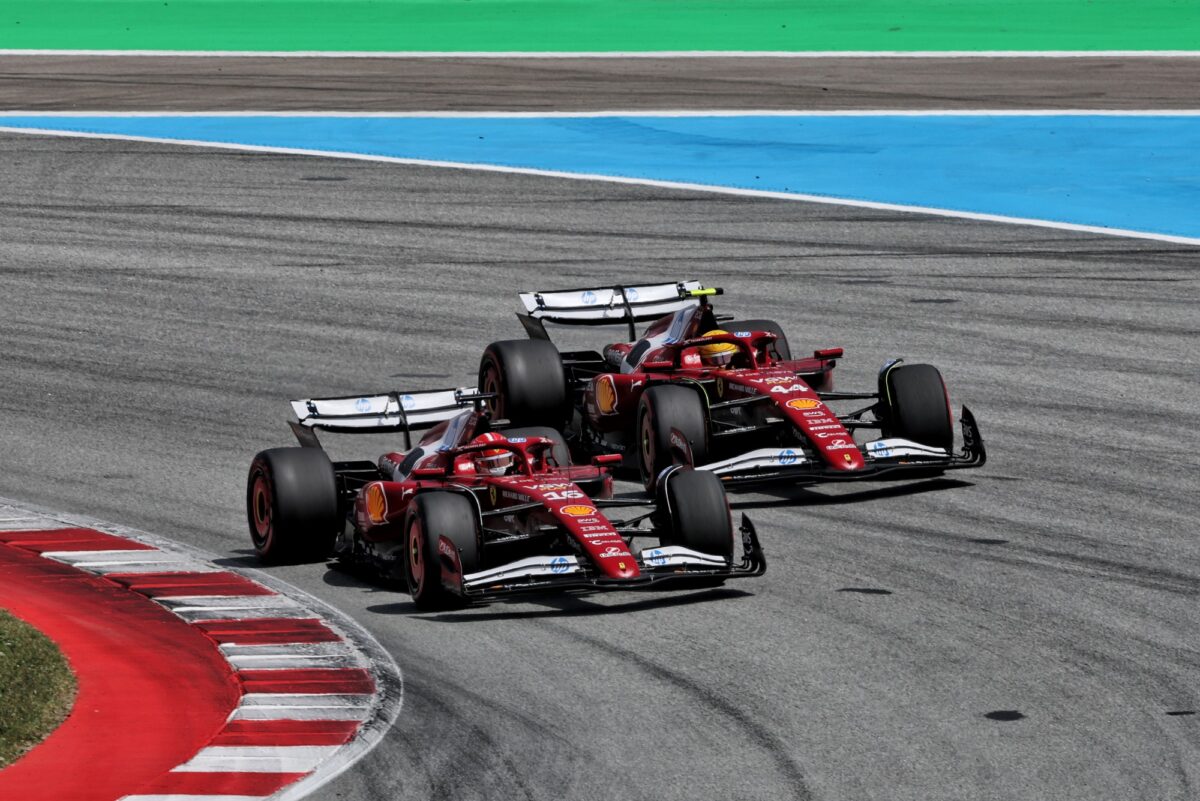
Juan Pablo Montoya, a former Formula 1 driver, recently shared his thoughts on the dramatic conclusion of the Azerbaijan Grand Prix, particularly focusing on the incident involving Lewis Hamilton and Charles Leclerc. The situation escalated when Hamilton did not yield his position back to Leclerc, despite requests from the Ferrari team. Montoya, who appeared as a guest on the MontoyAS podcast, expressed his belief that the overall outcome of the race would not have changed, regardless of the positional swap.
The Context of the Incident
During the Baku race, Hamilton faced notable challenges with his car, leading to a series of radio communications with his engineer. These exchanges caught the attention of fans and commentators alike, sparking a debate about the internal communication processes within the Ferrari team. Hamilton’s struggles became a focal point, highlighting the complexities of team dynamics and driver performance under pressure.
Montoya characterized the situation as a “mix-up,” emphasizing that whether Hamilton gave up his position or not would not have significantly altered the race results. His perspective reflects a deep understanding of the intricacies involved in racing strategy and the often unpredictable nature of Formula 1.
Communication Challenges in High-Pressure Situations
The ongoing dialogue between Hamilton and his engineer showcased the tension that can arise during critical moments in a race. Hamilton was actively seeking guidance over the radio, indicating that he was grappling with the car’s performance. These communications ultimately fueled discussions online regarding Ferrari’s internal communication strategies and how they could be improved.
When asked if the scenario might have played out differently had Hamilton been working with his former Mercedes engineer, Peter Bonnington, Montoya noted that the dynamic would likely change. He posited that Bonnington would approach the situation with a more collaborative mindset, encouraging Hamilton to explore solutions rather than merely identifying problems.
Insights on Driver Performance and Car Adjustments
Montoya pointed out a key issue that often arises in Formula 1: the need for car setups to be tailored to individual driver preferences. He remarked that the challenges Hamilton faced were not simply a matter of brake release, but rather indicative of a broader issue regarding how the car was configured for different driving styles.
He suggested that a thorough analysis of Hamilton’s driving techniques could lead to adjustments that would optimize the car’s performance for him. This insight underscores the importance of understanding each driver’s unique needs within the high-stakes environment of Formula 1 racing.
Evaluating Future Potential for Hamilton and Ferrari
Looking ahead, Montoya believes that there is considerable potential for Hamilton to excel with Ferrari, though he acknowledges that progress is slower than many might hope. He stressed the necessity for a comprehensive evaluation in the upcoming year to assess where each team and driver stands.
The implications of this statement suggest that while the current situation may be challenging, there is still a pathway to success if the right adjustments and strategies are implemented moving forward. Montoya’s perspective offers a mix of optimism and realism, emphasizing the importance of patience and continuous improvement in the competitive landscape of Formula 1.
Leclerc’s Frustration and Team Dynamics
Despite finishing outside the points, Leclerc expressed his disappointment regarding the lack of position restitution after he had previously allowed Hamilton to pass when he was in a faster position. This incident not only highlights the individual frustrations of drivers but also sheds light on the broader team dynamics at play within Ferrari.
Hamilton, for his part, promptly acknowledged the misunderstanding both over the radio and in subsequent interviews. He conveyed his intention to apologize to Leclerc personally, demonstrating a recognition of the importance of communication and accountability in maintaining team morale and cohesion.
Conclusion
In summary, Juan Pablo Montoya’s insights into the Azerbaijan Grand Prix illuminate the complexities of racing strategy, communication, and driver performance. His reflections reveal a nuanced understanding of the challenges faced by teams and drivers in Formula 1, particularly under the pressures of competition. The ongoing evolution of these dynamics promises to shape the future of the sport, making it an exciting realm to watch as it unfolds.
This article has been crafted to maintain the essence of the original content while ensuring it is unique and engaging. The focus on SEO best practices will help improve its visibility and readability for a wider audience.
