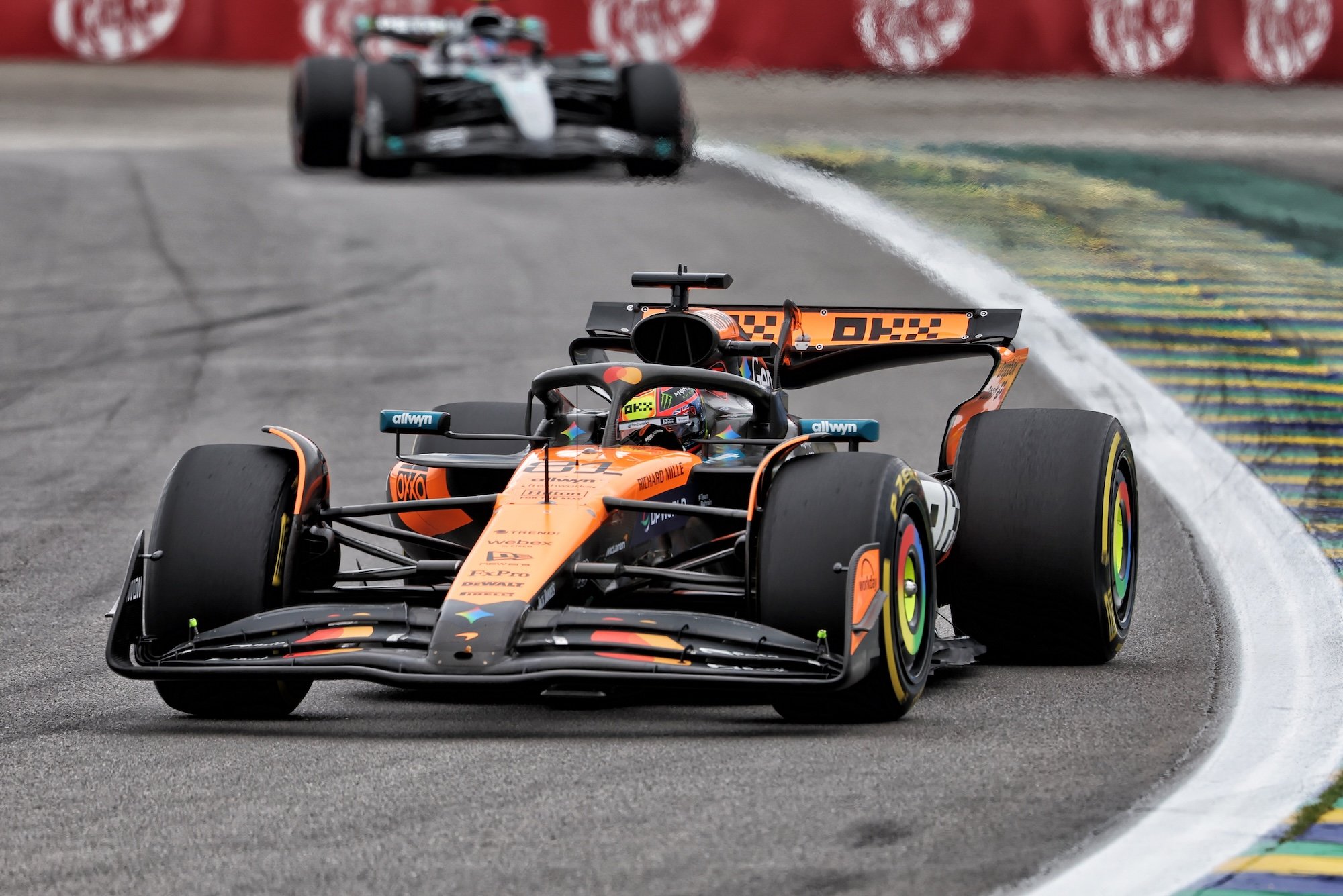
Oscar Piastri Faces Penalty at the São Paulo GP: An In-Depth Analysis
The recent Formula 1 race in São Paulo has stirred considerable discussion, particularly regarding the incident involving Oscar Piastri. The race officials have provided a detailed explanation for the 10-second penalty imposed on the McLaren driver after a collision during the event. This incident not only affected Piastri’s standing in the race but also raised questions about racing etiquette and responsibility on the track.
The Incident Unfolds
The incident in question occurred during the early stages of the race, specifically on the very first lap. A safety car was deployed following a crash that involved Gabriel Bortoleto and Lance Stroll, which resulted in Bortoleto needing to retire from the race. After a brief pause in the action, the race resumed on lap 7. However, the action quickly turned chaotic when Piastri, attempting to gain ground, collided with Kimi Antonelli at the first corner.
The collision had significant repercussions, not only for Piastri but for Antonelli and Charles Leclerc as well. After Piastri struck Antonelli, the latter was forced into a secondary collision with Leclerc, who was positioned on the outside. This series of events ultimately resulted in Leclerc’s retirement from the race, amplifying the impact of Piastri’s actions.
The Ruling from Race Officials
Following the incident, race officials took the time to analyze the circumstances surrounding the collision. Their findings were clear: Oscar Piastri was deemed entirely responsible for the collision. The officials explained that during the restart of the race after the safety car period, Piastri attempted to overtake Antonelli on the inside of the first corner. However, he failed to establish the necessary overlap before reaching the apex of the turn. According to the driving guidelines for overtaking on the inside of a corner, Piastri’s front axle was not aligned with Antonelli’s car, which is crucial for a safe overtaking maneuver.
In their ruling, officials noted that Piastri locked up his brakes in an attempt to avoid contact but was unable to reduce his speed enough to prevent the collision. This lack of control not only resulted in the crash with Antonelli but also forced Antonelli into Leclerc, whose race effectively ended due to the incident.
The Consequences for Piastri
As a result of the collision, race officials handed Piastri a 10-second time penalty. Additionally, he was assessed two points on his super license. Accumulating a total of eight points places him at risk of further penalties, as reaching twelve points would result in a suspension for the subsequent race. The officials concluded that the penalty imposed was appropriate and consistent with recent precedents in similar situations, emphasizing the importance of accountability in competitive racing.
Understanding Racing Etiquette
This incident sheds light on broader themes within the world of Formula 1, particularly the expectations surrounding driver conduct during races. The complexities of overtaking maneuvers require a nuanced understanding of racing lines and spatial awareness. The rules governing these actions are in place not only to protect the drivers but also to maintain the integrity of the sport.
Overtaking on the inside of a corner can be particularly challenging. Drivers must gauge their speed, positioning, and the actions of their competitors with great precision. In this case, Piastri’s failure to establish the required overlap before making his move raised significant concerns about the judgment exercised in high-pressure situations.
The Role of Technology in Modern Racing
In recent years, advancements in technology have played a pivotal role in shaping the landscape of Formula 1 racing. Data analytics, telemetry, and real-time feedback have transformed how teams and drivers approach races. However, despite these technological innovations, the fundamental principles of racing remain unchanged. Drivers still need to rely on their instincts and experience to navigate the complexities of the track.
In the case of Piastri, utilizing the data available to him could have potentially altered his decision-making process during the race. Understanding the dynamics of the race and the positioning of other drivers is crucial in avoiding incidents that could jeopardize not only one’s race but also that of others.
The Importance of Accountability in Racing
Racing is an inherently risky endeavor, and the stakes are high. As such, accountability becomes a cornerstone of the sport. The penalty imposed on Piastri serves as a reminder that actions on the track have consequences. It reinforces the idea that drivers must exercise caution and respect for their competitors, especially in high-stakes situations.
The racing community closely monitors incidents like this, as they can have broader implications for a driver’s career. A pattern of reckless driving can lead to a tarnished reputation, affecting sponsorship opportunities and team dynamics. Therefore, understanding and adhering to the principles of racing etiquette is not just about avoiding penalties; it’s about maintaining a professional standard that upholds the sport’s integrity.
Reflections on Piastri’s Performance
Oscar Piastri, a talented young driver, has garnered significant attention in the Formula 1 circuit. However, this incident raises questions about his decision-making and maturity on the track. As he continues to develop his career, learning from such experiences will be crucial. The ability to reflect on mistakes and adapt will define his trajectory in the highly competitive environment of Formula 1.
While the penalty may be seen as a setback, it also presents an opportunity for growth. Piastri has demonstrated potential, and how he responds to this incident will be pivotal in shaping his future. Developing a reputation as a driver who learns from mistakes can set him apart in a field filled with exceptional talent.
The Road Ahead for Piastri
Moving forward, Piastri faces the challenge of navigating the remainder of the season with the weight of this incident on his shoulders. The pressure to perform while managing the implications of his actions will test his resilience. As he prepares for upcoming races, focusing on refining his skills and understanding the dynamics of race craft will be essential.
Additionally, the support from his team will play a significant role in his development. The relationship between a driver and their team can greatly influence performance, especially during challenging times. Open communication and a collaborative approach will be vital as Piastri seeks to rebound from this incident.
Conclusion
The collision involving Oscar Piastri at the São Paulo GP serves as a case study in the complexities of Formula 1 racing. The incident underscores the importance of responsibility, accountability, and the adherence to racing etiquette. As Piastri navigates the challenges ahead, the lessons learned from this experience will undoubtedly shape his future in the sport. Whether he emerges stronger from this setback will depend on his ability to reflect, adapt, and grow as a driver in one of the most demanding arenas in motorsport.
