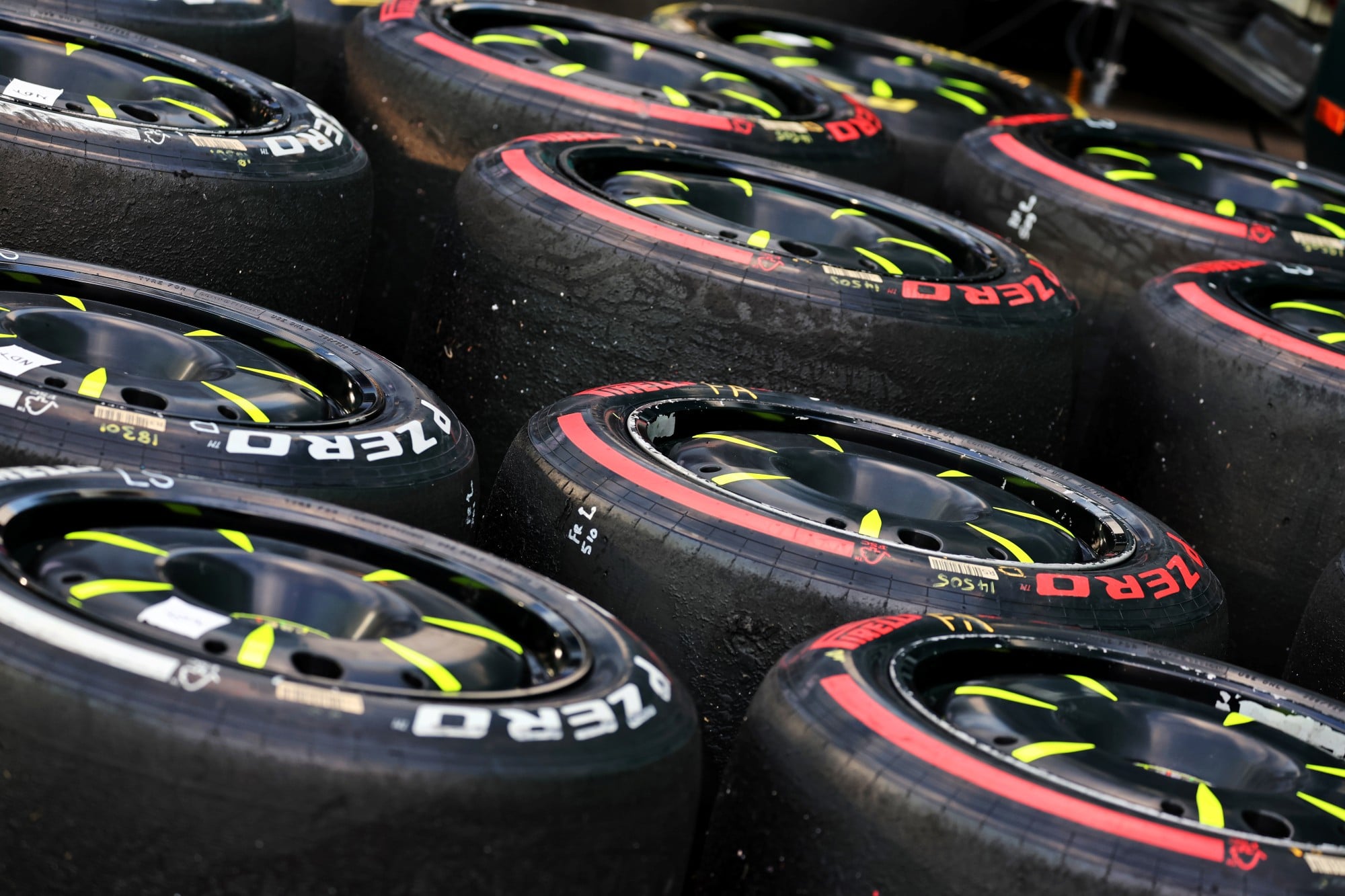
Pirelli Introduces New Tire Regulations for the Qatar Grand Prix
In a significant development for the Formula 1 Qatar Grand Prix, Pirelli has announced a groundbreaking regulation that will require teams to adhere to a maximum limit on the number of laps each tire set can complete throughout the race weekend. This decision, made in collaboration with the FIA, F1, and the teams, comes as a proactive measure aimed at enhancing safety and will directly influence the race strategy in the sweltering conditions of Lusail.
Tire Limitations Explained
According to the Italian tire supplier, each set of tires will now be restricted to a total of 25 laps across all sessions, including Practice 1 (FP1), Practice 2 (FP2), Practice 3 (FP3), Qualifying, the Sprint, and the main Grand Prix. This new rule mandates that all drivers must make at least two pit stops during the race to comply with the tire limitations. Notably, Pirelli clarified that formation laps, grid laps, and laps completed after the checkered flag will not count toward this limit, which will only apply to actual session laps. The accumulated lap count will be monitored from the start of the weekend, ensuring that teams manage their tire usage effectively.
Prior to the race, teams will receive an official tire count, indicating how many laps remain for each set of unused tires. This approach aims to prevent tires from reaching a critical level of structural wear, a concern that surfaced during the previous year’s race. In 2024, some drivers managed to extend their stints through aggressive degradation management, pushing their tires beyond their optimal lifespan. This kind of usage can induce excessive stress on tire structures, prompting the need for this new lap limit.
Implications of the New Rule
With the Qatar Grand Prix consisting of 57 laps, the mandatory two-stop strategy is now essential for all competitors. Pirelli has also emphasized that tire wear is likely to be pronounced in Lusail due to the high-speed corners and the energy exerted in the section between turns 12 and 14. Additionally, the potential for tire graining is a common occurrence on the region’s asphalt. However, Pirelli believes that the selected tire compounds—C1, C2, and C3—have shown commendable durability against this phenomenon in previous races throughout 2025.
The announcement also states that this tire regulation will apply to laps completed under Safety Car or Virtual Safety Car conditions. Therefore, any lap completed during an official session will contribute to the total count of laps, except for those completed prior to the race start and after the checkered flag. Pirelli assured that the lap count will be continuously monitored and communicated transparently to the teams.
Strategic Changes During Sprint and Qualifying
The new tire limitations are expected to have a considerable impact on driver strategies during both the Sprint and Qualifying sessions. Since the Qatar weekend maintains a Sprint format, any mileage accrued during these sessions will reduce the number of remaining laps available for the main race. Consequently, drivers will need to strike a balance between immediate performance and tire preservation for Sunday’s race. Teams that miscalculate their strategies during the earlier sessions may find themselves with less flexibility at the start of the Grand Prix compared to their competitors.
Pirelli has made it clear that this is not a permanent change, but rather a specific measure for the Qatar event, following the excessive tire usage observed in 2024. The company asserted that the 25-lap limit per tire set is adequate to ensure safety without compromising the excitement of the race. This decision received unanimous support from the teams after a thorough analysis of data from the previous year.
Challenging Conditions Ahead
The Qatar Grand Prix will take place under high heat and humidity, even though it is scheduled as a night race. In past events, drivers have reported feeling unwell by the end of the race due to extreme cockpit temperatures, making tire management even more crucial. The Lusail circuit features 16 corners, primarily high-speed, and is often affected by sand blown in from the desert, which can alter grip levels throughout the weekend.
The introduction of tire limits is poised to be one of the most discussed aspects of this race and is expected to create strategic variations that are not typically seen in Formula 1. The combination of heat, abrasive track conditions, high-speed corners, and the presence of the Sprint format heightens the complexity of the race and places tire management at the forefront of competition in Doha.
The Role of Teams and Drivers
With these new regulations in place, teams must adapt their strategies accordingly. They will need to carefully plan out tire usage not only for the main race but also for both Qualifying and the Sprint. This adjustment requires a deep understanding of tire performance under varying conditions and the ability to react to unexpected situations that may arise during the race weekend.
Drivers, too, will be tasked with a more challenging role. They must find the right balance between pushing the limits of their tires for a faster lap time and ensuring enough tire life remains for the Grand Prix. This dual focus will test their skills and strategic thinking in ways that are not usually required in standard race weekends.
Conclusion
Pirelli’s introduction of mandatory tire limits for the Qatar Grand Prix marks a significant shift in how teams will approach the race weekend. The enhanced focus on tire management, coupled with the challenging conditions of the Lusail circuit, is set to create a unique and exciting atmosphere for fans and participants alike. As teams prepare for this new era of racing in Qatar, the implications of these regulations will undoubtedly be felt across the grid, influencing everything from car setup to race strategy and driver performance.
The Qatar Grand Prix promises to be an event filled with intrigue, as the interplay between tire strategy and racing dynamics unfolds on the track. With the spotlight on tire management, teams that can adapt quickly and effectively will likely find themselves in a favorable position as they navigate the challenges ahead.
