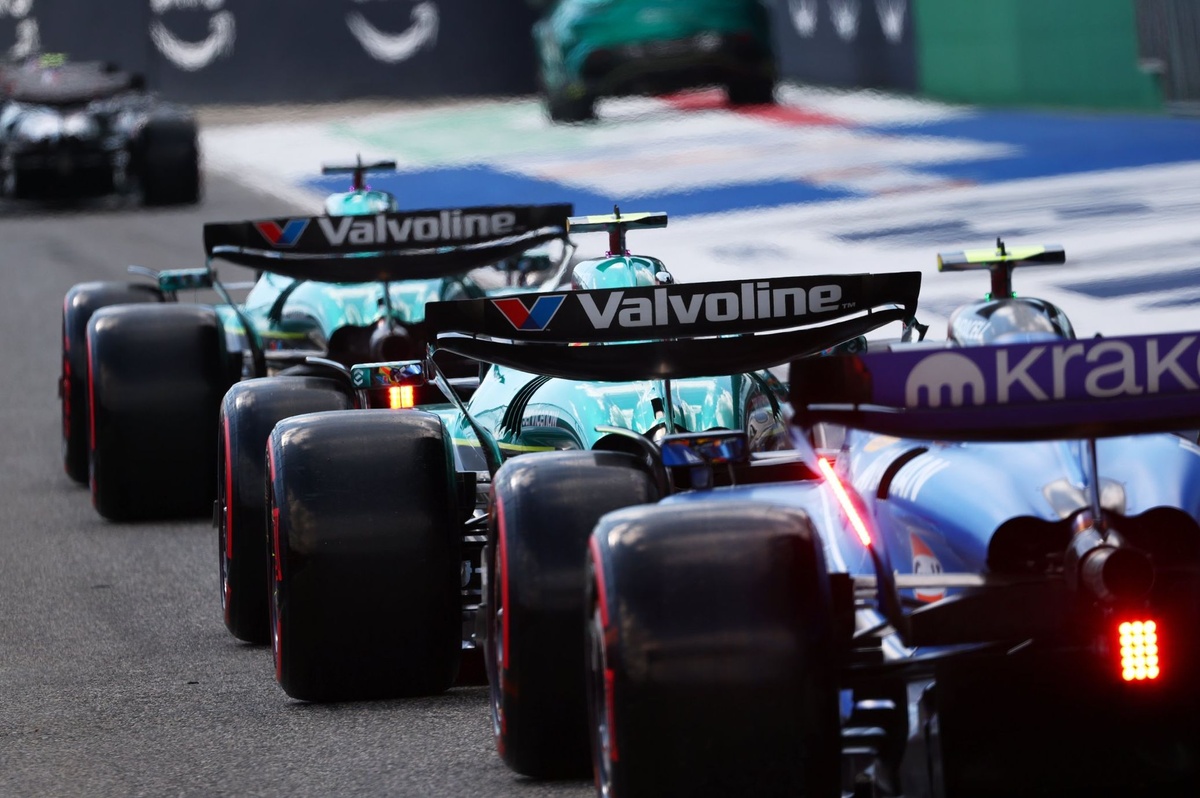
Pirelli’s latest C6 tire made its debut during the race weekend at Imola, but it left many, including the tire supplier, scratching their heads as competitors struggled to make it last even a full lap. The Aston Martin drivers, alongside Mercedes’ George Russell, recorded their quickest laps during qualifying on the C5 tire, which is classified as the medium tire choice for the Imola Grand Prix.
Interestingly, after the two practice sessions on Friday, initial feedback regarding the new soft compound was largely positive. Pirelli asserted that the C6 provided a significant increase in grip compared to the C5, with the actual difference in lap times being even more pronounced than their simulations had predicted—up to half a second per lap instead of the anticipated 0.2 to 0.3 seconds.
However, this optimism dissipated on Saturday when every team experienced a dramatic drop-off in performance from the C6 tires throughout a push lap unless they were managed with extreme precision. This issue led Mercedes to opt for Russell to utilize the C5 tire for his final qualifying run, which ultimately affected his tire options for the race. Meanwhile, Aston Martin had preemptively decided to use both the C5 and C6 during qualifying on Friday evening.
After qualifying, but before the data had been fully assessed, Pirelli’s motorsport manager, Mario Isola, acknowledged that the reasons behind the C6’s unexpected performance issues were still unclear. He noted that drivers reported experiencing more understeer on Saturday compared to Friday, which could explain why the track did not yield faster times.
“If we consider that this compound is very soft and, as is typical for soft compounds, it has a grip curve with a sharper peak,” Isola elaborated. “After a heat cycle, the new tire exhibits a slightly different grip curve with a lower peak, making it more manageable.”
Despite expectations that the C6 would be up to half a second faster per lap, it proved to be less predictable and consistent than the C5. This inconsistency contributed to many drivers achieving quicker lap times on the medium compound during practice and qualifying. Several teams even noted that their drivers were able to achieve better lap times on a used C6 tire, which Pirelli explained was due to the used tire’s performance peak being lower but more predictable and easier to access.
The underlying cause of the shift towards understeer remained difficult to pinpoint. Pirelli had reduced the minimum pressure for the rear tires by one psi overnight, but this change alone was unlikely to account for such a significant shift in balance. Teams often configure their setups to induce understeer to protect the rear tires, but if this was a deliberate strategy, it seemed counterintuitive for them to express concerns about the resulting understeer.
“It is not clear why drivers reported experiencing more understeer compared to Friday, as there were no elements to support this observation,” Isola remarked. “There wasn’t any rain overnight or other unusual conditions, yet the track appeared to be slower than the previous day.”
What added to the intrigue was the largely consistent weather conditions from one day to the next, although wind direction had shifted. The use of varying engine power modes during qualifying likely did not contribute to the balance shift either, as the C6 had also shown problems during Saturday’s third practice session.
“When you consider that even a one psi change in either direction doesn’t significantly alter the balance, it raises questions,” Isola stated. “This situation is unprecedented, suggesting there might be a larger factor at play that we haven’t yet identified.”
Further analysis is expected to shed light on whether the teams’ setup choices influenced the tire performance. Imola’s pit lane length inherently encourages teams to adopt a one-stop strategy, given that the time lost to a pit stop is about 28 seconds. Therefore, protecting the tires becomes crucial, which may have led teams to intentionally dial in more understeer to safeguard the rear tires. While this is a common approach, the unfamiliarity with the new tire compound might have resulted in more understeer than they initially anticipated.
Despite the hiccups experienced during this particular race weekend, Pirelli remains committed to advancing its plans to deploy the C6 in additional races and may consider “skipping” tire compounds in future selections. This approach would essentially create a disincentive for teams to opt for one-stop strategies. Since the entire tire range is homologated for the season, the only available strategy is to find solutions using the existing tire options.
As the racing community looks ahead, the unfolding narrative surrounding the C6 and its performance under competitive conditions will be a focal point for teams and fans alike. The complexities involved in tire management and the interplay of various factors that influence performance continue to intrigue stakeholders within the motorsport landscape. The lessons learned from Imola will undoubtedly inform strategies and preparations for upcoming races, as teams strive to optimize their performance on the track.
The C6 tire’s introduction has sparked discussions among teams, engineers, and drivers about the challenges and opportunities associated with adapting to new technology in high-stakes environments. As teams analyze data and refine their strategies, the anticipation surrounding the next race will heighten, creating a dynamic atmosphere in the world of Formula 1 racing.
In conclusion, tire performance is an essential component of competitive racing, and the introduction of new compounds like the C6 can significantly impact race strategies and outcomes. The experiences gleaned from the Imola Grand Prix will serve as valuable insights for teams as they navigate the complexities of tire management and performance optimization in subsequent races. With Pirelli’s continued commitment to innovation, the racing community eagerly awaits the next chapter in the tire saga of Formula 1.
