The Impact of Pole Position on the 2025 Formula 1 Season
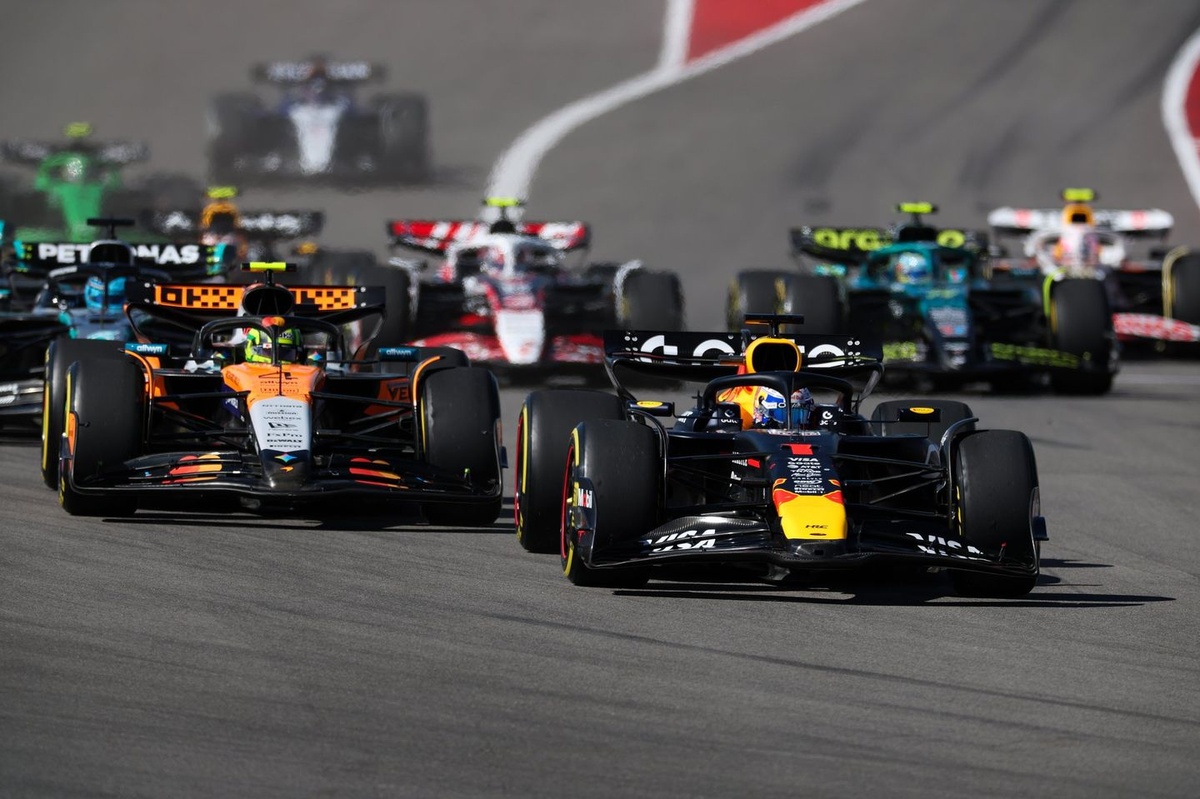
George Russell, following the United States Grand Prix in October, highlighted the significant role that pole position plays in the Formula 1 landscape for the 2025 season. He remarked on how crucial it has become to secure a strong qualifying position, indicating that the race dynamics are heavily influenced right from the start. “At this moment in F1, the race essentially begins at Turn 1,” he observed, acknowledging the challenge of recovery after a poor start, as he experienced during the Austin race.
In 2025, the relationship between qualifying and race outcomes has become more pronounced than ever. Analyzing the statistics reveals a compelling narrative: out of the 20 races held so far this season, 14 have been clinched by the driver who started from pole position, translating to a remarkable 70% success rate. This marks the highest conversion ratio seen within the last decade. In comparison, the 2023 season, which was dominated by a single team and driver, did not achieve such a high percentage.
The statistics from previous seasons further illustrate this trend. For instance, in 2019, the conversion rate was notably lower at 38%, indicating a significant gap between Ferrari’s pole position speed and their performance in races. Charles Leclerc, despite converting two out of six pole positions into race victories, faced challenges that reflected a broader issue with the team’s race pace. His solitary pole in Hungary this season—one that ultimately did not lead to a win—highlights how his reduced pole count has contributed to the high success rate of polesitters this year.
Historical Context of Pole Position Success
In 2019, several drivers faced difficulties converting pole positions into race wins. Sebastian Vettel failed to turn his pole starts into victories, while Valtteri Bottas managed to win from two out of five pole positions. Lewis Hamilton, on the other hand, achieved a three-out-of-five success rate. During that season, Mercedes struggled to generate tire heat effectively for a single lap, while they excelled in tire degradation management during races. Max Verstappen of Red Bull was the only driver outside of Mercedes and Ferrari to convert a pole position into a win that year.
The trend of polesitters winning races continued through the early rounds of the 2025 season. In the opening four races, every race was won by the driver starting from pole. This trend shifted slightly in subsequent rounds, as Oscar Piastri emerged victorious in both Jeddah and Miami, capitalizing on Verstappen’s pole positions. However, at the Imola Grand Prix, Verstappen reclaimed his dominance, showcasing the importance of pole positioning once more.
Analyzing the remaining races of the season, it becomes clear that the correlation between starting at the front and securing a win remains strong. The races not won from pole position—such as those at Silverstone, Belgium, and Hungary—showcased how critical the opening laps are. In Belgium, for instance, Lando Norris lost his lead to Piastri almost immediately, demonstrating how quickly fortunes can change in the early stages of a race.
Challenges of Overtaking in 2025
One of the significant factors influencing the dynamics of race outcomes in 2025 is the challenge of overtaking. The compact nature of the current grid, where teams are closely matched in performance, makes it increasingly difficult for drivers to get close enough to execute a pass. When the pace of each vehicle is similar, it hinders opportunities for overtaking, particularly given the impact of dirty air—an issue exacerbated by the current car designs that generate more turbulent airflow compared to those from 2022.
Moreover, advancements in aerodynamics have made cars more efficient in straight-line speed but have also increased the amount of dirty air produced in corners. This paradox creates a scenario where even when a driver is in a position to overtake, the aerodynamic disadvantages can thwart their attempts. The reduction in rear wing size at faster circuits has compounded this issue, rendering the DRS (Drag Reduction System) less effective than in previous years.
The Role of Qualifying in Title Contention
While qualifying is undoubtedly critical, Russell emphasized that it is not the sole determinant of the championship outcome. The interplay between a driver’s ability to navigate the challenges posed by competitors during the initial race phases is equally important. Starting from pole can provide a buffer against the chaos that often ensues at the beginning of a race, as it allows a driver to establish a lead and avoid being caught in the fray of battling cars.
Situational factors also play a role in how pole positions impact race outcomes. For example, in races characterized by low tire degradation, a polesitter may maintain their lead more easily throughout the race. However, in scenarios involving high tire wear or thermal management issues, competitors—such as those from McLaren—might have a better chance of capitalizing on any weaknesses demonstrated by the polesitter.
Take the Austin Grand Prix as a case study. Had Leclerc not executed a masterful defensive driving strategy against Norris, Verstappen could have faced a tougher challenge, given the McLaren’s superior pace relative to the Red Bull. While Austin was not a particularly high-degradation race, tire management issues still posed significant challenges for the drivers.
Upcoming Challenges in the Final Races
As the season progresses into its final races in Brazil, Las Vegas, Qatar, and Abu Dhabi, the implications of pole position continue to shift. Not all of these circuits favor the polesitter uniformly. For instance, the Brazilian Grand Prix could be influenced by unpredictable weather, while Las Vegas may present challenges related to tire graining, potentially impacting McLaren more adversely than Red Bull. The Qatar circuit is recognized for being tough on tires, adding another layer of complexity for teams as they strategize for the remaining races.
While qualifying remains a critical element for drivers looking to secure a championship title, it is clear that it will not be the singular factor determining the outcome. The multifaceted nature of racing in 2025, combined with external variables and the inherent challenges of overtaking, means that drivers and teams must be prepared for unexpected developments as they approach the season’s conclusion.
As the championship battle intensifies, the ability to perform well in qualifying will provide a competitive edge, but the strategic execution of race tactics, tire management, and the capacity to adapt to changing race conditions will ultimately shape the destiny of the title contenders.
The focus on pole position has created a dynamic atmosphere in the 2025 Formula 1 season, making each qualifying session pivotal not just for race strategy, but for the championship narrative itself. The interplay between qualifying prowess and race execution will be crucial as drivers contend for glory on the world stage, showcasing the relentless pursuit of speed, strategy, and skill in one of the most demanding motorsport arenas on the planet.
