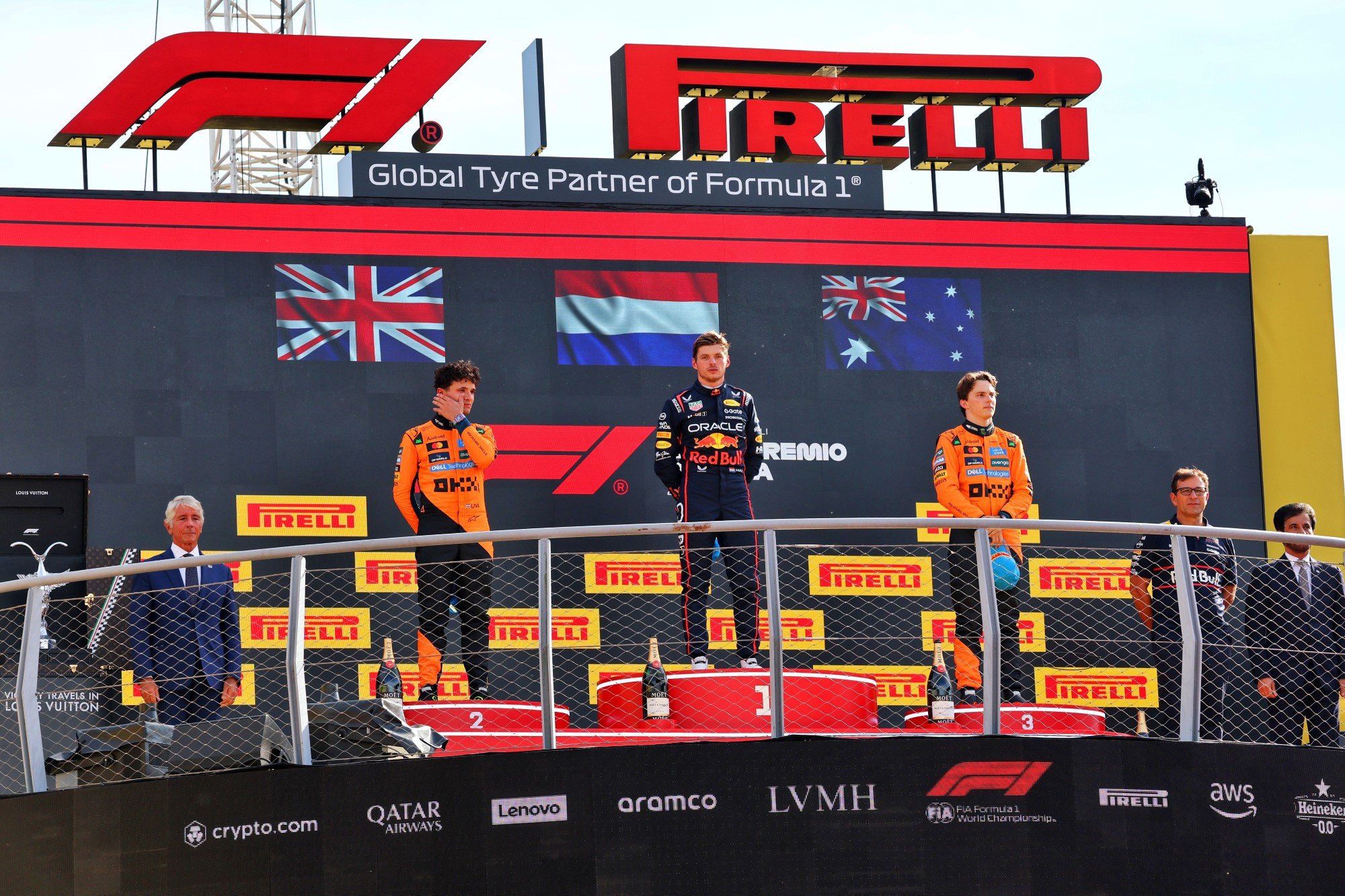
Analyzing the Controversial Position Swap Between Lando Norris and Oscar Piastri at the Italian Grand Prix
The recent Italian Grand Prix saw a notable exchange of positions between McLaren drivers Lando Norris and Oscar Piastri, a move that has stirred up discussions among fans and analysts alike. David Croft, a commentator for Sky Sports, provided insights into this situation, suggesting that the team acted in accordance with a pre-established agreement between the drivers.
The Pre-Established Agreement
Croft emphasized that McLaren had a clear understanding with both drivers before the race commenced. He noted, "It seems that McLaren was committed to upholding this agreement during the race." This pre-race arrangement played a crucial role in how the drivers navigated their positions on the track. As the race unfolded, Croft pointed out that Lando Norris received a radio communication indicating that Oscar Piastri would be the first to pit.
Norris’s acceptance of this decision was pivotal. The communication went smoothly, with the team reassuring him that there was no immediate threat of an ‘undercut’ from other competitors. This assurance allowed Norris to maintain his focus and confidence during the race. Croft elaborated that if the team had failed to return the position to Norris after the stop, it could have led to distrust within the driver lineup.
Transparency During the Race
The transparency exhibited by McLaren throughout the race contributed to a harmonious team atmosphere. Croft explained that Norris was made aware of the strategy, which included Piastri pitting first, and he agreed to follow the team’s plan. This level of communication is essential in high-stakes environments like Formula 1, where split-second decisions can have significant consequences.
During the race at Monza, it was evident that Norris was performing well, and the slow pit stop from his team could have altered the race’s dynamics. Croft remarked, “You wouldn’t have as much confidence in the team if the position wasn’t returned, especially when it wasn’t a matter of merit but rather circumstance.” The underlying implication is that such strategic decisions must be handled delicately to maintain driver trust and morale.
Fairness and Team Dynamics
Croft articulated that the decision to swap positions was ultimately correct, as it preserved internal team harmony. He observed that both drivers expressed their thoughts over the radio, with Piastri articulating his perspective before adhering to the team’s directives. “I didn’t see either of them leaving Monza dissatisfied,” he noted, highlighting the professional conduct exhibited by both drivers in handling the situation.
It is essential for a team like McLaren to maintain a balance between their drivers’ competitiveness and their collaborative spirit. Croft mentioned that fostering an environment where both drivers feel supported and valued is crucial. “They want both drivers to feel that the team will back them up as best as possible when the situation calls for it,” he added.
The Race Outcome and Its Implications
After the slower pit stop for Norris, Piastri temporarily secured the second position before relinquishing it back to Norris upon the team’s instruction. In the end, the race concluded with Norris finishing second and Piastri in third place. This outcome effectively narrowed the championship points gap between the two drivers to 31 points, with eight races remaining in the season.
The significance of this result cannot be understated. As the season progresses, every point is crucial in the championship standings, and maintaining a strong team dynamic is essential for McLaren’s overall success.
The Role of Team Orders in Formula 1
The situation at Monza is a prime example of the intricate balance teams must strike when it comes to driver management. Team orders, while sometimes controversial, are often necessary to ensure a cohesive strategy that maximizes the chances of success. In this case, McLaren’s decision to prioritize communication and pre-race agreements helped mitigate potential conflicts on the track.
In Formula 1, the stakes are incredibly high, and teams must navigate not only the technical aspects of racing but also the psychological dynamics between drivers. When teams communicate effectively and maintain transparency, they can enhance their performance and create a more positive environment for their athletes.
The Importance of Communication in High-Stress Environments
Effective communication is a cornerstone of success in Formula 1. The ability to convey critical information quickly and clearly can make the difference between victory and defeat. In the case of the McLaren team, the radio communications played a pivotal role in ensuring that both drivers understood their roles during the race.
Drivers rely on their teams for information about their performance, the status of competitors, and strategic decisions. When teams provide clear and timely updates, it fosters an atmosphere of trust and collaboration. In contrast, a lack of communication can lead to misunderstandings, misalignments in strategy, and ultimately, dissatisfaction among drivers.
Navigating Rivalries and Alliances
In a competitive environment like Formula 1, rivalries can emerge, even among teammates. However, successful teams often find a way to turn potential conflicts into opportunities for cooperation. The relationship between Norris and Piastri is an intriguing one, as both drivers are vying for individual success while also representing the McLaren brand.
The ability to manage these relationships effectively can have a significant impact on a team’s performance. By ensuring that both drivers feel heard and valued, McLaren can cultivate a spirit of teamwork that benefits everyone involved.
Looking Ahead: The Remaining Races of the Season
With eight races remaining in the season, the championship battle is far from over. The narrow point gap between Norris and Piastri adds an interesting layer of complexity to their relationship as teammates. Each race presents its own challenges and opportunities, and the dynamics within the team will continue to evolve.
As the season progresses, it will be crucial for McLaren to maintain the balance between individual aspirations and collective goals. This delicate dance will require ongoing communication, strategic foresight, and a commitment to teamwork.
Conclusion
The position swap between Lando Norris and Oscar Piastri during the Italian Grand Prix is a compelling illustration of the complexities of team dynamics in Formula 1. By adhering to pre-established agreements and fostering open communication, McLaren was able to navigate a potentially contentious situation effectively. As the season unfolds, the importance of maintaining strong relationships between drivers will be paramount in their quest for success on the racetrack.
Through transparent communication and a commitment to teamwork, McLaren can continue to build a positive environment that allows both Norris and Piastri to thrive in their pursuit of championship glory. The lessons learned from this race will undoubtedly resonate as they tackle the challenges that lie ahead in the remaining races of the season.
