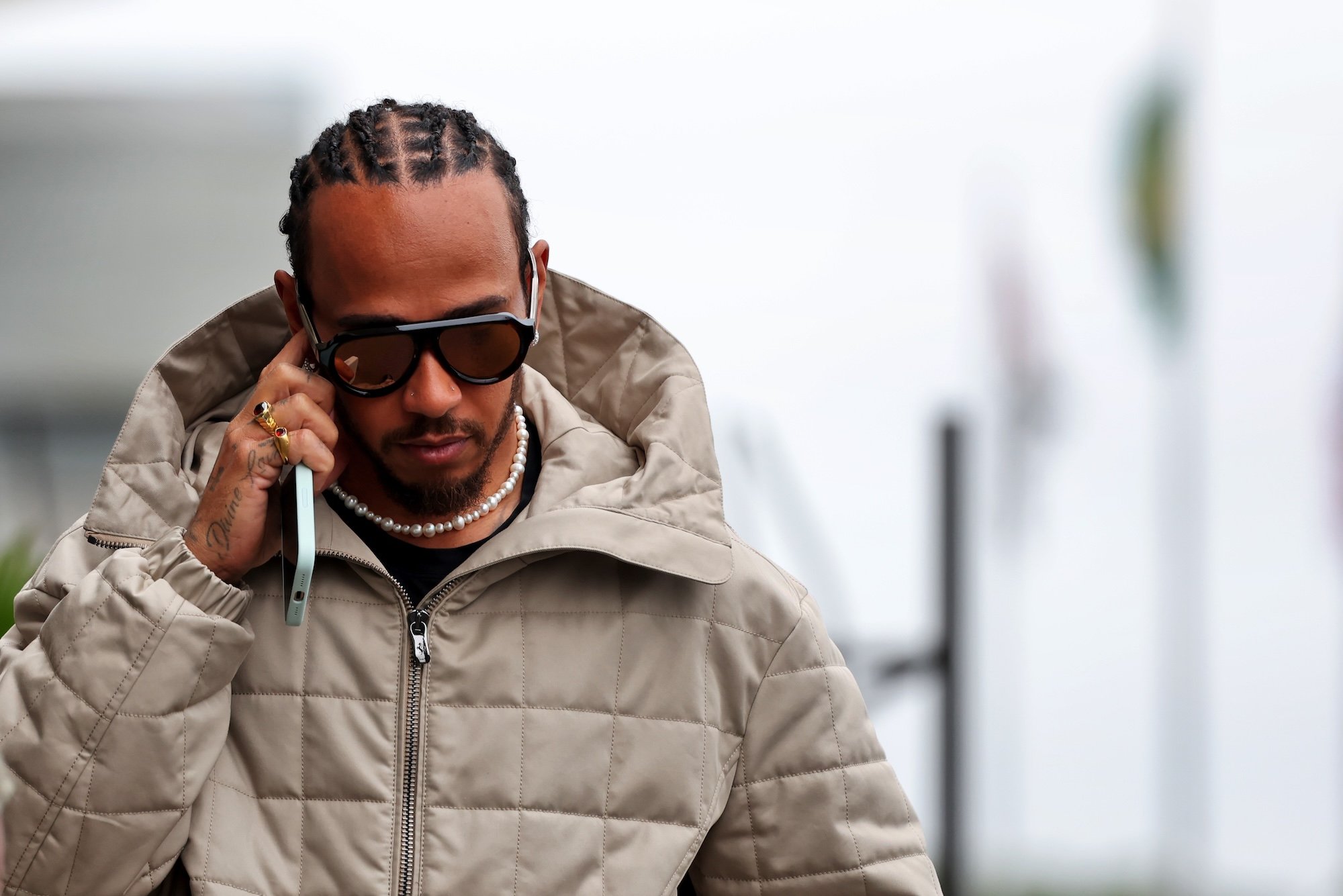
Lewis Hamilton’s Struggles in His First Season with Ferrari: Insights and Reactions
Lewis Hamilton’s debut season with Ferrari has not gone as smoothly as many had anticipated. The veteran Formula 1 driver, known for his exceptional skill and numerous championships, has faced significant challenges since joining the iconic Italian team. These struggles have drawn sharp criticism from various corners, including former F1 driver Ralf Schumacher, who has openly expressed his concerns about Hamilton’s performance and adaptation to Ferrari’s unique environment.
A Rocky Start: Hamilton’s Transition to Ferrari
When Lewis Hamilton made the switch to Ferrari, expectations were sky-high. The team has a rich history in the sport, and Hamilton’s arrival was seen as a potential catalyst for a championship run. However, the transition has proven to be more challenging than expected. In the early races of the season, Hamilton appeared to struggle with the car’s setup and the team’s operational methods, leading to underwhelming results.
The pressure mounted after the São Paulo Grand Prix, where Ferrari faced a double retirement. This race was particularly crucial, as the team managed to secure only six points from the sprint race, further compounding their difficulties in the championship standings. With three races remaining in the season, Ferrari’s position in the constructor’s championship dropped from second to fourth, while rival teams such as Mercedes and McLaren continued to perform strongly.
Criticism from Ralf Schumacher
Ralf Schumacher, a former F1 driver and commentator, did not hold back in his assessment of Hamilton’s performance. During an interview with Sky Sports Germany, he criticized Hamilton’s approach, suggesting that the British driver had a tendency to "sit back and do nothing" during his adjustment period with Ferrari. This remark highlighted a growing sentiment that Hamilton’s famed adaptability might not be translating well in this particular context.
Schumacher’s comments reflect a broader concern about Hamilton’s contributions to the team’s efforts. While he is undoubtedly one of the most talented drivers in Formula 1 history, the expectation is that he would bring not only his driving skills but also his leadership and experience to help guide Ferrari towards success. Instead, Schumacher argues that the results have fallen short of what both the team and its fans hoped for.
Team Dynamics and Leadership Challenges
The challenges faced by Hamilton are not solely his own; they are indicative of larger issues within the Ferrari team. The internal dynamics and leadership structure have come under scrutiny, particularly after the disappointing results in recent races. Ferrari President John Elkann publicly addressed the team, urging the drivers to "talk less" and focus more on their performance on the track. This call for action underscores the urgency within the organization to turn things around before the end of the season.
Elkann’s remarks are seen as a clear message to Hamilton, emphasizing the high expectations that come with wearing the Ferrari badge. Schumacher pointed out that the decision to hire Hamilton was one of the most significant and costly personnel moves Ferrari has made in recent years. With such a prestigious name associated with the team, there is an inherent pressure to deliver results that match the reputation.
Performance Expectations and Reality
Given Hamilton’s illustrious career, it is not surprising that fans and analysts expected him to have an immediate impact on Ferrari’s performance. However, the reality has been starkly different. The team’s struggles have drawn attention to the fact that, despite Hamilton’s star power, results are ultimately what matter in Formula 1. Schumacher’s critique that Hamilton "simply is not good enough" this season raises questions about the interplay between a driver’s experience and the specific challenges posed by a new team environment.
Ferrari’s failure to secure a constructor’s championship since 2008 adds another layer of complexity to the situation. The team has been striving to reclaim its former glory, and Hamilton’s arrival was viewed as a pivotal moment in their journey. Yet, the disheartening results have led to a reevaluation of the team’s strategy and the decisions that brought Hamilton to Maranello.
The Road Ahead for Hamilton and Ferrari
As the season approaches its final races, both Hamilton and Ferrari find themselves at a crossroads. The pressure to perform is immense, not only for Hamilton as an individual driver but also for the entire team as they seek to regain their competitive edge. The upcoming races will be critical in determining how well they can adapt and respond to the challenges they have faced throughout the season.
For Hamilton, this period represents an opportunity for growth and reflection. Adapting to a new team is never easy, especially one with as much history and expectation as Ferrari. As he navigates the complexities of this transition, the hope is that he can leverage his experience and skills to find a rhythm that aligns with the team’s objectives.
The Collective Responsibility of the Team
While much of the focus is on Hamilton, it’s essential to recognize that the challenges facing Ferrari are not solely the responsibility of one driver. Formula 1 is a team sport, and success hinges on the collective effort of engineers, strategists, and drivers working in harmony. As such, the entire Ferrari organization must evaluate its processes and identify areas for improvement.
The call for more on-track focus from Elkann highlights the need for a cohesive approach among team members. Every individual plays a role in the team’s success, and fostering an environment where collaboration and communication thrive is crucial. If Hamilton, along with his teammates, can rally together and work towards a common goal, there is still a chance to salvage the season and lay the groundwork for a more competitive future.
Addressing the Critique: Hamilton’s Response
In the face of criticism, Hamilton has remained composed and focused on his goals. He understands the nature of high-stakes competition, especially in a sport as scrutinized as Formula 1. While he has acknowledged the challenges, he has also emphasized the importance of perseverance and resilience. Hamilton’s ability to bounce back from adversity has been a hallmark of his career, and this season will undoubtedly test that resolve.
Hamilton’s experience in previous seasons, where he faced obstacles and emerged victorious, serves as a reminder that success is not always linear. The road to triumph is often fraught with setbacks, and how a driver responds to those challenges can define their legacy. For Hamilton, this season with Ferrari may become a pivotal moment in his career—a test of character and determination that could shape his future in the sport.
Conclusion
Lewis Hamilton’s first season with Ferrari has certainly been a rollercoaster of emotions, filled with challenges and opportunities for growth. As he navigates the complexities of his new environment, the eyes of the Formula 1 world remain keenly fixed on him and the team. The coming races will be a critical juncture in determining how Hamilton and Ferrari can turn the tide after a difficult season. Whether they can rise to the occasion remains to be seen, but the potential for redemption is always present in the world of motorsport.
