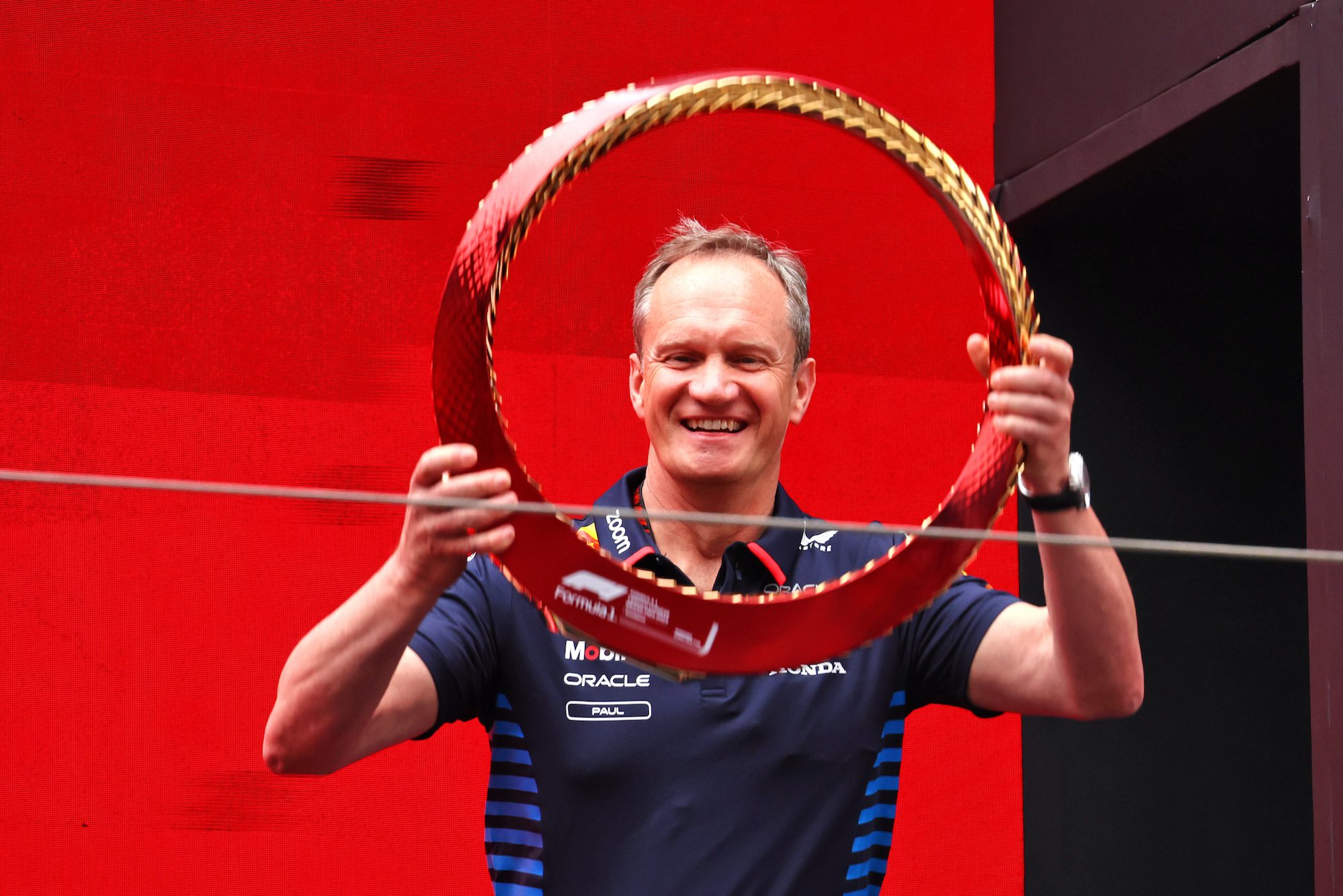
Red Bull Racing’s Progress: Insights from Chief Engineer Paul Monaghan
In the competitive world of Formula 1, each race serves as a testament to the relentless pursuit of speed, precision, and innovation. Recently, Paul Monaghan, the Chief Engineer of Red Bull Racing, shared insights into the advancements made with the RB21 car during the recent races. His remarks shed light on the complex nature of automotive engineering and the multifaceted approach required to enhance performance on the track.
The Collective Impact of Multiple Factors
Monaghan emphasized that the improvements seen in the RB21 were not the result of a singular breakthrough but rather a culmination of various elements working synergistically. When asked about Max Verstappen’s recent comments, which suggested that the car had inherent potential even before the race in Monza, Monaghan clarified, “I believe that several things happened simultaneously, and I don’t want to contradict Max; I’m not entirely sure of his exact words. A great deal of work has been invested since the beginning of the season to develop a better car. We thought we had identified the issue, but it required several steps to reach that point, not just the removal of aerodynamic load.”
A Turning Point in Performance
The turning point for Red Bull Racing came when different updates and adjustments began to harmonize effectively. Monaghan noted, “The combination of factors that came together by the time we reached Monza significantly evolved the car, but it wasn’t just a matter of one or two components or merely the body geometry. Many things fell into place at the right time.” This holistic perspective highlights the intricate web of engineering challenges faced by F1 teams, where every adjustment can lead to substantial performance shifts.
Acknowledging Verstappen’s Commitment
One of the standout aspects of Monaghan’s commentary was his recognition of Verstappen’s unwavering commitment, especially during a season where the RB21 wasn’t consistently the fastest car on the grid. “This year posed challenges for him in a different way, as the car hasn’t always been quick enough at every circuit. However, he has always believed that if the team was engaged, he would be too, and he contributed as much as possible to help us out of that situation,” he remarked. This statement underscores the importance of driver mentality and teamwork in achieving success in Formula 1.
Verstappen: A Unique Talent
Monaghan also highlighted the significance of Verstappen, both on and off the track. “He is an extraordinary driver, both inside and outside the car. He is one of those rare talents capable of uniting the team. He is not the sole reason for our success, but he plays a substantial role. It’s fantastic to have him with us,” he added. This acknowledgment points to the broader dynamics within a racing team, where the driver’s influence can extend beyond mere performance metrics.
Performance in Mexico
Despite not replicating the dominant performance seen in Austin, Verstappen delivered a commendable result in Mexico. Particularly noteworthy was his performance in the closing stages of the race on soft tires, where he closed the gap to Charles Leclerc in the battle for second place. This outcome not only reinforces Red Bull Racing’s resurgence during the 2025 Formula 1 season but also signifies a renewed confidence in their technical project.
The Role of Engineering in F1 Success
The world of Formula 1 engineering is a complex interplay of science, technology, and human skill. Engineers like Monaghan work tirelessly to push the boundaries of what is possible. The continuous iterations of design, testing, and feedback loop are critical in the pursuit of speed and efficiency. Each update and modification to the car is meticulously analyzed, ensuring that every aspect contributes to overall performance.
The Future of Red Bull Racing
As Red Bull Racing continues to build on its recent successes, the focus will inevitably shift towards future races and the upcoming seasons. The lessons learned from the RB21’s development will likely inform decisions regarding aerodynamics, chassis design, and engine performance. In a sport where milliseconds can define outcomes, the importance of data-driven decision-making cannot be overstated.
The Importance of Team Dynamics
A successful Formula 1 team is not just about technical prowess; it’s also about team dynamics. The ability to foster a collaborative environment where engineers, drivers, and support staff work in unison can significantly impact a team’s performance. Monaghan’s comments regarding Verstappen’s role in unifying the team reflect an understanding that success in F1 is as much about people as it is about technology.
Conclusion
As Red Bull Racing looks ahead, the synergy between engineering advancements and team dynamics will be vital in maintaining their competitive edge in the fast-paced world of Formula 1. The insights shared by Paul Monaghan provide a glimpse into the complexities of racing technology and the human elements that drive success on the track. With a renewed sense of confidence and a focus on continuous improvement, Red Bull Racing is poised to tackle the challenges of the upcoming races head-on.
