George Russell’s Challenges at the Las Vegas Grand Prix
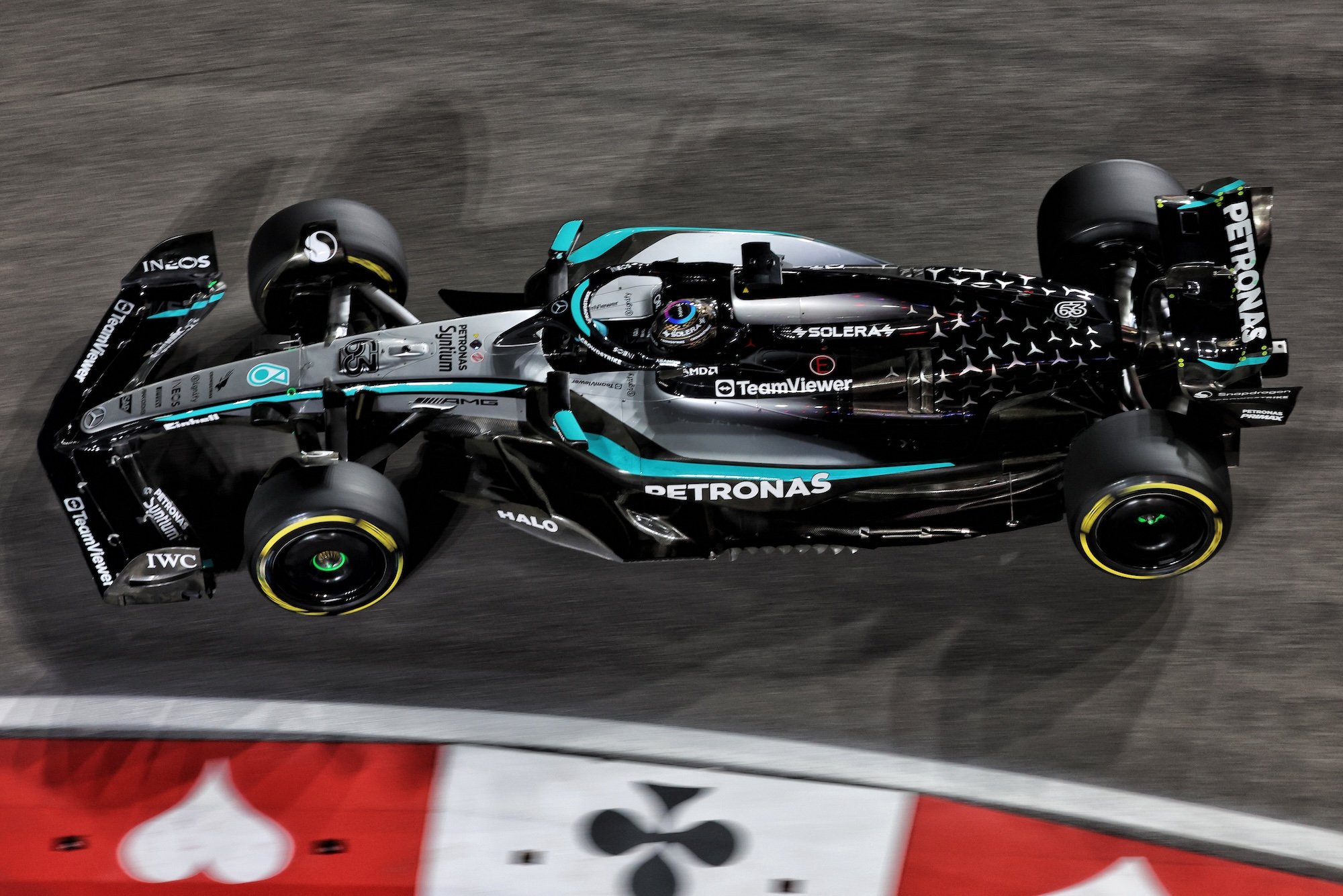
The Las Vegas Grand Prix reignited familiar challenges for George Russell. After starting in the fourth position on the grid, the Mercedes driver quickly moved up to second place by overtaking Lando Norris at Turn 3, shortly after Max Verstappen had taken the lead. However, Russell ultimately finished the race in third place after losing his position to Norris on lap 34 when the McLaren driver easily closed in on him following the pit stops.
During the race, Russell communicated via radio about an ongoing steering issue that had hindered his performance in the previous day’s qualifying session with the W16. “Well, I had the same steering problem as yesterday, after about five laps,” he mentioned in a conversation with journalists. Despite struggling with the issue for approximately four laps, he managed to adapt and cope with the situation.
Initial Performance and Strategy
Despite the limitations he faced, Russell assessed his initial pace as decent. “The pace wasn’t bad in the first stint. Obviously, I had a good start. I was probably only a tenth slower than Max during that opening stint,” he explained. He further elaborated on his strategy post-pit stop, noting that a more aggressive approach did not yield the desired results: “Then, after the pit stop, I saw an opportunity to attack and pushed really hard for two laps, which ended up destroying my tires.”
From that point forward, the remainder of the race became a significant challenge for Russell. “I knew with about 16 laps to go – or maybe 20 – it was going to be really tough to make it to the end.” He succinctly summarized his discomfort during the race: “So, it wasn’t enjoyable at all, to be honest, because I just couldn’t get through the left-hand corners.”
Team Insights and Future Directions
Toto Wolff, the team principal, confirmed the driver’s account and indicated that Mercedes is still searching for answers regarding the steering issue. He stated, “We need to investigate what the problem was because we changed the components overnight, and it didn’t make much difference.” This acknowledgment from Wolff highlights the ongoing challenges that the team faces as they strive to improve their performance on the track.
Despite the difficulties Russell encountered during the race, he managed to secure the coveted second place following the double disqualification of McLaren drivers. Additionally, Kimi Antonelli, his teammate at Mercedes, finished in third place, showcasing the team’s resilience amid adversity.
Looking Ahead: The Road to Improvement
The Las Vegas Grand Prix presented both challenges and opportunities for George Russell and the Mercedes team. As they continue to analyze the issues that arose during the race, the focus will be on enhancing their performance in future events. The team is committed to making the necessary adjustments to ensure that their drivers can compete at the highest level.
In the world of Formula 1, every race offers valuable lessons, and the Las Vegas Grand Prix was no exception. For Russell, the experience highlighted the importance of adaptability and resilience. As the season progresses, fans and analysts alike will be keenly observing how the Mercedes team addresses the obstacles they face and how Russell continues to develop as a driver under pressure.
The Role of Communication and Teamwork
Effective communication within the team plays a crucial role in addressing issues that arise during a race. Russell’s ability to convey his concerns about the steering problem in real-time allowed the engineers and team strategists to make informed decisions. It’s essential for drivers to maintain open lines of communication with their teams, as this collaboration can make the difference between a podium finish and a disappointing result.
Moreover, teamwork extends beyond the driver and engineers. It encompasses the entire organization, from strategists to pit crew members. Each individual has a role to play in ensuring the success of the team, especially in high-pressure situations like a Grand Prix. The synergy between drivers and their teams is what often sets the best apart from the rest.
Analyzing the Competition
In a competitive field filled with talented drivers and teams, analyzing the performance of rivals is vital. George Russell and the Mercedes team need to stay vigilant and aware of the strategies employed by their competitors. Understanding the strengths and weaknesses of rival teams like McLaren and Red Bull will allow them to adapt their approach and find ways to gain a competitive edge.
The Las Vegas Grand Prix showcased the fierce competition within Formula 1, with drivers pushing their limits and teams employing various strategies to secure top positions. As the season unfolds, it will be interesting to see how the dynamics between teams evolve and how Russell and Mercedes respond to the challenges posed by their adversaries.
The Impact of Race Strategy
Race strategy plays a significant role in determining the outcome of a Grand Prix. Teams must carefully plan their tire choices, pit stop timings, and overall race tactics to maximize their chances of success. In Russell’s case, the decision to push aggressively after the pit stop did not yield the desired results, leading to tire degradation that affected his performance in the latter stages of the race.
Moving forward, the Mercedes team will likely reassess their race strategies to ensure that they can effectively manage tire wear while still competing for top positions. This analysis will involve reviewing data from past races, evaluating tire performance under different conditions, and considering potential adjustments based on the unique characteristics of each circuit.
The Importance of Adaptability
In the fast-paced world of Formula 1, adaptability is key. Drivers must be prepared to adjust their driving styles based on changing track conditions, tire performance, and car handling. For George Russell, the ability to adapt to the steering issue during the Las Vegas Grand Prix was crucial in maintaining his competitiveness despite the challenges.
Looking ahead, Russell will continue to refine his skills and learn from each race experience. The ability to quickly adjust to unforeseen circumstances will be essential as he strives for success in future events. As he gains more experience, his adaptability will only improve, making him a formidable competitor on the track.
The Fan Experience
Fans play an integral role in the excitement of Formula 1, and events like the Las Vegas Grand Prix highlight the passion and enthusiasm of supporters. The atmosphere at such races is electric, with fans coming together to cheer for their favorite drivers and teams. For George Russell, the support from fans can provide an extra boost of motivation as he competes on the world stage.
Engaging with fans through social media and public appearances allows drivers like Russell to build a connection with their supporters. This relationship not only enhances the overall experience for fans but also serves as a reminder of the dedication and hard work that goes into competing at the highest level of motorsport.
Conclusion
The Las Vegas Grand Prix was a significant chapter in George Russell’s journey through the Formula 1 season. The challenges he faced, from steering issues to strategic miscalculations, provided valuable lessons and insights for both him and the Mercedes team. As they look to the future, the focus will remain on continuous improvement, effective communication, and adapting to the dynamic nature of Formula 1 racing.
With each race, George Russell continues to grow as a driver, and the Mercedes team is committed to evolving and overcoming obstacles. The road ahead may be filled with challenges, but with determination and resilience, they aim to achieve success in the thrilling world of Formula 1.
