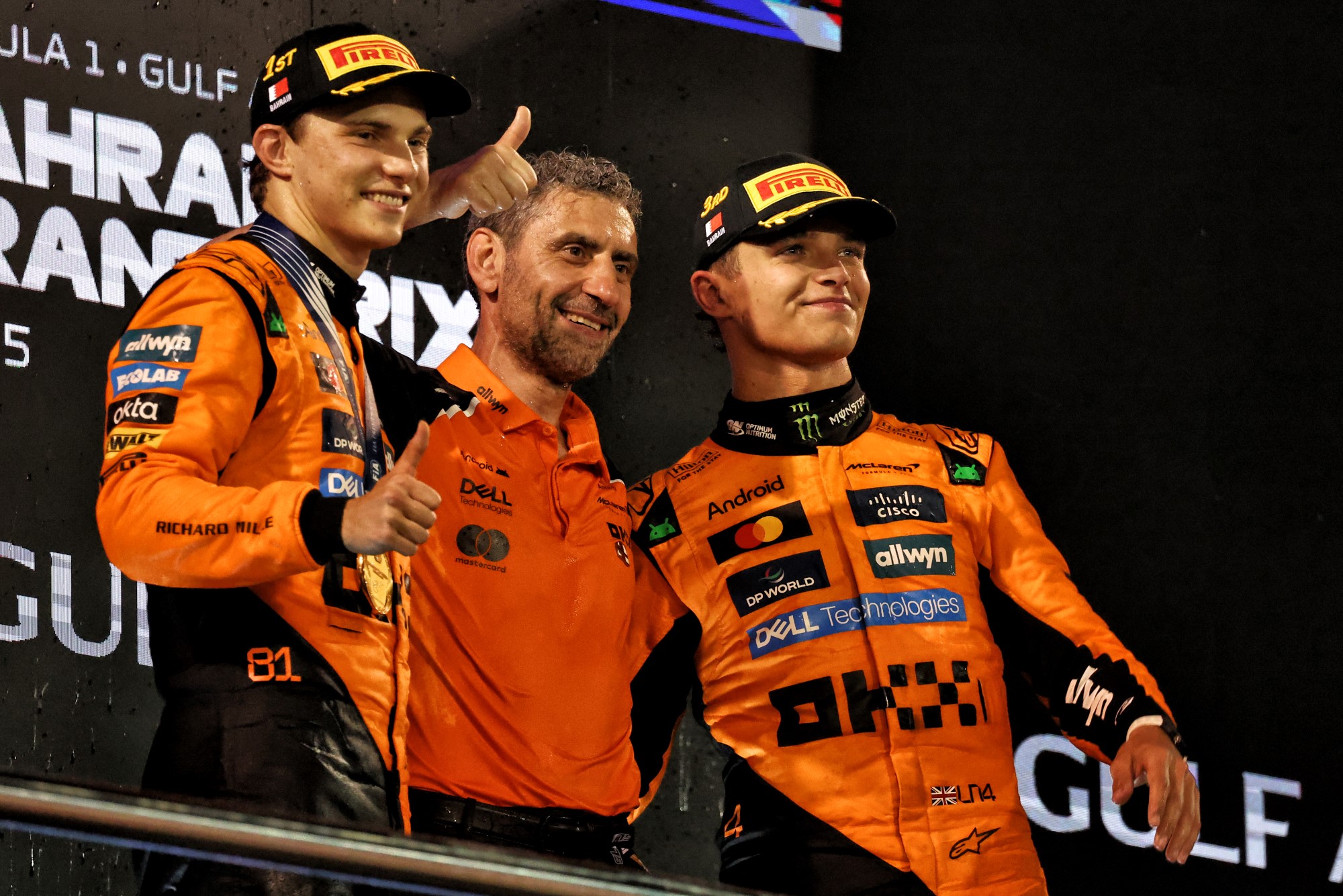
McLaren Responds to Criticism Following Team Orders at the Italian Grand Prix
In the world of Formula 1, team dynamics and strategies can often lead to heated discussions among fans and commentators. Recently, McLaren found itself at the center of controversy due to its team orders during the Italian Grand Prix. Andrea Stella, the team’s principal, addressed the backlash from fans and analysts alike, emphasizing the importance of respectful discourse regarding the team’s decisions.
Context of the Controversy
McLaren is currently leading the championship, with both of its drivers in contention for the title. Oscar Piastri is in a tight race against his teammate Lando Norris, holding only a 25-point advantage with seven Grand Prix races and three Sprint events remaining in the season. The situation in Monza, where team orders were executed to swap the positions of the two drivers, raised eyebrows. Piastri had overtaken Norris in the pits after a slower stop by the British driver, but the team subsequently instructed Norris to yield his position back to Piastri, leading to accusations of manipulation.
Team’s Stance on the Order
Stella stated that the team’s decision was in line with previously established principles discussed with both drivers. He expressed that McLaren is "comfortable" with the noise surrounding the decision and the various opinions expressed by fans. "We appreciate the comments. As I mentioned before, what matters is that the discussions remain respectful. Respect is a core value for McLaren Racing, and I believe for everyone involved," he remarked. This statement underscores the team’s commitment to maintaining an environment of professionalism and mutual respect, even amid criticism.
Historical Precedent for Team Orders
Additionally, Stella pointed out that the events in Monza were not entirely unprecedented. He drew parallels to a similar situation during the 2024 Hungarian Grand Prix, where Piastri claimed his first victory. In that instance, the team had also executed a sequence of operations that involved managing the positions of both cars during a pit stop. "From the pit wall, we executed what we had agreed upon with our drivers, which shapes our principles and race approach. In that situation, as I explained post-race, we sequentially managed both cars in a specific manner during the pit stop, positioning the car that was behind first, followed by a request for the swap. This, combined with a slow pit stop, led to the eventual position change. However, the strategic situation was comparable to Hungary, and we acted consistently with our approach there," Stella concluded.
The Importance of Team Strategy in Formula 1
In Formula 1, team strategies play a crucial role in achieving success. The sport is not just about individual talent; it also involves complex decision-making at various levels. Teams must weigh the benefits of allowing drivers to race freely against the need for a cohesive strategy that maximizes points for the team.
Effective communication and clear guidelines are essential for ensuring that all team members understand the rationale behind decisions made on race day. In this context, McLaren’s adherence to its principles illustrates the team’s commitment to a unified approach, even when faced with external criticism.
The Role of Team Orders
Team orders, while often contentious, are a fundamental aspect of motorsport. They can serve to optimize team performance, particularly in scenarios where one driver is in a better position to secure a higher finish. In this case, McLaren’s decision to enforce a position swap was likely driven by the larger goal of maximizing points for the championship standings.
As fans and pundits dissect the actions taken by the team, it’s important to recognize that such decisions are often made with the overall health of the team in mind. Teams must navigate the delicate balance between individual competitiveness and collective success, which can sometimes lead to difficult choices.
Fan Reactions and Media Commentary
The reaction from fans and the media has been mixed, with some expressing their support for McLaren’s decision while others voiced their disapproval. This division highlights the passionate nature of Formula 1 fandom, where opinions can vary widely based on personal allegiances to drivers or teams.
Many fans advocate for transparency from their teams, calling for open communication about the reasoning behind decisions like team orders. Others, however, believe that the essence of racing should allow drivers to compete on equal terms without interference from team management.
The Future of McLaren and Its Drivers
As McLaren moves forward in the championship, the focus will likely remain on how the team manages its two talented drivers. With Piastri and Norris both capable of delivering strong performances, the challenge will be ensuring that team dynamics remain positive while also maximizing their potential on the track.
The upcoming races will provide ample opportunities for McLaren to refine its strategy and address any lingering concerns from fans. As the team navigates the complexities of competition, it will be crucial to maintain open lines of communication with both drivers and supporters alike.
Conclusion: Navigating Challenges in Formula 1
In summary, McLaren’s handling of the situation at the Italian Grand Prix reflects the intricate nature of team dynamics in Formula 1. As the championship progresses, the team will face ongoing scrutiny regarding its strategies and decisions. The commitment to respect and dialogue, as emphasized by Andrea Stella, will be vital in fostering a positive environment both within the team and among its supporters.
By continuing to engage with fans and upholding its principles, McLaren can navigate the challenges ahead while striving for success on the track. The interplay between individual talent and team strategy will remain a defining characteristic of the sport, shaping the narrative of the championship as it unfolds.
