The Current Landscape of Formula 1 Penalty Points: Key Drivers at Risk
In the competitive world of Formula 1, every decision made on the track can have serious consequences, not only for race outcomes but also for the drivers’ careers and their standing in the championship. One of the mechanisms in place to ensure fair play and uphold the integrity of racing is the penalty points system. This system penalizes drivers for various infractions, and accumulating too many points can lead to a race ban. As we look ahead to the 2025 season, certain drivers find themselves at a higher risk of facing this undesirable fate.
Understanding the Penalty Points System
The Formula 1 penalty points system operates on a straightforward principle: drivers receive points for infractions committed during races. If a driver accumulates 12 points, they face a suspension for the subsequent grand prix. This system is designed to deter reckless behavior and encourage safer racing practices among competitors. Penalty points can be awarded for a range of offenses, including collisions, unsafe driving maneuvers, and failing to comply with race regulations.
The Current Leader in Penalty Points: Oliver Bearman
As of now, Oliver Bearman stands out as the driver facing the highest risk of a race ban in the upcoming 2025 season. This British rookie has garnered attention not just for his talent behind the wheel but also for his propensity to attract penalty points. Between November 3, 2024, and September 7, 2025, Bearman racked up an alarming 10 penalty points. His infractions included causing two collisions, overtaking during a yellow flag situation, and not adhering to a red flag directive.
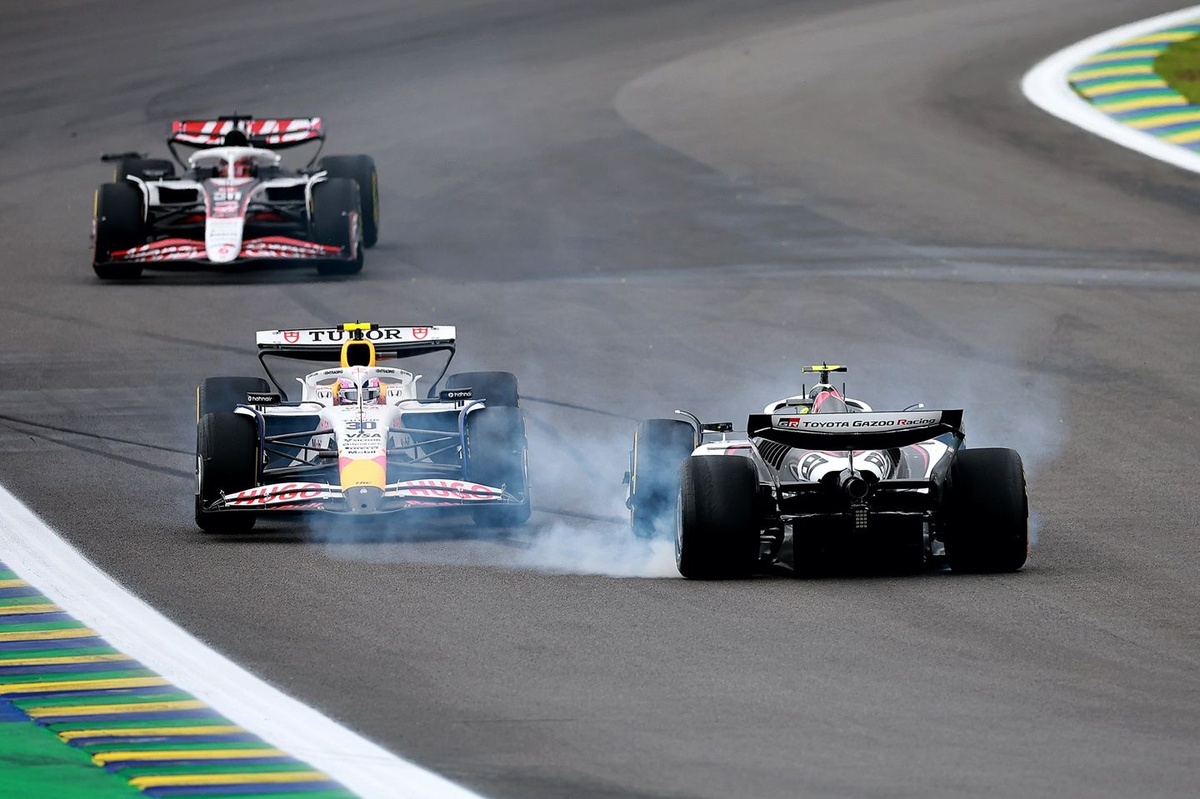
Bearman’s performance on the track has put him in jeopardy for several key races, including the Baku Grand Prix, the Singapore Grand Prix, the Austin race, and the Mexican Grand Prix. However, he managed to emerge from these events with his penalty points tally reduced to eight, thanks to a reduction attributed to incidents from the previous year at Interlagos. Unfortunately, his points quickly increased again after a recent incident where he squeezed fellow driver Liam Lawson onto the grass, bringing his total back up to nine.
The Implications of Penalty Points
The situation is precarious for Bearman, as he prepares to compete in future races in Las Vegas, Qatar, and Abu Dhabi. He must navigate these events carefully to avoid further infractions. The next significant date for him in terms of penalty points is May 23, 2026, which marks the seventh round of the season. Until then, the pressure will be on him to maintain his composure and avoid actions that could lead to additional points.
The Rising Concerns for Other Drivers
Bearman is not alone in facing the scrutiny of the penalty points system. A few other drivers are also at risk, including Liam Lawson, Lance Stroll, and Yuki Tsunoda, each of whom currently has seven penalty points. Lawson and Stroll are set to have two points deducted from their totals on December 1, 2025, while Tsunoda’s points will remain unchanged until June 14, 2026, during the ninth grand prix of the season. The evolving dynamics of the penalty points standings add an extra layer of competition among these drivers, as they each strive to avoid the possibility of a race ban.
Max Verstappen’s Narrow Escape
Max Verstappen, a prominent figure in Formula 1, faced a precarious situation earlier this year when he accrued 11 penalty points, bringing him dangerously close to a race ban. Fortunately for him, he has since managed to reduce his total to six points. If Verstappen can steer clear of any further infractions in the upcoming races in Las Vegas and Qatar, he stands to lose an additional point on November 30, 2025. His experience highlights how quickly the landscape of penalty points can change and the importance of strategic driving in high-stakes situations.
The Clean-Slate Drivers
In stark contrast to those at risk, four drivers currently boast clean licenses, free from any penalty points. This list includes a mix of seasoned veterans and fresh talent: Nico Hulkenberg and Gabriel Bortoleto from the Sauber team, Isack Hadjar, and the experienced Fernando Alonso. Their ability to race without incurring penalty points speaks to their skill and discipline on the track, allowing them to focus solely on performance without the looming threat of suspension.
The Impact of Penalty Points on Racing Strategy
The implications of the penalty points system extend beyond individual drivers; they significantly influence team strategies and race dynamics. Teams must consider the penalty points of their drivers when devising race strategies, pit stop timings, and overall approaches to each grand prix. A driver with a high penalty point tally may be advised to adopt a more conservative racing style, reducing the risk of collisions and other infractions that could lead to additional points.
Conclusion
The penalty points system serves as an essential component of Formula 1, ensuring that drivers adhere to the rules and race in a manner that prioritizes safety and fairness. As we move into the 2025 season, the focus will undoubtedly be on drivers like Oliver Bearman and others who are at risk of accumulating too many points. Their experiences will shape not only their careers but also the competitive landscape of Formula 1 as a whole.
As the season progresses, it will be fascinating to see how these drivers navigate the challenges ahead and whether they can avoid the pitfalls that come with the harsh realities of the penalty points system. The pressure to perform while staying within the rules adds an intriguing layer to the already high-stakes environment of Formula 1 racing.
