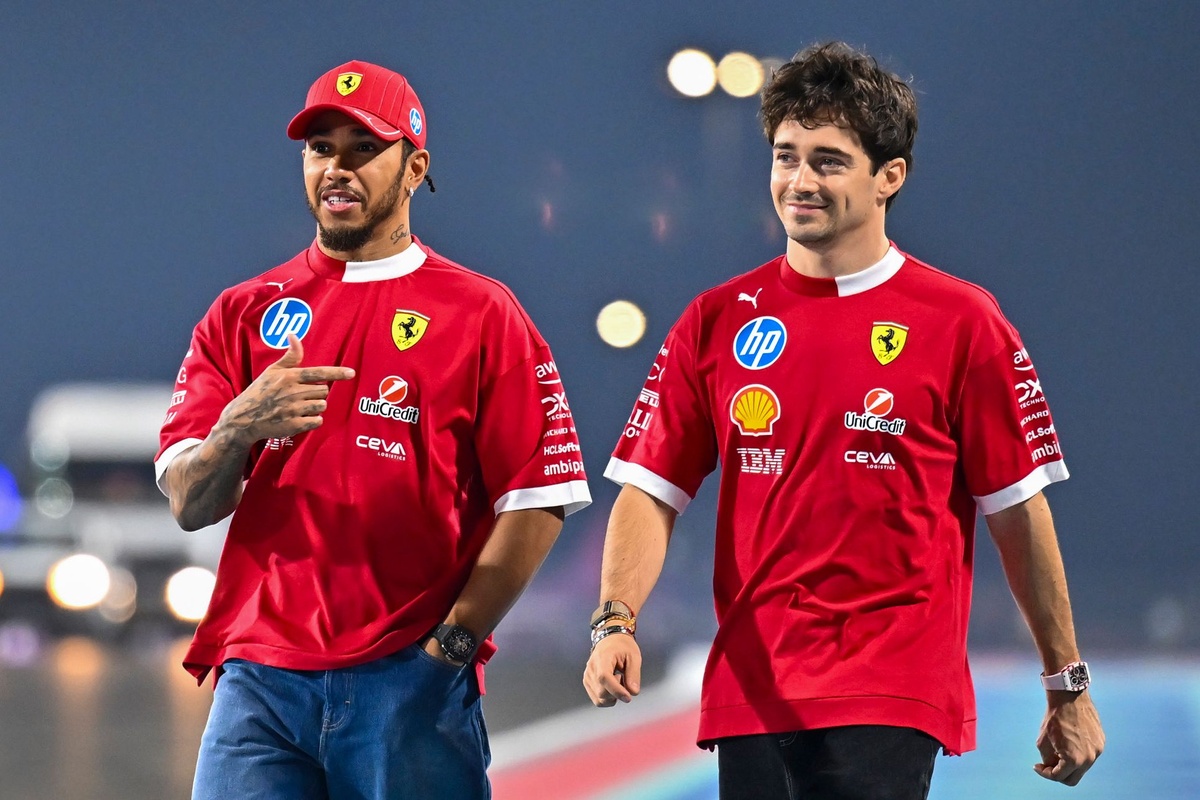
Charles Leclerc Reflects on Lewis Hamilton’s Transition to Ferrari
In the world of Formula 1, transitions between teams can often be challenging, and Charles Leclerc recently shared his insights on Lewis Hamilton’s first season with Ferrari. While Leclerc expressed empathy for Hamilton’s difficulties, he acknowledged that his own responsibilities within the team limited his ability to offer assistance.
Hamilton’s Challenges at Ferrari
Lewis Hamilton’s move to Ferrari was one of the most talked-about shifts in recent motorsport history. After spending over a decade with Mercedes, Hamilton was tasked with adjusting to a new environment, complete with different operational protocols and a fresh engineering team. The weight of expectation was immense, not only from fans and media but also from within the team itself.
Despite showing promising signs early in the season—such as a victory in the sprint race in China—Hamilton’s overall performance was a mixed bag. Throughout the 24-race season, he frequently found himself finishing in positions ranging from fourth to eighth. This inconsistency was particularly highlighted by a few disappointing qualifying sessions, which saw him exit in Q1 on three occasions. The absence of podium finishes raised concerns about his standing in the championship, where he risked slipping to seventh place, potentially behind his successor at Mercedes, Andrea Kimi Antonelli.
The narrative surrounding Hamilton’s struggles was amplified across social media platforms, where opinions suggested that his relationship with race engineer Riccardo Adami was not as robust as it could be. However, the Ferrari team management has countered these claims, asserting that Hamilton’s integration into the team is more solid than public perception might indicate.
Leclerc’s Perspective on Team Dynamics
From Leclerc’s viewpoint, the demands of competing at a high level made it challenging for him to extend a helping hand to Hamilton. As a driver focused on maximizing his own performance, Leclerc felt the weight of his own obligations. "My job is to obviously maximize whatever I can do in my control," he stated. With a significant focus on adapting his driving style to suit the car, Leclerc admitted it was difficult to allocate time to assist a teammate of Hamilton’s caliber.
Leclerc acknowledged Hamilton’s extensive accomplishments and felt he had little to offer in terms of advice. "Lewis has achieved a lot more than I ever did," he remarked, indicating the respect he holds for the seven-time world champion. The process of acclimatizing to a new team is inherently lengthy, and Leclerc noted that it had been several years since he had experienced such a transition himself. "It’s been eight years that I’m at Ferrari," he reflected, emphasizing the comfort he has developed within the team.
Understanding the Transition
Leclerc pointed out the significant differences in team dynamics and operational methods between Ferrari and Hamilton’s previous team, Mercedes. "The processes are completely different, the way you have the vision, the team, the way you work," he explained. These variances can create a steep learning curve for any driver entering a new environment, and Leclerc recognized that Hamilton was still navigating this adjustment even after a full season.
Ferrari’s Performance in the 2025 Season
Regarding Ferrari’s overall performance, Leclerc expressed a sense of accomplishment for the team’s efforts, particularly in maximizing the potential of the SF-25 car throughout the season. However, he was also candid about the car’s limitations. "The performance of the car is just not good enough," he commented, noting that while the team may have been consistent, it fell short of competing with the frontrunners.
Ferrari opted not to evolve key concepts from its previous SF-24 model for the 2025 season. Instead, they introduced an entirely new suspension system but halted development in April, which restricted their ability to fully understand and exploit the new design. "I felt like we did a good job maximizing our car throughout the year like that," Leclerc said. However, he reiterated that the lack of competitive performance was a significant hurdle.
The Competitive Landscape
In comparing Ferrari’s performance to that of other teams, Leclerc pointed out the inconsistencies experienced by Mercedes. "Mercedes, the closest team to us this year, had very big ups and bigger downs as well," he noted. In contrast, Ferrari’s performance was more stable but consistently lagging behind the leading teams. "On our side, we’re probably more consistent, but unfortunately consistently off the pace and not ever at the pace of the guys in front," he added.
As the season progressed, it became clear that Ferrari needed to address the underlying issues with their vehicle to enhance their competitiveness. Leclerc’s reflections indicate a keen awareness of the challenges ahead for both himself and Hamilton as they strive to improve their standings and performance within the team.
Looking Ahead
The journey for Hamilton at Ferrari is far from over, and Leclerc’s insights reveal the complexities of adapting to a new environment in the high-stakes world of Formula 1. With both drivers focused on their own performance and the overarching goal of elevating Ferrari’s status, the future holds the potential for growth and improvement.
Leclerc’s commitment to his own development, alongside Hamilton’s pursuit of success within the team, underscores the dynamic nature of Formula 1 racing. As they navigate the challenges of team dynamics, performance pressures, and personal expectations, the coming seasons will be pivotal for both drivers and the Ferrari team as a whole.
In conclusion, while Leclerc’s ability to assist Hamilton may be limited by his own competitive aspirations, the mutual respect between the two drivers and their shared desire for improvement within Ferrari sets the stage for an intriguing narrative in the seasons to come. The road ahead will require collaboration, adaptation, and relentless pursuit of excellence, as both Leclerc and Hamilton aim to reclaim Ferrari’s position among the sport’s elite.
