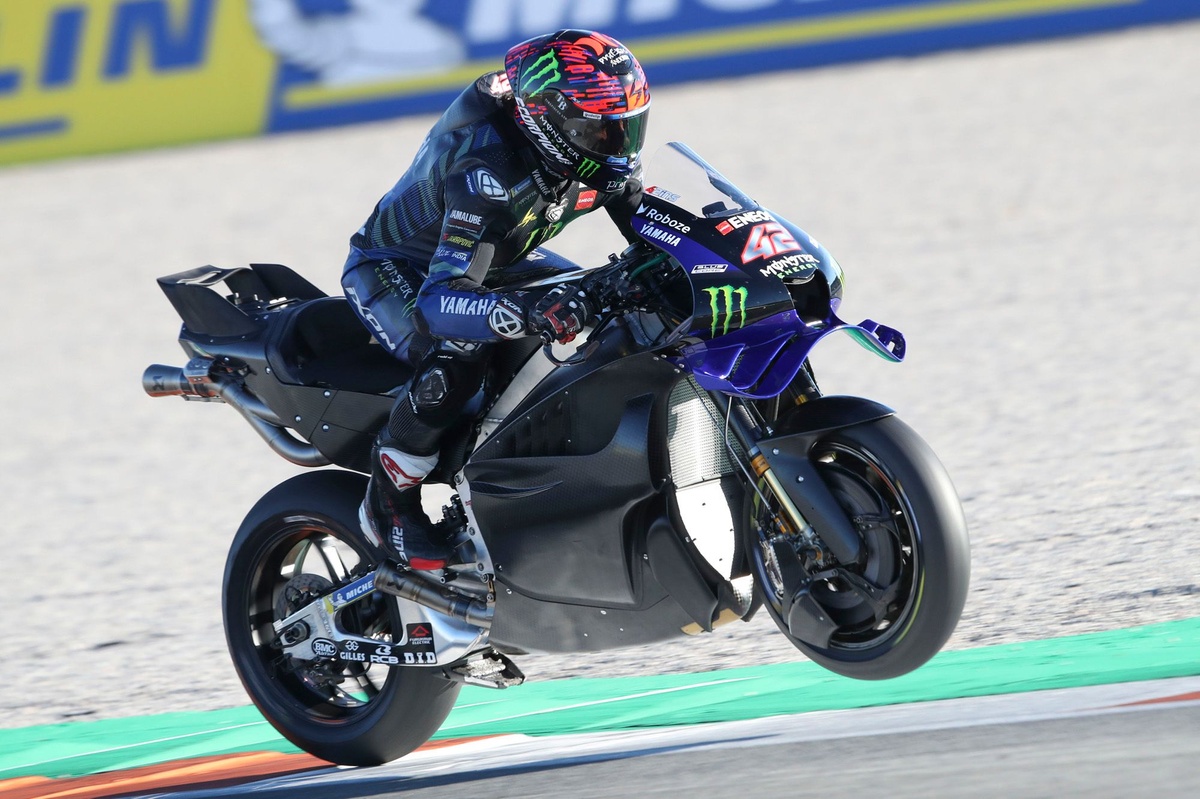
Yamaha’s New V4 Project: A Look Ahead to the 2026 MotoGP Season
The landscape of MotoGP is constantly evolving, and with the introduction of Yamaha’s new V4 engine, the company is preparing to enhance its competitiveness in the upcoming 2026 season. Notable riders Jack Miller and Alex Rins have recently shared their insights regarding this new engine design, indicating a promising future for Yamaha’s motorcycle racing ambitions.
Transitioning to a V4 Engine
Yamaha has made a significant strategic shift by moving away from its traditional inline-four engine configuration. This decision marks a pivotal moment for the manufacturer as it seeks to innovate and improve performance with its new V4 setup. The V4-powered M1 motorcycle made its debut at the Valencia test last month, where it showcased competitive times, particularly with star rider Fabio Quartararo clocking a time just half a second behind pace leader Raul Fernandez from the Trackhouse Aprilia team.
Following this public unveiling, Yamaha continued its development efforts with a private test at Circuit Ricardo Tormo. This additional testing was essential for gathering further data, allowing the team to refine the motorcycle before the winter break. While Quartararo’s initial feedback was somewhat neutral, indicating a challenging start, both Miller and Rins expressed optimism about the potential of Yamaha’s new V4 platform as they look toward the 2026 season.
Promising Developments from Jack Miller
Pramac Racing’s Jack Miller is particularly enthusiastic about the capabilities of the new V4 engine. He believes that the momentum built during testing is a good sign, even though he acknowledges that the bike is still in development. Miller stated, "There’s potential. The potential’s obviously going to be bigger. We wouldn’t go with it if we didn’t think it was going to be bigger than what we got." His optimism is supported by the fact that their times are already competitive, especially considering that the engine was tuned down during testing.
Miller also highlighted the need for ongoing work on the bike’s electronics, emphasizing that getting the fueling right is crucial for performance. “The TC is not too bad. It’s just the way it works; getting the fuelling [engine maps] right, getting the bike running crisp, so it’s not spinning on the first touch and stuff like that,” he explained. This level of detail demonstrates Yamaha’s commitment to fine-tuning its new V4 motorcycle for optimal performance on the track.
Insights from Alex Rins
Alex Rins, who is also part of the Yamaha team, shared his thoughts on the transition to the V4 engine, noting the improvements he felt during the recent tests. Rins mentioned that while no major changes were made to the gearbox or other significant components, the overall experience on the new V4 was more favorable compared to past models. He remarked, “The bike has slightly improved… The shift shock that we were struggling with quite a bit, especially at this track, is working better.”
One of the standout advantages of the new V4 engine is its enhanced braking capabilities. Rins pointed out that the new design allows riders to utilize both the front and rear tires more effectively, improving stability during braking maneuvers. "In braking, it is much better than the Inline 4. The problem with the four inline was that we were stopping the bike only with the front tyre. With this bike, we are able to use both tyres," he explained.
Performance Comparisons: V4 vs. Inline-Four
While the new V4 has shown promise, both Miller and Rins recognize that it still has some catching up to do in certain areas compared to the well-regarded inline-four model. Miller noted the exceptional front-end feel that the previous bike offered, stating, “Obviously coming off the [inline-four] M1, which is a bike that’s got a remarkable front end, you’re always going to feel like you’re taking a back step in that sort of department.” He believes that with the right direction and focus on specific areas, improvements can be made to the V4’s handling and feel.
Rins echoed these sentiments, identifying traction as a critical area for development. He mentioned that while the bike picks up better than the inline-four, it still struggles to find the necessary traction, which is vital for optimal performance. "It’s true that we can pick up the bike better than the inline-four because it’s moving less [and there is] less shaking," Rins stated. However, he emphasized that improving traction should be a top priority moving forward.
Balancing Heritage with Innovation
Despite the transition to the V4 engine, Miller noted that the new M1 retains some of the characteristics that define Yamaha motorcycles. “I think it has the Yamaha DNA about it,” he said, while also acknowledging that the new engine design brings a different feel. He described the V4 as having a blend of traits from other manufacturers, noting, "It has a little bit of a Honda/KTM kind of sound about it and a Ducati feel in terms of weight." This blend of features suggests that Yamaha is not only looking to maintain its identity but is also embracing innovation to remain competitive.
The introduction of the V4 engine signifies a critical phase for Yamaha as it seeks to revitalize its performance in the highly competitive MotoGP arena. As the team continues to gather data and refine the motorcycle, the insights from riders like Miller and Rins will play an essential role in shaping the development process.
Yamaha’s Commitment to Development
Yamaha’s focus on the 2026 MotoGP season is underscored by its commitment to continuous improvement. The feedback from both Miller and Rins reflects a proactive approach to addressing the challenges that arise with a new engine design. The team is well aware that the transition from an established inline-four to a V4 configuration involves significant adjustments, and they are dedicated to making the necessary enhancements.
As Yamaha prepares for the upcoming season, the emphasis on testing and data collection will be crucial. The insights gained from recent tests will inform future developments, ensuring that the M1 can compete effectively against other manufacturers in the championship. The anticipation surrounding the new V4 project is palpable, and as the team works through its development, the MotoGP community is eager to see how these changes will manifest on the track.
The Road Ahead: Expectations for 2026
Looking ahead to the 2026 season, there is a sense of anticipation surrounding Yamaha’s performance. The combination of a new engine, rider feedback, and ongoing development signifies a renewed sense of hope for the brand. Both Miller and Rins are optimistic that with continued progress, Yamaha can reclaim its position as a formidable competitor in MotoGP.
The challenges associated with transitioning to a new engine design are significant, but Yamaha’s commitment to improvement is evident. As the team prepares for further testing and development, the focus will remain on refining the bike’s electronic systems, enhancing traction, and ensuring that the V4 engine delivers the performance needed to succeed in a competitive field.
In summary, Yamaha’s shift to the V4 engine is a bold move that reflects its intent to innovate and improve performance as it heads into the 2026 MotoGP season. With positive feedback from riders and ongoing development efforts, the brand is poised for a promising future in motorcycle racing. As the team continues to refine its approach and address the challenges ahead, the excitement surrounding Yamaha’s new V4 project is palpable, and the MotoGP community eagerly awaits the results of their hard work on the track.
