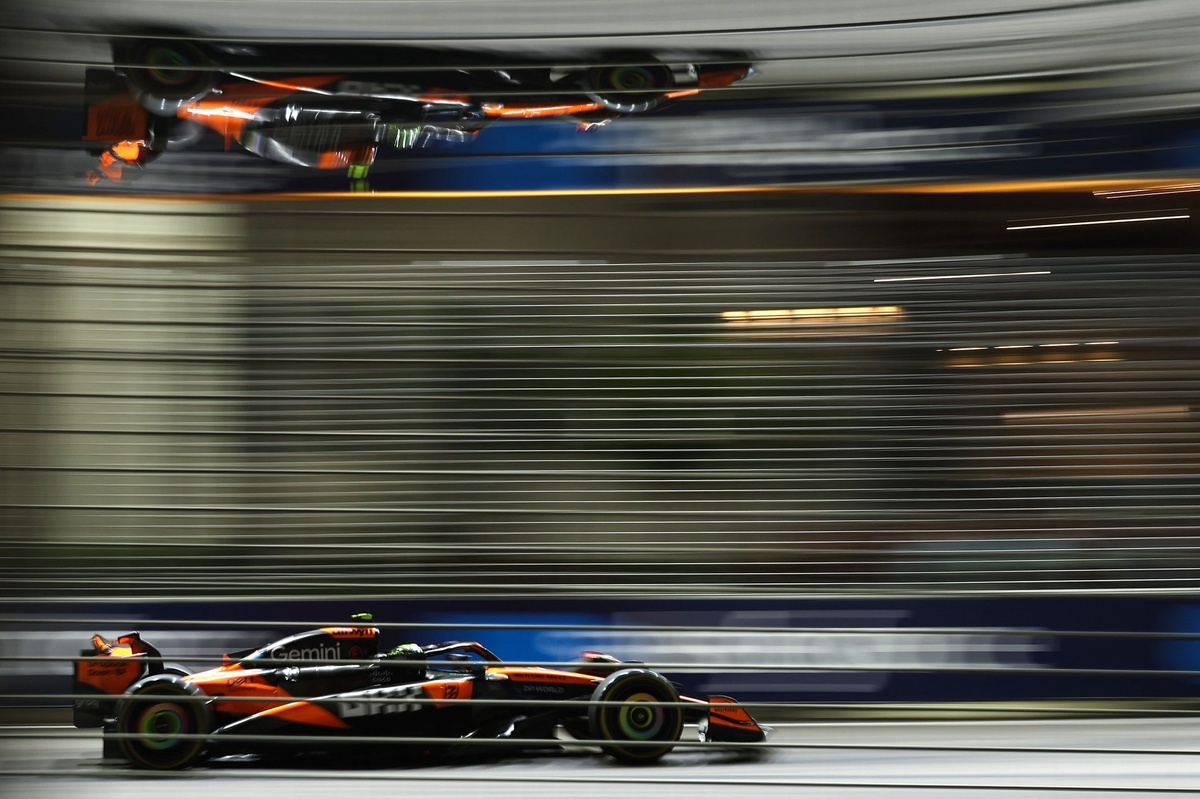
McLaren’s Performance Analysis at the Singapore Grand Prix: A Detailed Examination
The 2023 Formula 1 season has been a rollercoaster for McLaren, especially following a challenging period during races that didn’t suit the characteristics of their MCL39 car. The Singapore Grand Prix was viewed as a pivotal opportunity for McLaren to reclaim their competitive edge, especially against reigning world champion Max Verstappen. This analysis seeks to delve into the factors that influenced McLaren’s performance at Marina Bay and how it ties into their overall season strategy.
The Expectations for McLaren in Singapore
After experiencing two tough races in Monza and Baku, the Marina Bay circuit was anticipated to play to McLaren’s strengths. Last year, the team had a stellar performance in Singapore, finishing over 20 seconds ahead of the competition. Given the trajectory of the current season, many believed that the MCL39 would once again allow McLaren to vie for victory.
The unique challenges of the Singapore Grand Prix included high ambient temperatures, soft tyres that required meticulous management due to significant thermal degradation, and a track layout demanding a responsive front end for optimal car rotation. Team principal Andrea Stella had earmarked Marina Bay as a key race for the team to redeem themselves and potentially return to the winner’s circle.
However, the outcome was not as anticipated, with McLaren settling for third and fourth places. Although the MCL39 showed its traditional strength in managing tyre performance during the race, the absence of a podium finish cast a shadow over McLaren’s evening, especially as they had already secured the constructors’ championship prior to the race.
Analyzing the Root Causes of Performance Issues
To comprehend the factors that contributed to McLaren’s lack of dominance in Singapore, one must examine the comments made by driver Lando Norris following the second practice session. Norris expressed that he struggled to find the right balance with the car, particularly on the softer tyre compounds, which had once given him confidence in both qualifying and race scenarios in 2024. The crux of the issue was identified as a lack of front-end confidence.
Stella elaborated on this point, noting that Norris had voiced concerns about the car’s front end since the season’s inception. He pointed out that the change in tyre specifications from last year to this year had affected driver comfort. The feedback from both drivers indicated that they felt more at ease with the medium and hard compounds but faced challenges with the soft tyres.
The Impact of Circuit Characteristics on Performance
When analyzing the Marina Bay circuit, it becomes evident that the layout places a premium on braking precision and traction, particularly given its street circuit nature. Many of the corners are not as sharp as those found in Baku, where straight-line braking is more common. Instead, the sequence of curves at Marina Bay demands a high degree of front-end precision, particularly as braking often occurs while the car is already in a turn. This is essential for setting up for exits and ensuring optimal traction.
During qualifying, data revealed that both Norris and his teammate, Oscar Piastri, experienced significant time losses in the middle sector, which is critical for maintaining speed through corners and setting up for exits. It was here that George Russell from Mercedes found the pace to secure pole position.
Comparisons with Rivals
In terms of corner speed, both McLaren drivers aimed to differentiate themselves from the competition. While the MCL39 showed its ability to gain ground on rivals mid-corner, the usual advantage was not as pronounced. The limitations became especially apparent in the final phase of cornering—critical for preparing for acceleration out of the turn. Norris and Piastri found themselves unable to push or rotate the car as desired, primarily due to the inadequate front-end feedback.
This lack of confidence meant that, while they could have leveraged the grip offered by the soft tyres, they were unable to do so effectively. Instead of being an asset, the soft tyres became a liability, as the drivers struggled to maintain the operating window and stability needed to navigate the corners effectively. Conversely, when they switched to medium and hard tyres during the race, the car regained its balance and responsiveness, enhancing performance.
Feedback from the Drivers
Norris himself confirmed that he felt a greater sense of comfort when using the medium tyres during the race weekend. He stated, "I feel where there’s more lap time out of it, on the medium tyres this weekend, I’ve always felt very comfortable." This sentiment underscores the drivers’ struggles with the softer compound, which did not provide the front-end grip they needed.
Despite the overall success of the season, the issues experienced during this race serve as a reminder of the fine margins in Formula 1. McLaren’s ability to adapt and respond to these challenges will be crucial as they move forward in the season.
The Technical Aspects of the MCL39
Understanding the technical nuances of the MCL39 provides further insight into its performance in Singapore. The car has demonstrated significant capabilities throughout the season, especially in managing tyre wear and maintaining competitive lap times. However, the specific track conditions in Singapore posed unique challenges that highlighted some of the car’s limitations, particularly in terms of front-end responsiveness.
The MCL39’s design philosophy emphasizes a balance between downforce and drag, which has generally served the team well. However, the performance in Singapore indicated that under certain conditions, particularly with the softer tyre compounds, the car’s inherent characteristics did not translate into the expected performance.
The Road Ahead for McLaren
In conclusion, while McLaren has secured their place in the constructors’ championship, the performance at the Singapore Grand Prix serves as a reminder that consistency is key in Formula 1. The team must continue to refine their approach, particularly in adapting their car setup to different tracks and conditions. The insights gained from this race will be instrumental as they prepare for future events, ensuring that they can maintain their competitive edge.
By addressing the specific challenges posed by various circuits and learning from the feedback provided by their drivers, McLaren can work towards optimizing their performance to capitalize on the strengths of the MCL39. The journey through the remainder of the season will undoubtedly require resilience and adaptability, but the foundation laid this year promises a bright future for the team.
