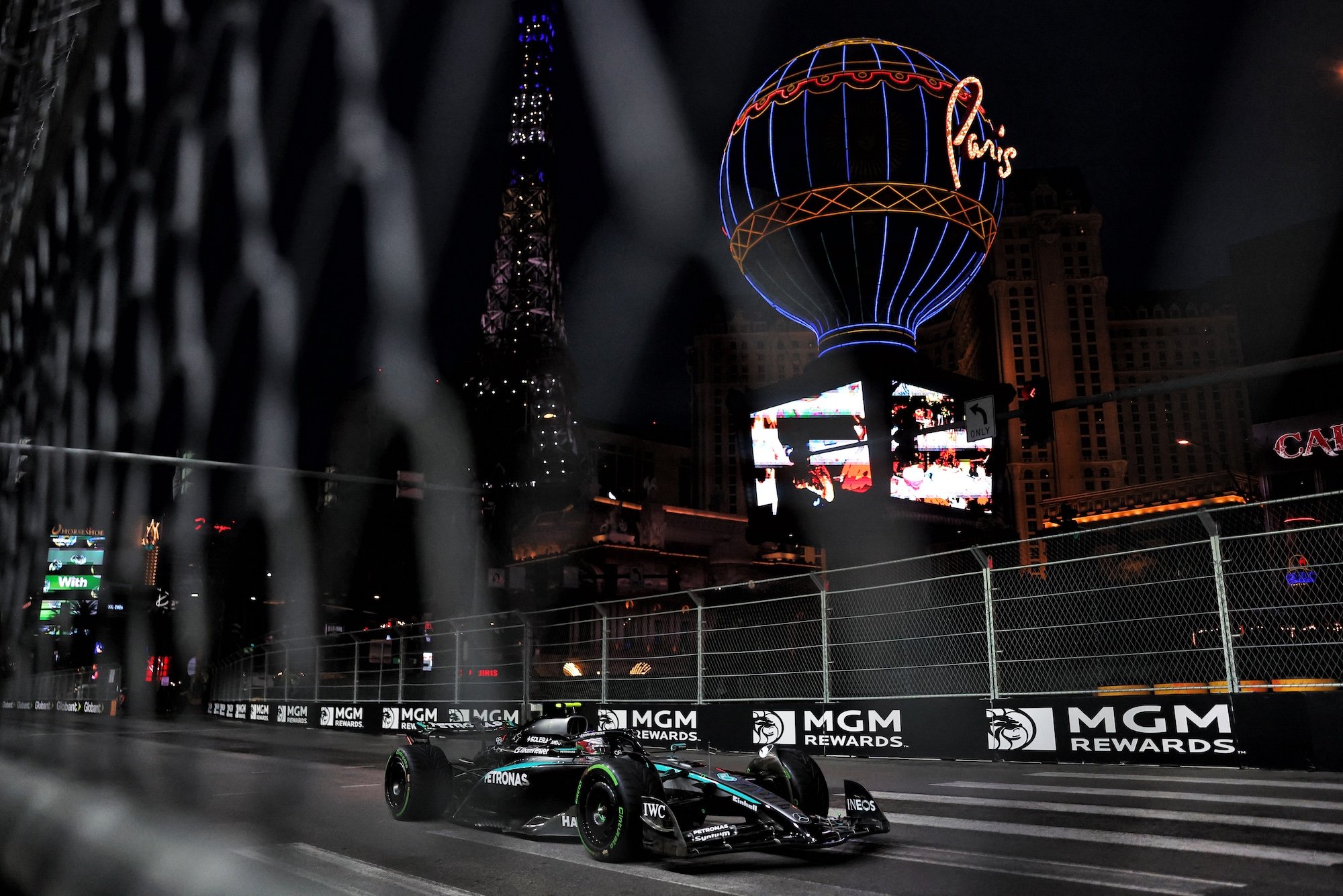
Controversy Surrounds Kimi Antonelli at the Las Vegas Grand Prix
The Formula 1 world was once again abuzz with controversy following the Las Vegas Grand Prix, where Kimi Antonelli, a promising young driver for Mercedes, found himself at the center of a heated debate. The 18-year-old racer was handed a five-second penalty for what was deemed an irregular movement on the starting grid. This decision sparked a division of opinions, leaving even Toto Wolff, the head of the Mercedes team, uncertain about the circumstances surrounding the penalty. While the rules governing such movements are explicit, the Mercedes team contends that their investigations revealed no abnormalities in the car’s systems.
The situation gained additional attention due to Antonelli’s remarkable performance during the race. Starting in 17th place, he made an early pit stop, opted for hard tires, and remarkably completed 48 laps on them. Despite the penalty he received, Antonelli crossed the finish line in fourth place, which was later adjusted to fifth, but he ascended to the podium after disqualifications were handed down to two McLaren drivers. Throughout this, Wolff emphasized his desire to comprehend the origins of the alleged movement before the lights went out.
According to Wolff, the team meticulously analyzed data from the power unit and the car’s clutches, finding no evidence of any illegal actions by Antonelli. He mentioned that he was the only one who noticed a "slight movement," yet it did not appear to have been caused by either the releasing of the brake pedal or the engagement of the clutch. The FIA employs its own sensors to catch such violations, and Wolff confirmed that he is awaiting an official explanation on the matter.
Wolff addressed the media, stating that despite reviewing all available information, nothing suggested that Antonelli had made a mistake. He noted that while the FIA detected an irregularity, the team could not pinpoint how it was recorded. "We did not see anything wrong with the clutch, nor any indication that would suggest an illegal start," he explained. "The FIA’s sensors picked up something, so we will wait to hear what they say. There was a slight movement, but it did not seem to be a clear result of the driver’s actions."
Aside from the grid controversy, Wolff praised the exceptional race that Antonelli had. To him, starting from 17th and still competing for points was already a significant achievement, but the pace he demonstrated exceeded the internal expectations of the Mercedes team. Wolff admitted that initially, no one in the team believed that such a bold strategy would allow Antonelli to reach such a high position.
Moreover, Wolff noted that the car’s performance improved lap by lap, with Antonelli quickly overcoming the initial phase of tire degradation, clearing away the graining, and maintaining a strong pace against competitors with fresher tires. The Mercedes chief evaluated that even with the penalty, the final result was outstanding, underscoring Antonelli’s maturity—a quality often not seen in drivers of his age.
Wolff further emphasized that the podium finish only reinforced the notion that Antonelli could have achieved an even better result had he started in a more favorable position. "With a better starting position, we can’t say where he could have ended up," he remarked.
As the Mercedes team prepares for the upcoming Qatar Grand Prix, Antonelli aims to replicate his strong performance from Las Vegas, this time without the burden of a penalty that continues to raise questions within the team itself.
The Background of Kimi Antonelli
Kimi Antonelli has been a rising star in the world of motorsport, known for his impressive skills and competitive spirit. Born in 2005, Antonelli started his journey in karting, where he quickly gained recognition for his talent. His transition to single-seater racing showcased his abilities, leading to his signing with the Mercedes Formula 1 team. As a young driver, he is often under scrutiny, not only for his performance on the track but also for how he manages the pressures that come with racing at such a high level.
The Las Vegas Grand Prix Experience
The Las Vegas Grand Prix was a highly anticipated event, not just for its glamorous setting but also for the intense competition it promised. The race is known for its unique challenges, including the track layout and the variables introduced by tire wear and pit strategies. Antonelli’s performance was a testament to his skills, demonstrating not only speed but also strategic thinking. His decision to pit early and switch to hard tires was a calculated risk that ultimately paid off, propelling him into contention despite the initial setback of starting in a lower grid position.
Analyzing the Penalty
The five-second penalty imposed on Antonelli raised eyebrows among fans and analysts alike. Penalties in Formula 1 can significantly alter the course of a race, and in this case, it seemed disproportionate given the circumstances. The scrutiny surrounding the penalty can be attributed to the fact that Antonelli’s movements were not deemed overtly illegal by his team, which raises questions about the consistency of the FIA’s enforcement of rules.
The FIA’s reliance on sensors for monitoring starts has been a topic of discussion in the sport. While these sensors are designed to ensure fairness and adherence to rules, they can also lead to contentious situations when the data collected is interpreted differently by teams and officials. This incident has sparked a debate about the technology used in monitoring driver behavior and the potential for misinterpretation.
The Role of Team Management
Toto Wolff’s leadership has been a cornerstone of Mercedes’ success in Formula 1. His approach to managing drivers, particularly young talents like Antonelli, involves a careful balance of encouragement and oversight. Wolff’s commitment to understanding the intricacies of the penalty reflects not only his dedication to the team’s performance but also his investment in Antonelli’s development as a driver. Ensuring that young drivers feel supported during challenging situations is crucial for their growth and confidence on the track.
The Importance of Data Analysis
In the realm of Formula 1, data analysis plays a pivotal role in a team’s strategy and performance. The ability to dissect telemetry data can provide insights into a driver’s performance, the car’s handling, and the efficacy of different tire strategies. For Mercedes, the analysis of Antonelli’s driving during the Las Vegas race was essential in evaluating not only the penalty but also the effectiveness of their race strategy. The data gathered from the race will inform future decisions and strategies as the season progresses.
Looking Ahead: The Qatar Grand Prix
As the Mercedes team shifts its focus to the Qatar Grand Prix, the pressure is on for Antonelli to replicate his Las Vegas performance. The lessons learned from the previous race will be integral in shaping their approach. The Qatar circuit presents its own unique challenges, and the team will need to adapt quickly to ensure that Antonelli can perform at his best.
The anticipation surrounding Antonelli’s next race is palpable, as fans and analysts alike are eager to see how he handles the pressures of competition following such a controversial race. His journey in Formula 1 is just beginning, and how he navigates these challenges will be crucial for his career and the future of the Mercedes team.
The Broader Implications for Formula 1
The incident involving Kimi Antonelli also highlights broader themes within Formula 1, including the pressures faced by young drivers and the scrutiny that comes with high-stakes racing. As the sport continues to evolve, the balance between technology, human performance, and regulatory enforcement will remain a critical area of focus. The ongoing discussions surrounding penalties and race regulations reflect the sport’s commitment to fairness while also acknowledging the complexities of racing at such an elite level.
As the season unfolds, the implications of this incident will likely resonate beyond just the immediate context of the Las Vegas Grand Prix. The spotlight on young talents like Antonelli and their journeys through the ranks of Formula 1 will continue to be a significant narrative, shaping the future of the sport.
In summary, Kimi Antonelli’s experience at the Las Vegas Grand Prix serves as a microcosm of the challenges and triumphs that define life in Formula 1. With his sights set on the Qatar Grand Prix, Antonelli’s resilience and skill will be put to the test once again, and fans are eager to see how he meets the challenges ahead.
