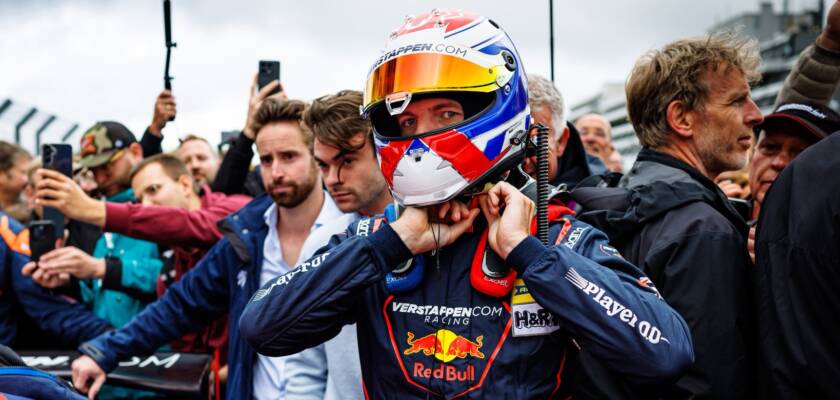
Max Verstappen’s Bold GT3 Debut at Nordschleife: A Risky Move?
Max Verstappen, the celebrated driver of the Red Bull Racing team, recently made headlines with his foray into the GT3 racing scene at the iconic Nordschleife track, known for its challenging twists and turns. This venture took place during a weekend when there was no Formula 1 race scheduled, allowing Verstappen the opportunity to showcase his skills in an entirely different racing discipline. His debut at this infamous circuit, often referred to as the "Green Hell," ended in spectacular fashion as he clinched victory after starting from third position, earning him the title of Driver of the Day.
However, this exciting endeavor has sparked discussions among experts and analysts about the potential risks involved in such an undertaking, particularly for a driver of Verstappen’s stature and importance in the world of Formula 1. Bernardette Collins, a former strategist for Aston Martin in the F1 circuit, provided her insights on the implications of Verstappen’s participation in the GT3 race.
The Risk Factor in Motorsport
During an interview, Collins reflected on Verstappen’s decision to race at Nordschleife, emphasizing that it posed a significant risk. She highlighted the fact that many teams take precautions during the off-season to ensure their drivers do not engage in activities that could lead to injuries, such as skiing, snowboarding, or mountain biking. These activities are often seen as high-risk endeavors that could jeopardize a driver’s availability for the main racing season.
In her analysis, Collins pointed out that the nature of motorsport itself is inherently dangerous. She underscored that the warning is explicitly stated on race tickets: "motorsport is dangerous." Racing on the Nordschleife with a GT3 car, which is generally slower than F1 cars, still presents unique challenges and hazards that can lead to accidents.
The Implications of Championship Contention
Collins speculated that if Verstappen were in contention for the World Championship or if Red Bull were actively competing for the Constructors’ Championship, the decision to participate in the GT3 race might have been approached differently. The stakes in Formula 1 are incredibly high, and the potential fallout from an injury could have dire consequences for both the driver and the team.
She elaborated on the responsibilities drivers have not only to themselves but also to their teams and fans. The fact that Verstappen is a prominent figure in F1 means that his actions are closely scrutinized, and any misstep could impact not just his career but the team’s performance as well. Collins expressed her admiration for Verstappen’s talent but also emphasized the unpredictability of motorsport, where accidents can occur without warning, regardless of a driver’s skill level.
The Balancing Act of Risk and Reward
In the world of racing, drivers often find themselves walking a fine line between taking risks to enhance their skills and ensuring their safety. For Verstappen, participating in a GT3 race at Nordschleife might have been an opportunity to gain experience on a challenging circuit, which could ultimately benefit his performance in Formula 1. However, the potential for injury looms large, particularly given the high stakes involved in the F1 season.
Collins’ perspective raises important questions about the responsibilities of teams and drivers in managing risks associated with participation in different racing formats. It is crucial for teams to weigh the benefits of additional racing experience against the potential repercussions of injuries that could sideline their top drivers.
The View from the Paddock
The reaction from the racing community has been mixed, with some applauding Verstappen for his adventurous spirit and others expressing concern over the implications of such a decision. The discussion around Verstappen’s debut at Nordschleife highlights the broader conversation about risk management in motorsport, particularly when it comes to elite drivers participating in events outside their primary racing commitments.
As the motorsport season progresses, the focus will inevitably shift back to the Formula 1 calendar, where drivers like Verstappen are expected to perform at the highest level. The challenges of balancing personal interests with the demands of a professional racing career are something that every driver must navigate. The scrutiny from fans, media, and teams only adds to the complexity of these decisions.
The Legacy of Nordschleife
The Nordschleife circuit has a storied history in motorsport, often regarded as one of the most challenging tracks in the world. Its combination of elevation changes, tight corners, and unpredictable weather conditions makes it a true test of a driver’s skill and tenacity. For many racing enthusiasts, participating in a race at Nordschleife is a bucket-list experience, and Verstappen’s involvement has undoubtedly brought additional attention to the event.
As drivers like Verstappen push the limits of their skills in various racing formats, the legacy of tracks like Nordschleife continues to thrive. The allure of such challenging circuits attracts not only professional drivers but also amateur racers who seek to test their mettle against the odds.
The Evolution of Racing Strategies
In recent years, the landscape of motorsport has evolved, with drivers increasingly seeking opportunities to expand their racing portfolios. Participating in different types of races can provide valuable experience and enhance a driver’s adaptability on various circuits. However, this trend also raises questions about the impact on a driver’s primary racing commitments and the strategies employed by teams to protect their assets.
The conversation around Verstappen’s GT3 debut underscores the importance of strategic decision-making in motorsport. Teams must consider not only the immediate benefits of additional racing experience but also the long-term implications for their drivers’ health and performance.
Conclusion
Max Verstappen’s foray into the GT3 racing scene at Nordschleife has sparked a lively debate about the risks and rewards associated with such decisions in the high-stakes world of motorsport. While his victory showcased his undeniable talent, the concerns raised by experts like Bernardette Collins highlight the complexities of balancing personal interests with professional responsibilities. As the racing season unfolds, the implications of these choices will continue to resonate within the motorsport community, reminding everyone of the fine line that drivers walk in pursuit of greatness.
